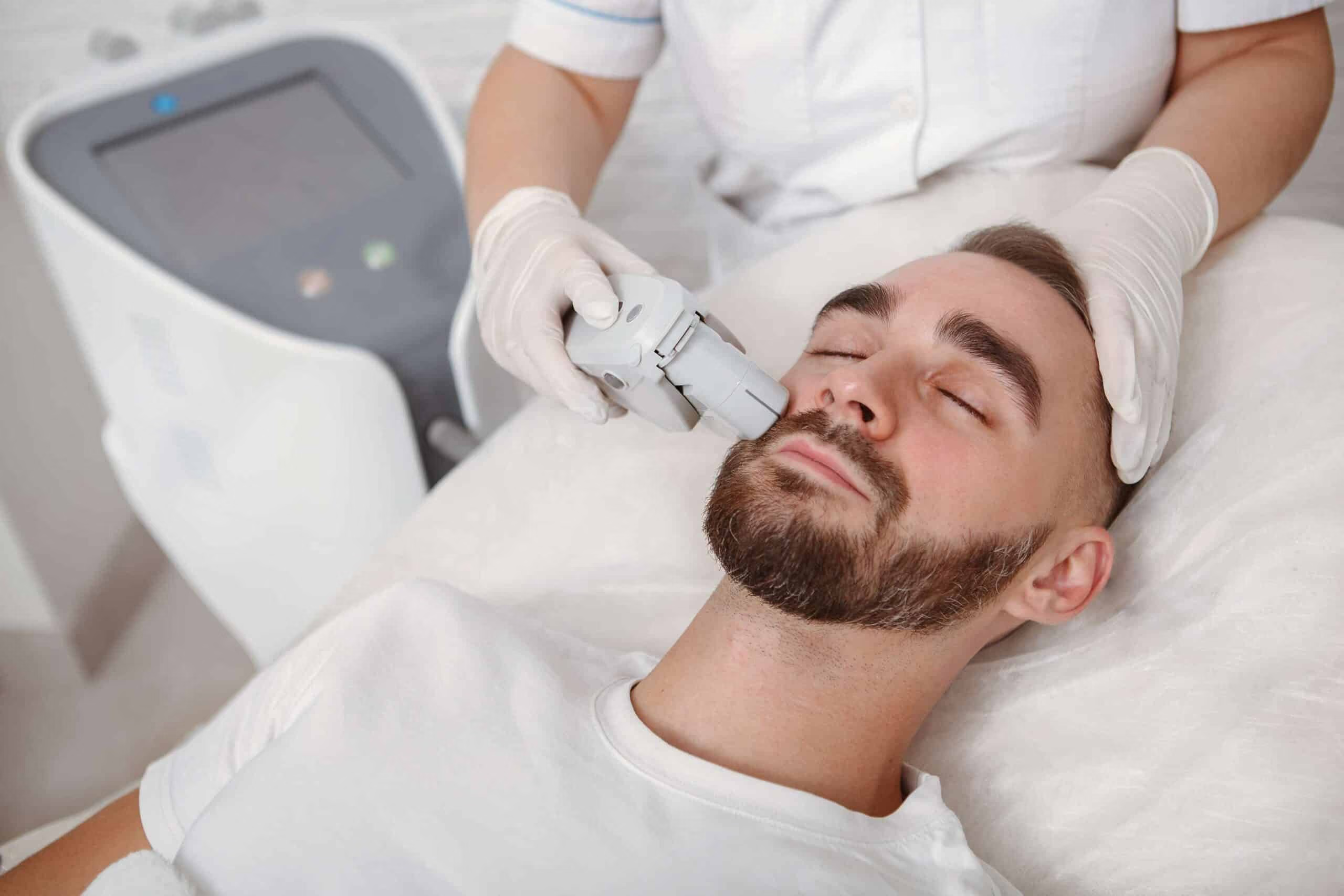
Medical-grade lasers and proper settings for long-term hair reduction on face and body
Laser hair removal uses pulses of light to target the pigment in your hair follicle. The heat damages the follicle enough to slow or stop future hair growth. After a series of six to eight sessions, most patients see 70 to 90 percent permanent reduction in hair growth in the treated area.
Hair grows in cycles, which is why multiple sessions are needed. Each treatment catches follicles in the active growth phase, and it takes several sessions to work through a full cycle for all the follicles in an area.

The treatment plan matters as much as the technology. Most patients need six to eight sessions spaced four to eight weeks apart depending on the area. Face and upper body areas grow faster and need shorter intervals. Legs and bikini areas grow slower and can be spaced further apart.
Stopping the series early gives worse results. Each session works on a different subset of follicles in the growth phase, so skipping sessions leaves follicles untreated. Most clinics that fail to deliver strong results are clinics where patients give up after three or four sessions.
Hair color and skin color matter. Darker hair on lighter skin gives the best results because the laser easily targets the follicle pigment. Blond, red, grey, and white hair do not respond well to laser because they lack pigment. Patients with this hair color are better served by other hair reduction options like electrolysis.
Darker skin tones can be treated safely with the Nd:YAG laser, which targets deeper structures without damaging surface pigment. Not every clinic owns this laser or uses appropriate settings, which is why darker-skinned patients often experience burns or post-inflammatory pigmentation at clinics that use only one laser. We use the right laser for every skin type.
Sun exposure before treatment is the single biggest cause of complications. If you are tanned, the laser cannot distinguish between surface pigment and follicle pigment, and the treatment is more likely to burn the skin. Avoid sun, self-tanner, and spray tans for at least four weeks before each session, and use mineral sunscreen daily throughout the treatment series.
Certain medications and conditions can affect laser treatment. Recent isotretinoin use requires a waiting period. Active infection or herpes outbreaks in the treatment area require rescheduling. Certain antibiotics cause photosensitivity that can increase burn risk. We review all of this before your first session.
After completing a full series, most patients experience 70 to 90 percent reduction in hair growth in the treated area. Some patients need annual maintenance sessions to keep results, while others go years without additional treatment. Hormonal changes, especially in women, can trigger new hair growth that requires touch-up sessions.
Laser hair removal works for most skin types and hair types, though results vary. Dark hair on lighter skin responds best because there is the biggest contrast between the follicle pigment and the surrounding skin. Light, red, grey, or white hair does not respond as well because there is not enough pigment for the laser to target. Darker skin tones require specific lasers, like the Nd:YAG, to treat safely without burns or pigmentation changes.
Most popular treatment areas are underarms, legs, bikini area, face, back, and chest. We treat all of them regularly.
Different skin types need different lasers. Our offices have the Nd:YAG laser for darker skin and the Alexandrite laser for lighter skin. Using the wrong laser on the wrong skin type causes burns or pigmentation. Using the right laser produces safe, long-lasting results.
Laser settings have to be adjusted for every patient based on skin type, hair color and coarseness, and treatment area. Our providers tune settings each session based on how your skin responded to the last one, which maximizes results and minimizes risk.
Your laser treatment is done under the oversight of a board-certified dermatologist. If a complication occurs, you have immediate access to medical expertise in the same office.
Each session takes 15 to 60 minutes depending on the area. Small areas like upper lip take five to ten minutes. Legs take closer to an hour. Before treatment, you shave the area at home the day before. Do not wax, pluck, or use depilatories for six weeks before treatment because those remove the follicle the laser needs to target.
During treatment, you wear protective eyewear. Your provider applies cooling gel or uses a built-in cooling tip and passes the laser over the area. Most patients describe the sensation as a rubber band snap followed by a cool sensation from the device. It is tolerable without numbing for most areas but we offer topical numbing for sensitive zones.
After treatment, the area may be pink and warm for a few hours, similar to a mild sunburn. You can return to normal activities but avoid heavy sweating, hot showers, and sun exposure for 24 hours. Sunscreen on the treated area is required for the duration of the treatment series and for several months after.

Most patients need six to eight sessions to achieve significant long-term hair reduction. Some areas and some patients need more. We match the plan to your specific situation.
Most patients describe the sensation as a rubber band snap followed by a cooling feeling from the device. It is tolerable without numbing for most areas. Sensitive areas can be numbed with topical cream before treatment.
Yes, with the right laser. We use the Nd:YAG laser for darker skin types, which targets the follicle without damaging surface pigment. Not all clinics own this laser, and using the wrong laser on darker skin causes problems.
Pricing varies by area and by number of sessions purchased. Package pricing offers per-session savings compared to individual sessions. Our team provides a quote at consultation.
Most patients achieve 70 to 90 percent long-term reduction after a full series. A small percentage of hair may return over years, especially with hormonal changes. Annual maintenance sessions can keep results consistent.
Please give us a call and we will be happy to answer all your questions or concerns you may have.