Basal Cell Carcinoma

Understanding the Most Common Skin Cancer

Medical Dermatology
Overview

Basal cell carcinoma (BCC) is the most common cancer in the world. About one in five Americans will develop a BCC during their lifetime, and roughly four million cases are diagnosed in the United States every year. BCC arises from the basal cells in the lowest layer of the epidermis and is caused almost entirely by ultraviolet radiation from the sun and tanning beds.

The good news is that BCC is rarely life-threatening. It almost never spreads to lymph nodes or distant organs. The catch is that left untreated, a basal cell can grow locally for years, invading nerves, cartilage, muscle, and bone, especially on the face. Removing it early means smaller scars, simpler reconstructions, and cure rates above 95 percent.

At Cleaver Dermatology and Aesthetics, our board-certified dermatologists diagnose and treat BCC at all nine offices across North Georgia and Metro Atlanta. Our fellowship-trained Mohs surgeon handles high-risk lesions on the face, ears, scalp, and hands with the highest cure rate available.

Common Symptoms

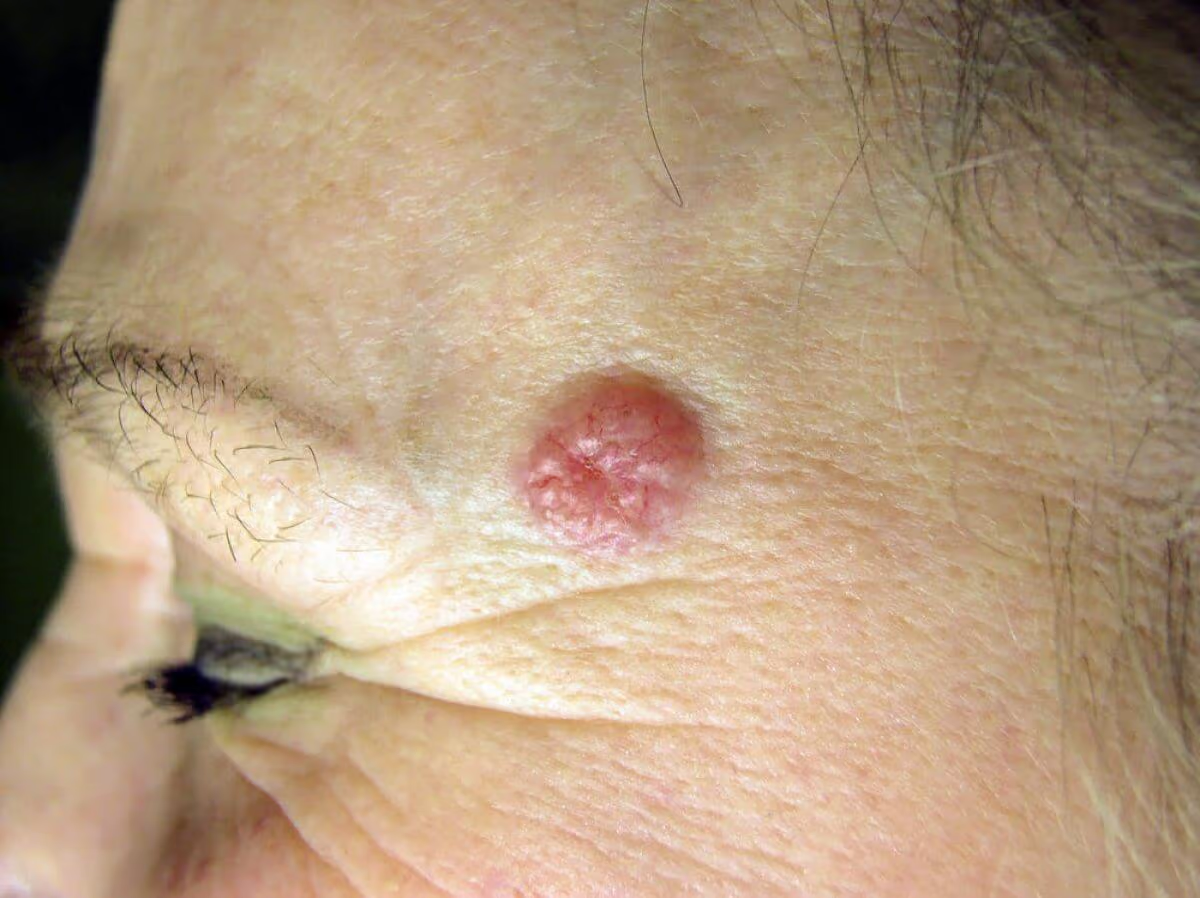
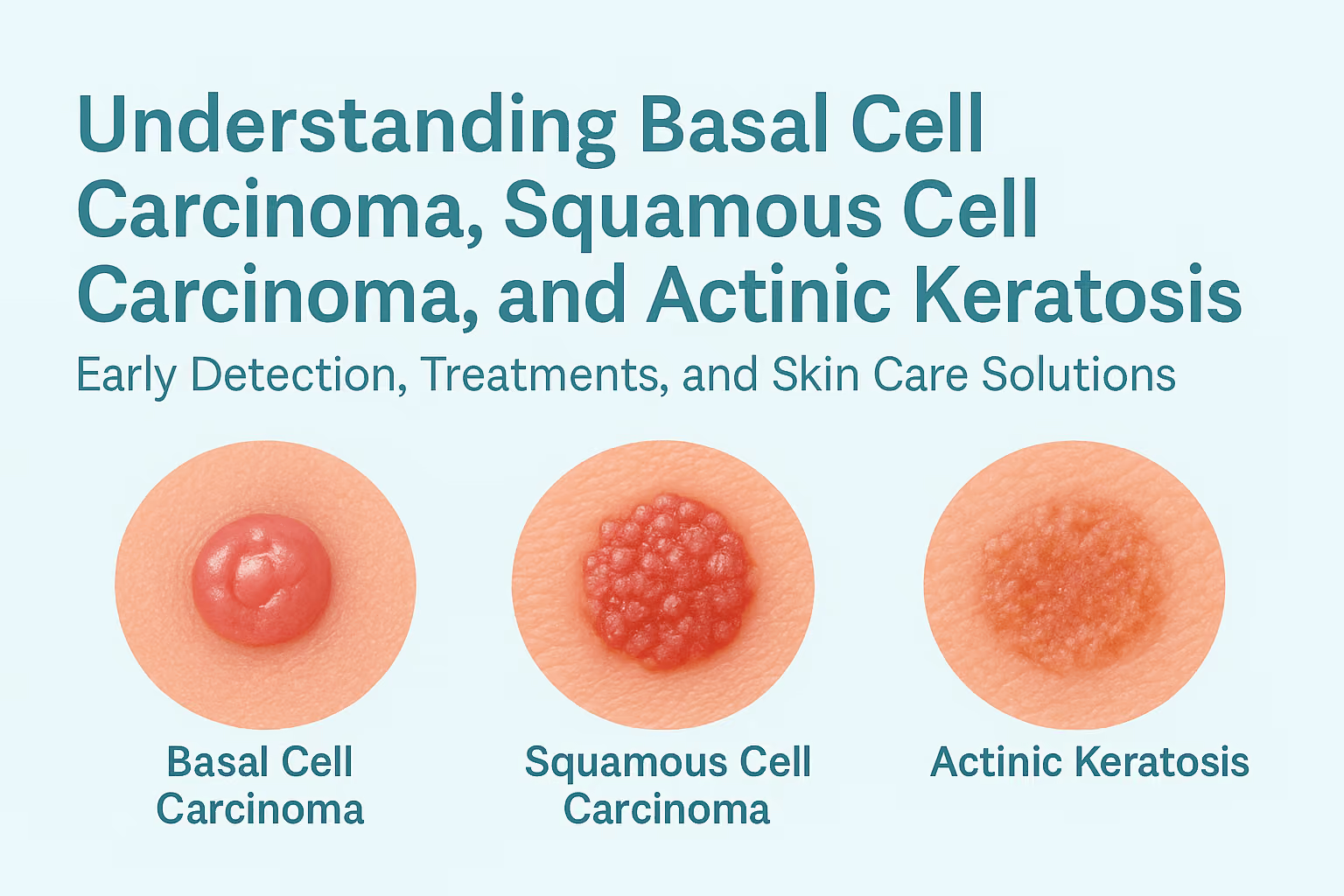
Most basal cell carcinomas show up on sun-exposed skin, particularly the nose, cheeks, ears, scalp, neck, and the back of the hands. The classic appearance is a small pearly or pink bump with tiny visible blood vessels on the surface that bleeds with minor trauma and then scabs over and seems to heal, only to open up again weeks later. A sore that bleeds, scabs, and never fully heals is the most common patient complaint.

BCC has several patterns. Nodular BCC is the pearly papule already described. Superficial BCC looks like a flat pink scaly patch and is often mistaken for eczema or psoriasis. Pigmented BCC contains brown or blue color and can resemble a mole or melanoma. Sclerosing or morpheaform BCC appears as a waxy, scar-like white patch with poorly defined borders, and these are the trickiest to recognize and to remove because they extend in finger-like roots well beyond what the eye can see.

Common Causes

Basal cell carcinoma is caused by cumulative ultraviolet exposure that damages DNA in basal keratinocytes. Most of that damage happens slowly, year after year, from everyday sun exposure rather than a single bad sunburn, although childhood sunburns and intense intermittent sun also raise risk. Tanning beds are a major preventable cause and are classified as a Group 1 human carcinogen.

Risk goes up with fair skin, light eyes, blond or red hair, freckling, advancing age, outdoor work or hobbies, residence in sunny southern latitudes, immunosuppression after organ transplant, prior radiation therapy, and a personal or family history of skin cancer. Once you have one BCC, your odds of developing another within five years are roughly 40 to 50 percent, which is why ongoing surveillance matters as much as treatment.

Treatment Options

Treatment is selected based on the BCC subtype, size, location, depth, and your overall health. Standard surgical excision with a margin of normal-appearing skin works well for low-risk lesions on the trunk and extremities, with cure rates around 95 percent. The tissue is sent for pathology to confirm clear margins.

Mohs micrographic surgery is the gold standard for BCCs on the face, ears, scalp, hands, feet, and genitals, for large or recurrent tumors, and for aggressive subtypes such as morpheaform BCC. The Mohs surgeon removes the cancer in thin layers and examines the entire margin under the microscope on the same day, taking more tissue only where cancer remains. The result is the highest cure rate of any treatment, up to 99 percent for primary BCC, while sparing the maximum amount of healthy tissue.

Other options for selected cases include curettage and electrodessication for small superficial lesions on the trunk, cryosurgery, photodynamic therapy, and topical imiquimod or 5-fluorouracil for superficial BCC. Radiation therapy is reserved for patients who cannot tolerate surgery. For advanced or metastatic BCC that cannot be removed surgically, oral hedgehog pathway inhibitors such as vismodegib or sonidegib offer another option.

What to Expect During Treatment

Your visit starts with a thorough exam of the lesion and the rest of your skin, often using a dermatoscope. If we suspect skin cancer we perform a small shave or punch biopsy under local anesthesia, which takes only a few minutes. Pathology results usually come back in five to seven business days.

If the biopsy confirms BCC, we discuss the recommended treatment in plain language, including what the scar is likely to look like and what the healing timeline involves. Most surgical treatments are done in the office under local anesthesia. Sutures usually come out in five to fourteen days depending on location, and final scar maturation takes six to twelve months.

After treatment we recommend full-body skin exams every six to twelve months for life, because anyone with a history of BCC is at higher risk for new skin cancers.

When to See a Dermatologist

See a dermatologist for any new spot that bleeds, scabs, and refuses to heal, any sore that comes back in the same place, a pearly or shiny bump that grows over months, or a flat pink scaly patch that does not respond to moisturizer or topical steroid. Pay particular attention to the nose, ears, lips, and scalp, which are common sites that are easy to miss.

If you have fair skin, significant lifetime sun exposure, a personal or family history of skin cancer, or are immunosuppressed, schedule a baseline full-body skin exam even without a specific concern.

Prevention and Self-Care

Daily broad-spectrum SPF 30 or higher sunscreen is the single most effective thing you can do, applied to the face, ears, neck, and hands every morning and reapplied every two hours of outdoor exposure. Pair sunscreen with wide-brimmed hats, UPF-rated clothing, and shade between 10 a.m. and 4 p.m. Avoid tanning beds completely.

Examine your own skin once a month in good light, and ask a partner or family member to check your back and scalp. Photograph any spot you are watching so you can track changes objectively rather than relying on memory. Get a professional full-body skin exam at least once a year if you are at higher risk, and more often if you have already had a skin cancer.

FAQs

Is basal cell carcinoma curable?

Yes, basal cell carcinoma is highly curable, especially when detected early. With appropriate treatment, the cure rate exceeds 95%. At Cleaver Dermatology and Aesthetics, we use advanced techniques like Mohs surgery to ensure complete removal while preserving healthy tissue. Follow-up monitoring is important to detect any recurrence early.

Will I have a scar after basal cell carcinoma treatment?

Scarring depends on the size, location, and treatment method used. Mohs surgery, which we specialize in at Cleaver Dermatology and Aesthetics, minimizes scarring by removing only the cancerous tissue. Our dermatologists employ advanced reconstruction techniques, especially for facial lesions. Most scars fade significantly over time with proper aftercare.

Can basal cell carcinoma come back?

While recurrence is uncommon with appropriate treatment (less than 5% with Mohs surgery), it can occur. Regular follow-up appointments and self-monitoring are essential. Patients treated for BCC have an increased risk of developing additional skin cancers, making ongoing surveillance important.

What's the difference between the types of basal cell carcinoma?

Basal cell carcinomas vary in appearance and behavior. Nodular BCC (most common) appears as a pearly bump. Superficial BCC grows slowly on the trunk. Morpheaform BCC resembles scarring and can be more aggressive. Infiltrative BCC has deeper invasion. The subtype influences treatment recommendations and prognosis. A biopsy helps determine the specific type.

How can I reduce my risk of basal cell carcinoma?

The most effective prevention strategy is sun protection. Use broad-spectrum SPF 30+ sunscreen daily, wear protective clothing, avoid peak sun hours, and skip tanning beds. Perform monthly self-examinations and schedule annual skin cancer screenings with Cleaver Dermatology and Aesthetics. Early detection of precancerous lesions allows for prompt treatment before they develop into BCC.

Menu