Wart Removal

Professional Wart Treatment Solutions

Medical Dermatology
Overview

Warts are common, benign skin growths caused by infection of the top layer of skin with human papillomavirus (HPV). There are over 100 HPV subtypes, and different subtypes cause different kinds of warts. Warts are contagious through skin-to-skin contact and through shared surfaces such as gym floors and pool decks, but they are not dangerous. They often clear on their own over months to years, though many patients want them treated for comfort, cosmetic reasons, or to limit spread to others.

At Cleaver Dermatology and Aesthetics, we remove warts using a range of evidence-based methods matched to wart type, size, location, and your tolerance. Treatment is offered at all nine of our offices across North Georgia and Metro Atlanta. Persistent or unusual lesions are biopsied to confirm the diagnosis, since some skin cancers can mimic stubborn warts.
Common Symptoms

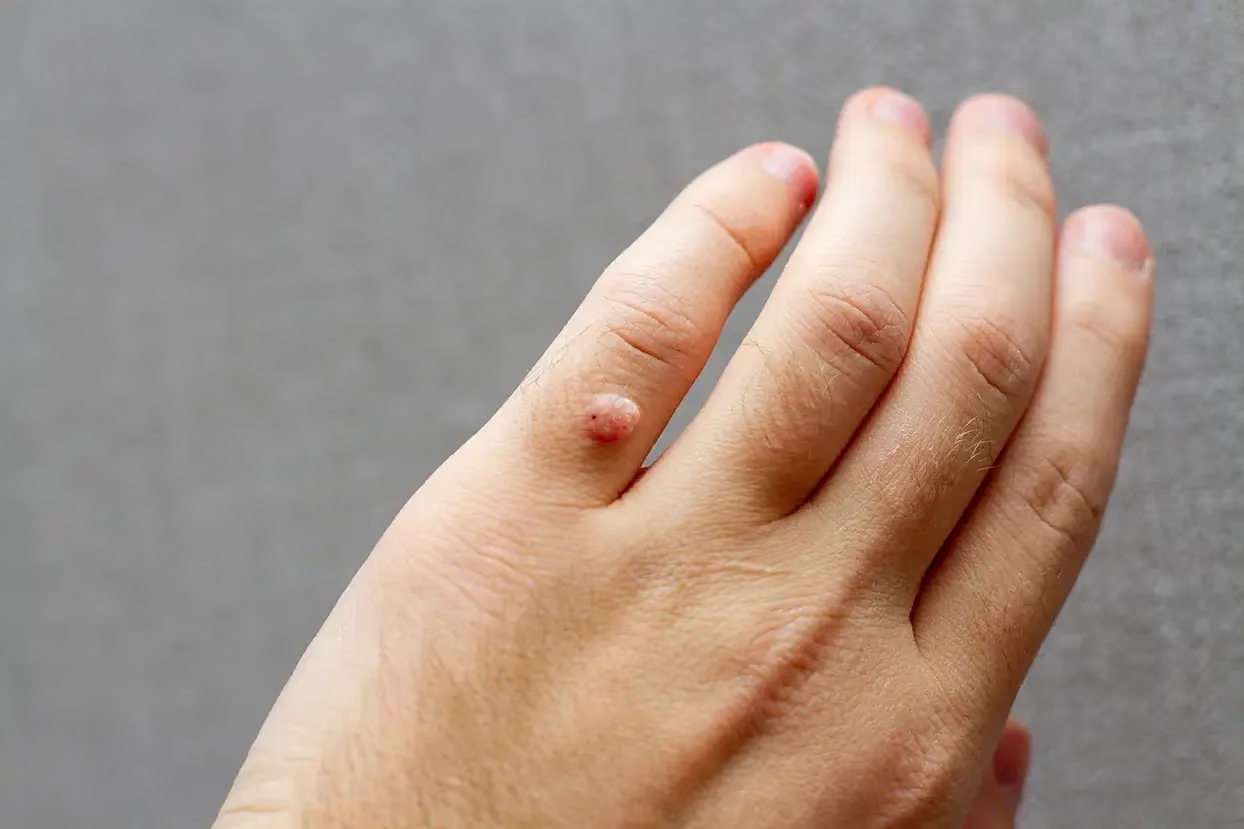
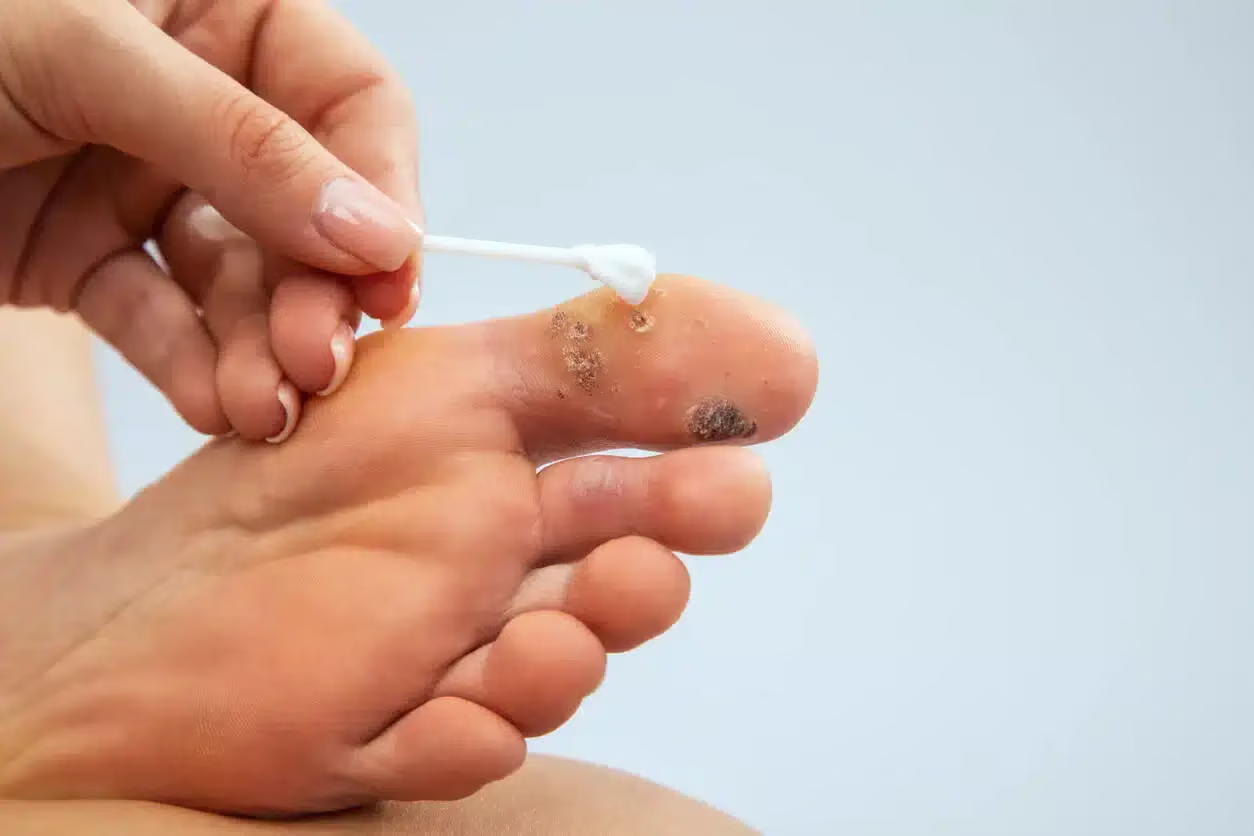
Common warts (verruca vulgaris) appear as rough, raised, skin-colored or grayish bumps with a cauliflower texture, most often on the hands, fingers, and around the nails. Plantar warts develop on the soles and are pushed inward by body weight, often appearing as flat, callused spots with tiny black dots, which are tiny clotted blood vessels. They can be tender to walk on, especially on weight-bearing areas of the heel or ball of the foot.

Flat warts are smaller and smoother than common warts and tend to appear in groups on the face, neck, hands, or legs, especially on areas that are shaved. Filiform warts have finger-like projections and favor the eyelids, nose, and lips. Genital warts (condyloma) require evaluation by a dermatologist or gynecologist and may need additional testing for related HPV-associated conditions.

Common Causes

HPV enters the skin through tiny cracks or breaks. Walking barefoot in locker rooms, sharing shoes or towels, biting nails, picking at skin, and shaving over an existing wart all spread the virus. Children, teenagers, and people with weakened immune systems get warts more often, because the immune system is what eventually clears them.

People with eczema or other conditions that disrupt the skin barrier are also more susceptible. Warts can spread from one location to another on the same person, a process called auto-inoculation, which is why picking, biting, and shaving over warts make them multiply.

Treatment Options

Cryotherapy with liquid nitrogen is the most common in-office treatment. Liquid nitrogen is applied to the wart for several seconds to freeze and destroy the infected tissue, then repeated every two to four weeks until the wart resolves. Most common and plantar warts clear in two to four sessions, although thick plantar warts can take longer.

Cantharidin, a topical agent applied in the office, raises a controlled blister beneath the wart that lifts it away from the skin over the following week. It is painless to apply, which makes it a favorite for children and for warts on sensitive areas. Curettage, electrodessication, and CO2 laser ablation are options for resistant warts and require local anesthesia.

For multiple, widespread, or stubborn warts, immune-stimulating approaches help the body recognize and clear the virus. Options include intralesional Candida antigen injections, topical imiquimod, topical 5-fluorouracil, and squaric acid sensitization. Salicylic acid 17 to 40 percent applied at home daily after gentle filing remains a useful adjunct, especially for plantar warts, and is the best-supported over-the-counter treatment.

For genital warts, options include cryotherapy, podofilox, imiquimod, sinecatechins, trichloroacetic acid, and surgical removal. We choose treatment based on number, size, and location, and discuss HPV vaccination and partner counseling at the same visit.

What to Expect During Treatment

Most wart treatments are quick in-office procedures. Cryotherapy feels like a sharp cold sting that lasts ten to twenty seconds, followed by mild redness and sometimes a blister over the next two days. Plantar warts may be tender to walk on for a few days afterward. Cantharidin is painless on application but produces a tender blister within 24 hours that resolves over a week.

Plan on returning every two to four weeks until the wart is gone. Be patient: even the most effective treatments often need three to six visits, and some warts will recur and require an additional round. Keeping treated areas clean, dry, and covered between visits speeds healing and limits spread to other parts of your body or to family members.

If a wart is unusually firm, pigmented, painful, ulcerated, or fails to respond to standard treatment, we biopsy to make sure we are not missing a skin cancer mimicking a wart.

When to See a Dermatologist

See a dermatologist if a wart is painful, growing rapidly, multiplying, on the face or genitals, or has not responded to several months of over-the-counter salicylic acid. Have any plantar lesion evaluated rather than treated as a callus, since persistent foot pain may be due to a wart that needs professional treatment.

Diabetics and immunosuppressed patients should not treat warts at home with cutting or aggressive salicylic acid, because of the risk of poor healing and infection.

Prevention and Self-Care

Wear shower shoes in locker rooms, gyms, and around pools. Do not share towels, razors, socks, or shoes. Avoid biting nails, picking cuticles, and shaving over warts. Cover existing warts with a bandage to limit shedding of virus to other parts of your body and to other people. Keep the skin barrier strong with moisturizer and address conditions such as eczema that create cracks for the virus to enter.

The HPV vaccine, given in adolescence and through age 45 in many recommendations, prevents the high-risk genital HPV types that cause cancer and the types responsible for most genital warts. It does not treat existing warts.

FAQs

How long does wart removal take?

Most warts require 1-3 professional treatments spaced 2-4 weeks apart. Timeline depends on wart type, size, and immune response. Some respond to single treatment. Others need multiple sessions.

Will my wart return after treatment?

While we destroy visible wart tissue, HPV may remain dormant in surrounding skin. Recurrence rates vary 10-40% depending on treatment type and immune function. Proper aftercare reduces recurrence significantly.

Is wart removal painful?

Most professional treatments cause minimal discomfort, often described as mild stinging or pressure. We can apply numbing cream or local anesthesia to ensure your comfort.

Can I remove warts at home?

Over-the-counter treatments work for some people but are less effective than professional care. Professional dermatology ensures proper diagnosis, prevents spreading, avoids scarring, and increases success rates.

Are warts contagious?

Yes, warts are contagious through direct skin contact or contaminated surfaces. Prompt professional treatment reduces transmission risk. Practice good hygiene and avoid sharing personal items.

Menu