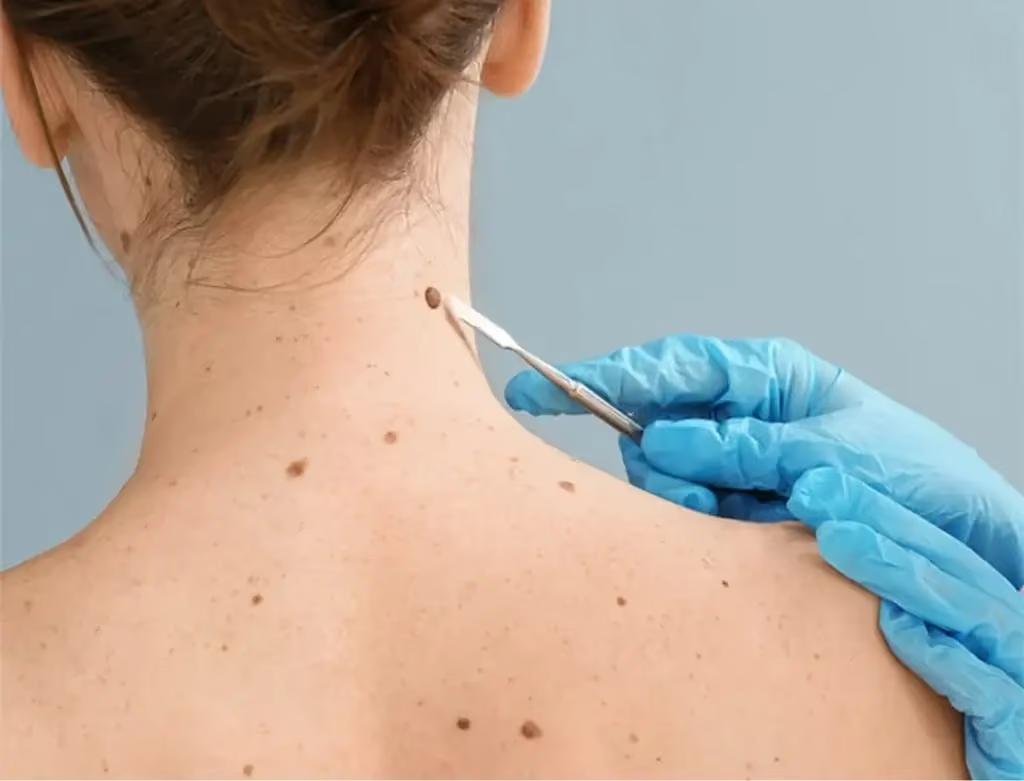
Mole Evaluation and Removal

Expert Mole Evaluation and Safe Removal Services

Medical Dermatology
Overview

Moles are common benign skin growths that can appear anywhere on the body. Most people develop several moles during their lifetime, particularly during childhood and young adulthood. While the vast majority of moles are harmless, it is important to monitor them for changes that could indicate melanoma or other skin cancer. This guide provides information about mole characteristics, when they require medical evaluation, and available treatment options.

Common Symptoms

Most moles are asymptomatic and do not cause any discomfort or symptoms. They typically appear as round or oval brown, black, or tan spots on the skin that are usually flat or slightly raised. Some moles may be flesh-colored or have a waxy appearance. Symptoms that warrant medical evaluation include itching, bleeding, oozing, pain, or tenderness associated with a mole. Changes in size, shape, color, or texture also require prompt evaluation.

Common Causes

Moles form when melanocytes, which are pigment-producing cells, accumulate in clusters beneath or on the skin. Most moles are benign and either present at birth or develop during childhood and adolescence as part of normal skin development. Risk factors for developing atypical moles and melanoma include fair skin, having many moles (50 or more on the body), family history of melanoma, history of sunburns, or prior UV exposure. Dysplastic nevi (atypical moles) are associated with higher melanoma risk.

Treatment Options

Most moles do not require treatment since they are benign. However, moles can be removed for cosmetic reasons or if they become irritated. Common removal methods include surgical excision, shaving, cryotherapy (freezing), or laser removal. Any mole that changes in size, color, shape, or bleeds should be evaluated by a dermatologist to rule out melanoma. Atypical moles require monitoring and may be removed preventatively.

What to Expect During Treatment

During your visit, your dermatologist will examine your moles visually and may use a dermatoscope (magnifying tool) for closer inspection. If any mole appears suspicious, a biopsy may be performed to rule out melanoma. The biopsy involves removing a small sample of skin under local anesthesia for laboratory analysis. Results typically return within 1-2 weeks. If a mole is removed, the procedure is quick and can be done in the office with minimal discomfort. Stitches may be required depending on the removal method and location.

When to See a Dermatologist

You should see a dermatologist if you have a mole that is itching, bleeding, or changing in any way. Any mole that becomes larger, darker, develops irregular borders, or shows color variation warrants evaluation. If you have more than 50 moles on your body, have atypical moles, have a personal or family history of melanoma, or have fair skin with significant sun exposure history, regular skin cancer screening is recommended. Annual or biannual full-body skin exams are appropriate for high-risk individuals.

Prevention and Self-Care

While moles cannot be prevented, you can reduce your risk of developing more moles and decrease skin cancer risk by protecting yourself from sun exposure. Use broad-spectrum sunscreen (SPF 30+) daily, seek shade during peak sun hours (10am-4pm), wear protective clothing, and avoid tanning beds. Self-examination of your skin monthly is important to detect changes. Use the ABCDE rule: Asymmetry, Border irregularity, Color variation, Diameter >6mm, and Evolution (change). Report any changing moles to your dermatologist promptly.

FAQs

Are all moles dangerous?

No, most moles are benign and never become cancer. However, some moles have higher melanoma risk and may need monitoring or removal. Our dermatologists can accurately assess which moles need attention.

How do I know if a mole is cancerous?

Use the ABCDE rule. Asymmetry, Border irregularity, Color variation, Diameter greater than 6mm, and Evolution (changing). However, only a dermatologist can definitively determine if a mole is cancerous through examination and biopsy if needed.

Will mole removal leave a scar?

Scarring depends on removal method and location. Shave excision typically leaves minimal scarring. Excision methods may leave a small linear scar. Our dermatologists use techniques to minimize visible scarring while ensuring complete mole removal.

Can a mole grow back after removal?

If the entire mole is removed, recurrence is unlikely. However, benign moles in other areas may develop over time. This is normal skin behavior and doesn't indicate the removed mole grew back.

When should I have moles checked professionally?

Everyone should have a baseline skin exam. Those with fair skin, many moles, atypical moles, or family history of melanoma should have annual professional exams. Any new or changing mole warrants prompt evaluation.

Menu