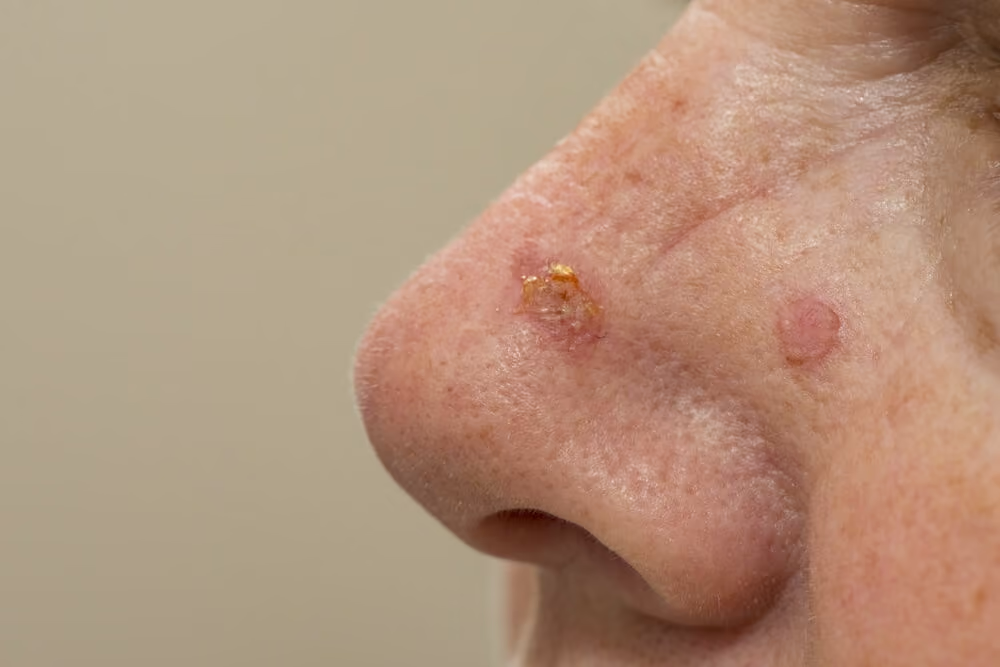
Actinic Keratosis

Professional Treatment of Precancerous Skin Lesions

Medical Dermatology
Overview

Actinic keratosis (AK) is a precancerous skin lesion caused by chronic sun exposure. These rough, scaly patches are common in people with significant sun damage history, particularly those with fair skin. At Cleaver Dermatology and Aesthetics, our board-certified dermatologists specialize in identifying and treating actinic keratosis to prevent progression to squamous cell carcinoma (SCC).

With nine convenient locations across North Georgia in Cumming, Alpharetta, Johns Creek, Canton, Gainesville, Dawsonville, Dahlonega, Toccoa, and Lavonia, our experienced dermatologists provide comprehensive evaluation and multiple effective treatment options tailored to your specific needs.

Early treatment of actinic keratosis is crucial. Left untreated, approximately 2-6% of lesions annually progress to invasive squamous cell carcinoma. Our approach emphasizes not only treating visible lesions but also addressing field damage to prevent future development. With proper treatment and sun protection, you can significantly reduce skin cancer risk.

Common Symptoms

Actinic keratosis appears as rough, scaly patches on the skin with irregular borders. The lesions can be red, pink, skin-colored, or brown and typically measure 2 to 6 millimeters in diameter, though they can sometimes be larger. These patches feel rough and gritty to the touch, similar to sandpaper. They develop exclusively in sun-exposed areas, including the face, scalp, ears, neck, shoulders, hands, and forearms.

Most lesions are asymptomatic, but some people experience itching, tenderness, or slight bleeding. You may notice multiple lesions developing, which indicates chronic sun damage.

Fair skin and sun sensitivity increase your risk significantly. Chronic cumulative sun exposure, especially with a history of severe sunburns, elevates the likelihood of developing actinic keratosis. Age plays an important role, with risk increasing substantially after age 40. Occupational sun exposure, use of tanning beds, and immunosuppression from organ transplants or medications all increase your vulnerability to developing these lesions.

Common Causes

Actinic keratosis develops from chronic ultraviolet radiation damage to skin cells. Cumulative UV exposure causes DNA damage in keratinocytes, leading to uncontrolled cell proliferation and the characteristic rough patches. This damage typically requires years of sun exposure to manifest, which is why actinic keratosis is more common with advancing age.

The risk of progression to squamous cell carcinoma is significant, especially when lesions are present on the lips or face. Patients with multiple actinic keratosis lesions have higher skin cancer risk than those with isolated lesions. Immunocompromised individuals, such as organ transplant recipients, have substantially increased risk of progression.

Once an individual develops actinic keratosis, they demonstrate cumulative sun damage and are at high risk for developing additional lesions. This is why preventive treatment and aggressive sun protection are essential components of comprehensive management.

Treatment Options

Several effective treatment options are available to remove actinic keratosis lesions. Cryotherapy uses liquid nitrogen to freeze individual lesions, causing a blister and peel that typically requires one to two treatments per lesion. Topical Fluorouracil, a chemotherapy cream applied daily for two to four weeks, treats both visible and subclinical lesions through controlled inflammation and healing.

Imiquimod cream is an immune-stimulating topical applied two to three times weekly for eight to sixteen weeks, proving especially effective for multiple lesions and field damage. Photodynamic therapy combines a light-activated medication with visible light to treat widespread lesions and field damage, delivering excellent cosmetic outcomes. Chemical peels using glycolic acid or TCA can remove lesions and address field damage, while CO2 or erbium laser therapy vaporizes lesions and proves particularly effective for scalp and difficult-to-treat areas. Diclofenac gel, an NSAID topical treatment applied twice daily for 60 to 90 days, offers good tolerability for patients seeking a gentler approach.

Our dermatologists at Cleaver Dermatology customize treatment based on the number of lesions, their location, the extent of field damage, and your personal tolerance for different approaches.

What to Expect During Treatment

During your appointment, our dermatologist carefully examines sun-exposed skin to identify all actinic keratosis lesions and assess field damage. We'll discuss treatment options and their expected outcomes, including potential side effects and recovery time.

Treatment selection depends on lesion characteristics and your preferences. Cryotherapy takes 5-10 minutes per lesion with immediate effects. Topical treatments require home application and typically cause some redness and peeling during healing. Photodynamic therapy involves multiple office visits and temporary light sensitivity.

Most treatments result in lesion resolution within 2-8 weeks. Some temporary redness, swelling, or peeling is common and expected. Complete healing usually occurs within 4-12 weeks depending on treatment type. Regular follow-up ensures all lesions have cleared and no new ones have developed.

When to See a Dermatologist

Schedule an appointment at Cleaver Dermatology if you have rough, scaly patches on sun-exposed skin, history of significant sun exposure or sunburns, multiple rough spots developing on face, scalp, or hands, or any lesion that persists after home treatment attempts.

Individuals with fair skin, family history of skin cancer, occupational sun exposure, or immunosuppression should have annual skin exams to screen for actinic keratosis. Early detection and treatment prevent progression to skin cancer.

Our board-certified dermatologists in Cumming, Alpharetta, Johns Creek, Canton, Gainesville, Dawsonville, Dahlonega, Toccoa, and Lavonia are experienced in treating actinic keratosis and can develop a personalized prevention and treatment plan.

Prevention and Self-Care

Sun protection is your most powerful tool for preventing actinic keratosis. Use broad-spectrum SPF 30 or higher sunscreen daily on all exposed skin, reapplying every two hours or after swimming. Seek shade during peak ultraviolet hours between 10 AM and 4 PM, and wear protective clothing including hats, long sleeves, and sunglasses. Avoid tanning beds and artificial ultraviolet exposure entirely.

Treat sunburns immediately with cool compresses and moisturizer to minimize skin damage. Have regular professional skin exams and self-monitor sun-exposed areas monthly for changes. When possible, avoid sun exposure during high-risk hours, and consider preventive topical treatments if you are at high risk for recurrence.

FAQs

Is actinic keratosis cancer?

Actinic keratosis is precancerous, not cancer. However, left untreated, 2-6% of lesions annually progress to squamous cell carcinoma. Early professional treatment prevents this progression and reduces skin cancer risk significantly.

What's the difference between actinic keratosis and skin cancer?

Actinic keratosis is a precancerous lesion confined to the epidermis. Squamous cell carcinoma involves invasion into deeper skin layers. While AK may progress to SCC, most never become invasive if treated appropriately.

Are there side effects from actinic keratosis treatment?

Side effects are typically temporary and mild. Cryotherapy may cause temporary redness and slight swelling. Topical treatments cause controlled inflammation, redness, peeling, and temporary sensitivity. These resolve completely during healing.

Will my actinic keratosis come back after treatment?

Treated lesions typically do not recur if completely removed. However, new lesions may develop in other sun-exposed areas due to ongoing cumulative sun damage. Proper sun protection significantly reduces new lesion development.

Do I need regular check-ups after treatment?

Yes, annual professional skin exams are recommended after actinic keratosis treatment to monitor for new lesions and ensure no progression to skin cancer. Those with extensive damage may need more frequent exams.

Menu