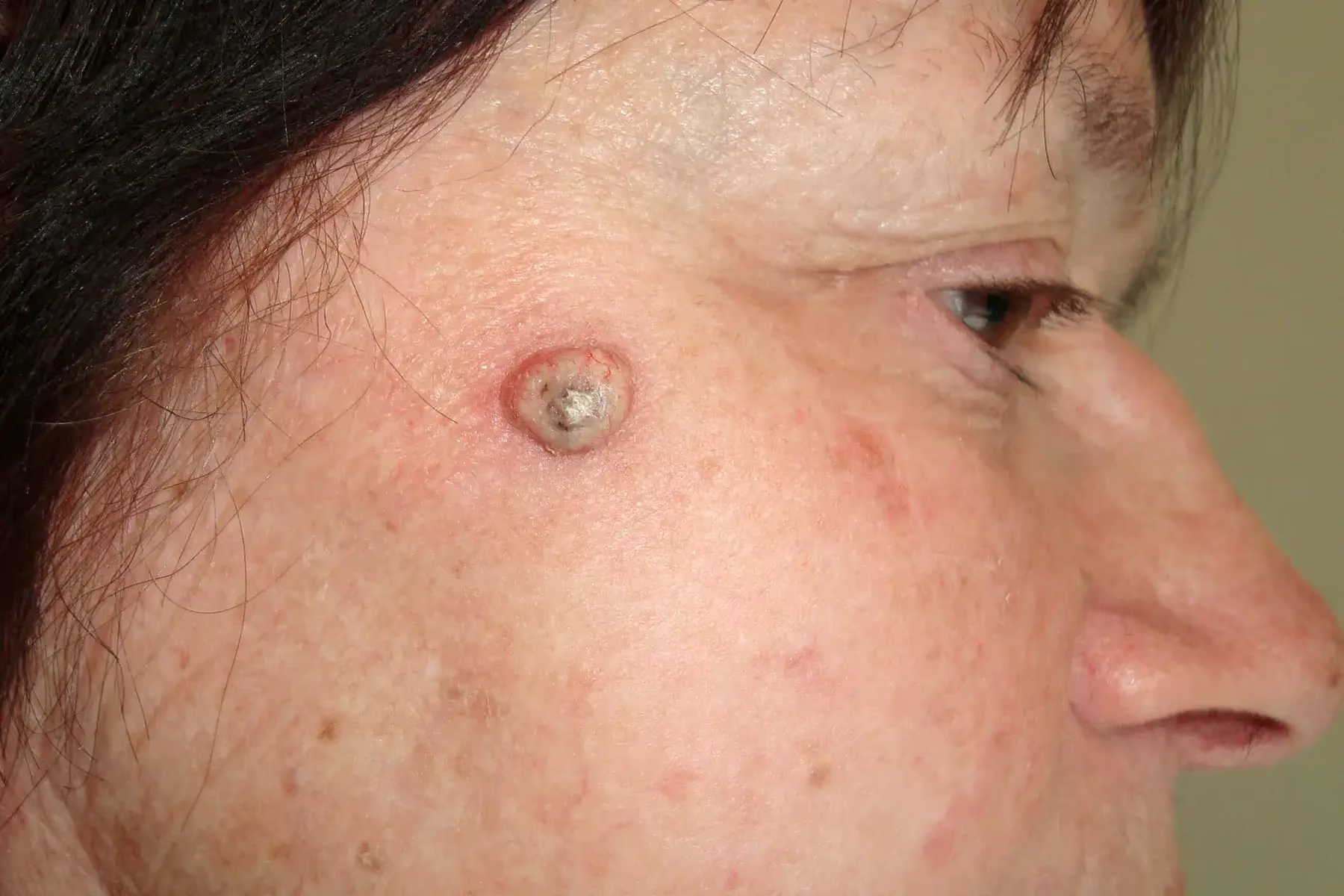
Squamous Cell Carcinoma

The Second Most Common Skin Cancer

Medical Dermatology
Overview

Squamous cell carcinoma is the second most common skin cancer, accounting for about 20% of skin cancer cases. Unlike basal cell carcinoma, SCC has greater potential to spread to lymph nodes and distant organs, making early detection and appropriate treatment essential. With early detection and proper treatment, cure rates exceed 95%. Regular skin screening and sun protection are critical for prevention and early diagnosis.

Common Symptoms

Squamous cell carcinoma presents as a scaly, crusty, erythematous patch, plaque, or nodule. Some lesions appear as ulcers with raised, indurated borders. On the lip, SCC may appear as a persistent sore or ulceration. SCCs commonly occur on the face, ears, scalp, lips, hands, and other sun-exposed areas. They may itch, bleed, or ooze. Some SCCs are tender or painful. Lesions that don't heal or change over time warrant professional evaluation.

Common Causes

Squamous cell carcinoma results from UV-induced mutations in squamous skin cells. Risk factors include cumulative UV exposure, fair skin, advancing age, immunosuppression, family history of skin cancer, and prior skin cancers. Unlike basal cell carcinoma, SCC is more likely to spread (metastasize) to lymph nodes and distant sites, particularly if arising on the lip, ear, or in immunocompromised individuals. SCC can also arise from chronic wounds or scars (Marjolin's ulcer).

Treatment Options

Squamous cell carcinoma treatment depends on size, location, depth, and differentiation grade. Surgical excision with clear margins is standard treatment. Mohs micrographic surgery offers highest cure rates (95-99%) and tissue preservation, particularly for high-risk SCCs. Curettage and electrodessication, cryotherapy, or topical 5-FU/imiquimod may be appropriate for small, low-risk lesions. Radiation therapy is an option for elderly patients or those unable to tolerate surgery. Our dermatologists recommend most appropriate treatment.

What to Expect During Treatment

Your dermatologist will examine the lesion and likely perform a biopsy to confirm diagnosis and determine grade (differentiation level). If squamous cell carcinoma is confirmed, we discuss treatment options and recommend the most appropriate approach. Surgical removal is performed under local anesthesia. We may recommend staging (imaging, node examination) if the SCC has high-risk features. Follow-up includes healing monitoring and periodic skin exams to detect new lesions early.

When to See a Dermatologist

See a dermatologist if you notice any new skin lesion that doesn't heal within 3 weeks, particularly on the lip, ear, scalp, or hands. Any lesion that bleeds, oozes, or changes appearance warrants evaluation. If you have risk factors (fair skin, significant sun exposure, family history of skin cancer, prior skin cancers, or immunosuppression), regular professional skin screening is essential. Early detection allows treatment when lesions are small and least likely to have spread.

Prevention and Self-Care

Prevent squamous cell carcinoma through rigorous, lifelong sun protection. Use broad-spectrum SPF 30+ sunscreen daily, reapplied frequently. Wear protective clothing, wide-brimmed hats, and UV-blocking sunglasses. Avoid tanning beds. Avoid peak sun hours when possible. Limit sun exposure, particularly between 10am-4pm. Self-examine skin monthly for new or changing lesions. Have professional skin exams at least annually, more frequently if you have risk factors or history of skin cancer.

FAQs

Can squamous cell carcinoma metastasize?

Yes, unlike basal cell carcinoma, squamous cell carcinoma can metastasize to lymph nodes and distant organs, particularly if high-risk features are present. Risk factors for metastasis include tumor size greater than 4mm, depth greater than 4mm, poor differentiation, location on face or ears, immunosuppression, and perineural invasion. Early detection and treatment significantly reduce metastatic risk. Regular follow-up with Cleaver Dermatology and Aesthetics is essential for at-risk patients.

What is the relationship between actinic keratosis and squamous cell carcinoma?

Actinic keratosis (AK) is a precancerous lesion that can progress to squamous cell carcinoma. Approximately 2-6% of AKs progress to SCC annually. Patients with multiple AKs have significant risk of developing SCC. At Cleaver Dermatology and Aesthetics, we recommend prompt treatment of AKs through topical therapy, chemical peels, cryotherapy, or laser treatment to reduce SCC risk. Early intervention can prevent malignant transformation.

How is squamous cell carcinoma different from basal cell carcinoma?

While both arise from the epidermis due to sun exposure, SCC has greater metastatic potential than BCC. SCC is more aggressive, grows faster, and requires more extensive treatment in many cases. SCC can develop from precursor lesions (actinic keratosis) and has higher recurrence rates if not completely removed. Because of these differences, SCC treatment often requires Mohs surgery or wider excision margins than typical BCC treatment.

What does Mohs surgery involve for squamous cell carcinoma?

Mohs micrographic surgery is performed under local anesthesia while you remain awake. Our Mohs surgeon removes the visible lesion plus a margin of tissue, which is immediately processed and examined under a microscope. If cancer cells are seen at the edges, additional tissue is removed from that area. This layer-by-layer process continues until clear margins are achieved. Once cancer-free, the wound is reconstructed to optimize healing and cosmetic outcome. The procedure typically takes 2-4 hours.

What happens after squamous cell carcinoma treatment?

After treatment, expect mild discomfort, swelling, and redness that typically resolve within 2-3 weeks. Our team provides detailed aftercare instructions including wound care, activity restrictions, and sun protection. You'll have follow-up appointments to monitor healing and assess for complications. Depending on your risk factors, we may recommend more frequent skin exams to detect any recurrence or new lesions early. Lifelong sun protection and self-monitoring are important preventive measures.

Menu