Psoriasis

Advanced psoriasis treatment at Cleaver Dermatology and Aesthetics

Medical Dermatology
Overview

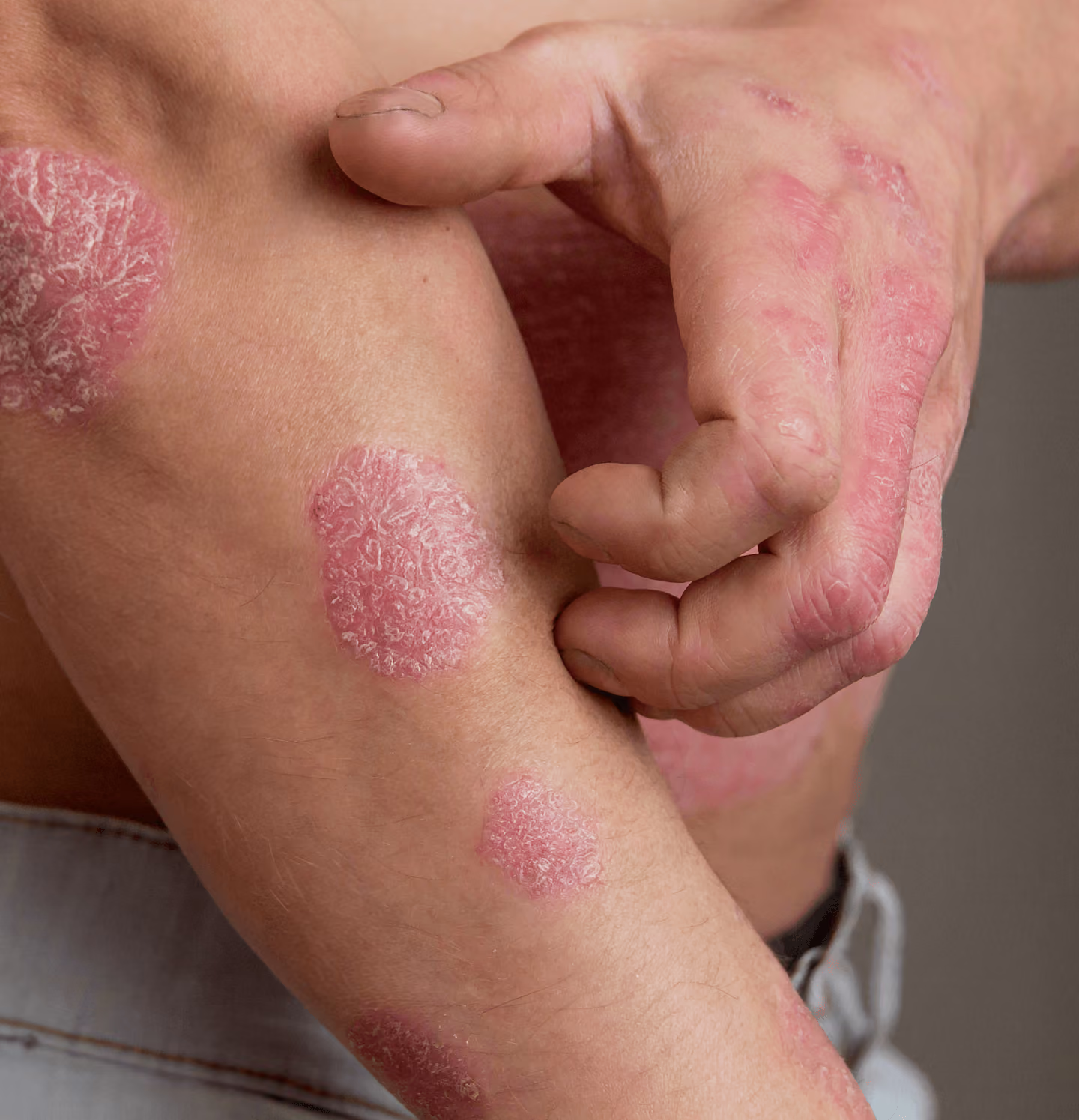
Psoriasis is a chronic, immune-mediated inflammatory disease that affects about three percent of American adults. The most familiar form, plaque psoriasis, produces well-defined patches of thick red skin covered by silvery scale, most often on the elbows, knees, scalp, and lower back. Psoriasis is not contagious, but it can be painful, itchy, and emotionally taxing, and is associated with several important systemic conditions.

Up to 30 percent of patients with skin psoriasis develop psoriatic arthritis, an inflammatory arthritis that can cause permanent joint damage if not treated. Psoriasis is also linked to cardiovascular disease, fatty liver, depression, and metabolic syndrome, which is why comprehensive care addresses more than just the skin.

At Cleaver Dermatology and Aesthetics, our board-certified dermatologists treat every form and severity of psoriasis at all nine of our offices in North Georgia and Metro Atlanta. Treatment options have expanded enormously, and most patients with moderate to severe disease can now achieve nearly clear or completely clear skin with modern biologics.

Common Symptoms

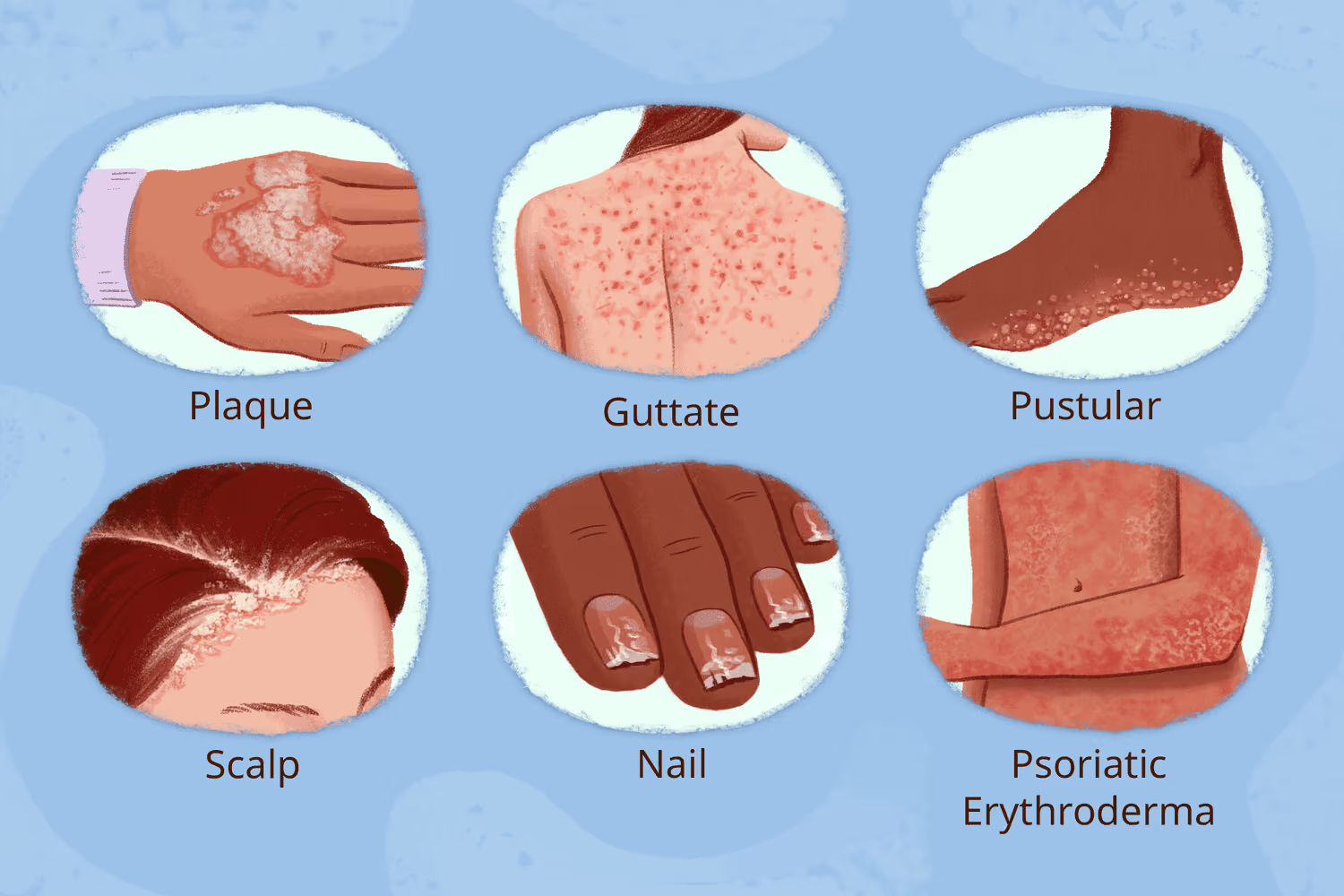
Plaque psoriasis is the most common form, accounting for about 80 percent of cases. Plaques are well-demarcated, raised, red or pink in lighter skin and violet or dark brown in skin of color, with an overlying silvery scale. They are typically itchy and sometimes painful, and they can crack and bleed, especially over joints. Common locations include elbows, knees, scalp, lower back, and buttocks.

Other forms include guttate psoriasis, which appears as small drop-like spots over the trunk and limbs, often after a streptococcal throat infection in younger patients. Inverse psoriasis affects skin folds with smooth red patches and lacks the scale. Pustular psoriasis produces white pustules on red skin and can be localized or generalized. Erythrodermic psoriasis is a rare, severe form that covers most of the skin and can be a medical emergency. Nail psoriasis causes pitting, oil-drop discoloration, thickening, and lifting of the nail plate.

Joint pain, stiffness in the morning lasting more than 30 minutes, swollen fingers or toes, heel pain, and lower back stiffness can all signal psoriatic arthritis and should be reported.

Common Causes

Psoriasis is driven by an overactive immune response, particularly involving the IL-23 and IL-17 pathways, which causes skin cells to grow about ten times faster than normal. The result is the thickened plaque with overlying scale. Genetics play a major role, and roughly one-third of patients have a family member with psoriasis. The HLA-Cw6 gene is the most strongly associated.

Common triggers include streptococcal infections, skin injury (the Koebner phenomenon), stress, smoking, heavy alcohol use, obesity, certain medications such as lithium, beta-blockers, antimalarials, and rapid withdrawal of oral or systemic steroids. Cold dry weather often worsens symptoms in winter. Psoriasis is more common in adults than children, with two peaks of onset in the twenties and again around age 50.

Treatment Options

For mild to moderate plaque psoriasis, topical therapies are the foundation. Topical corticosteroids of varying strengths reduce inflammation. Vitamin D analogs such as calcipotriene, calcitriol, and the calcipotriene-betamethasone combination products work well in combination with steroids. Topical tazarotene is a retinoid useful for thicker plaques. Newer topical options include tapinarof (Vtama) and roflumilast (Zoryve), which are non-steroidal and can be used long-term, including on the face and skin folds.

Phototherapy with narrow-band UVB is highly effective for moderate psoriasis and is delivered in the office two to three times per week for an initial course. Excimer laser focuses light on individual plaques and is useful when only a small body surface area is affected.

For moderate to severe psoriasis, oral systemic and biologic medications have transformed care. Oral options include apremilast (Otezla), methotrexate, cyclosporine, and the newer oral selective tyrosine kinase 2 inhibitor deucravacitinib (Sotyktu). Biologic injections include the IL-17 inhibitors secukinumab (Cosentyx), ixekizumab (Taltz), and brodalumab (Siliq), the IL-23 inhibitors guselkumab (Tremfya), risankizumab (Skyrizi), and tildrakizumab (Ilumya), and the TNF inhibitors adalimumab (Humira), etanercept (Enbrel), and infliximab (Remicade). Most achieve PASI 90 or PASI 100 results, meaning 90 to 100 percent reduction in plaques, in a high proportion of patients.

Patients with psoriatic arthritis are co-managed with rheumatology when needed. Several biologics treat both skin and joint disease.

What to Expect During Treatment

Your first visit includes mapping the extent and severity of your psoriasis, screening for joint symptoms, reviewing your medical history for cardiovascular and metabolic risk factors, and discussing how psoriasis is affecting your daily life. Quality-of-life impact, not just body surface area, helps determine how aggressively to treat.

Topical regimens often produce visible improvement in two to four weeks, with maximal effect by eight to twelve weeks. Phototherapy results show by twelve to twenty sessions. Biologics typically produce significant clearing within twelve to sixteen weeks, with many patients essentially clear by six months. Before starting a biologic, we order baseline labs and screen for tuberculosis and hepatitis. Most major insurance plans cover biologics for moderate to severe psoriasis, and manufacturer copay assistance is available for many products.

Psoriasis is a long-term condition rather than a single-treatment cure, so we plan for ongoing follow-up every three to six months once you are stable.

When to See a Dermatologist

See a dermatologist if you have new or persistent scaly red plaques, scalp scaling that does not respond to dandruff shampoo, nail changes such as pitting or lifting, or a worsening rash that has not improved with over-the-counter products. Schedule sooner if you have joint pain, stiffness, or swelling along with skin symptoms, since untreated psoriatic arthritis can cause permanent joint damage.

Severe symptoms such as widespread pustules, fever, or generalized red skin warrant urgent evaluation.

Prevention and Self-Care

Daily moisturizing with a thick, fragrance-free cream or ointment lowers itch and softens scale. Apply within three minutes of getting out of the shower while skin is still damp. Use lukewarm rather than hot water, fragrance-free gentle cleansers, and a humidifier in winter to combat dry indoor air.

Avoid known triggers when possible. Quitting smoking, moderating alcohol, maintaining a healthy weight, treating strep throat promptly, and managing stress through exercise, sleep, and counseling all reduce flares. Sun in moderation often helps psoriasis, but sunburn can trigger Koebner reactions, so use sunscreen on unaffected areas and limit exposure. Do not stop systemic steroids abruptly without medical guidance, since rapid withdrawal can trigger severe rebound flares.

FAQs

Is psoriasis contagious?

No, psoriasis is not contagious. It's an autoimmune condition caused by genetics and environmental factors. You cannot catch it from someone else or transmit it through contact.

What's the difference between psoriasis and eczema?

Both cause itchy skin but have different causes and appearances. Psoriasis is autoimmune with thick, silvery scales, while eczema involves a compromised skin barrier. Treatment approaches differ significantly, so professional diagnosis is essential.

Are biologic medications effective for psoriasis?

Yes, biologic medications like Humira, Cosentyx, Taltz, and Skyrizi have shown remarkable effectiveness for moderate-to-severe psoriasis. Many patients experience significant clearance or complete remission with these targeted therapies.

Can psoriasis affect my joints?

Yes, about 30% of people with psoriasis develop psoriatic arthritis, which causes joint inflammation and pain. Early diagnosis and treatment can help prevent joint damage. Tell us about any joint symptoms during your appointment.

Will my psoriasis go away?

While psoriasis is chronic and cannot be completely cured, it can be effectively managed and controlled with proper treatment. Many patients achieve clear or nearly clear skin and maintain long-term remission.

Menu