Skin Cancer Screening

Early detection saves lives. Schedule your full-body skin exam today.

Medical Dermatology
Overview

A skin cancer screening is a thorough head-to-toe examination of your skin by a board-certified dermatologist, designed to find skin cancers and pre-cancers when they are small, early, and easiest to treat. Skin cancer is the most common cancer in the United States, and the great majority of cases are highly curable when caught early. Screening is the most effective tool we have for catching them.

At Cleaver Dermatology and Aesthetics, full-body skin exams are performed by board-certified dermatologists at all nine of our offices across North Georgia and Metro Atlanta, in Cumming, Alpharetta, Johns Creek, Canton, Gainesville, Dawsonville, Dahlonega, Toccoa, and Lavonia. The exam is covered by most insurance plans when performed for medical reasons, and Medicare covers it when skin cancer risk factors are present.

Annual screening is recommended for most adults, with more frequent visits for those with a personal or family history of skin cancer, fair skin, many moles, or significant sun exposure.

Common Symptoms

Screening looks for any spot that does not match the rest of your skin. The ABCDE rule is the starting point for pigmented lesions: Asymmetry, Border irregularity, Color variation, Diameter greater than six millimeters, and Evolution or change. The ugly duckling sign, a mole that looks different from your other moles, is just as important.

Non-pigmented warning signs include a sore that bleeds, scabs, and refuses to heal after three to four weeks, a pearly or shiny bump with visible blood vessels, a rough scaly patch that is not responding to moisturizer, a wart-like growth that suddenly enlarges, and any new dark streak under a fingernail or toenail. Tell your dermatologist about any spot that itches, hurts, or has changed, even if it looks unimpressive.

Common Causes

Anyone can develop skin cancer, but certain factors raise your risk and your screening frequency should match. Risk goes up with fair skin, light eyes, blond or red hair, freckling, a personal history of any skin cancer, a family history of melanoma, more than 50 moles, atypical moles, significant lifetime sun exposure, a history of blistering sunburns or tanning bed use, immunosuppression after organ transplant, and certain inherited conditions such as xeroderma pigmentosum.

Skin cancer can occur in skin of color too, often in less sun-exposed areas such as the palms, soles, and nail beds, and is more likely to be diagnosed at a later stage. Regular screening matters regardless of skin tone.

Treatment Options

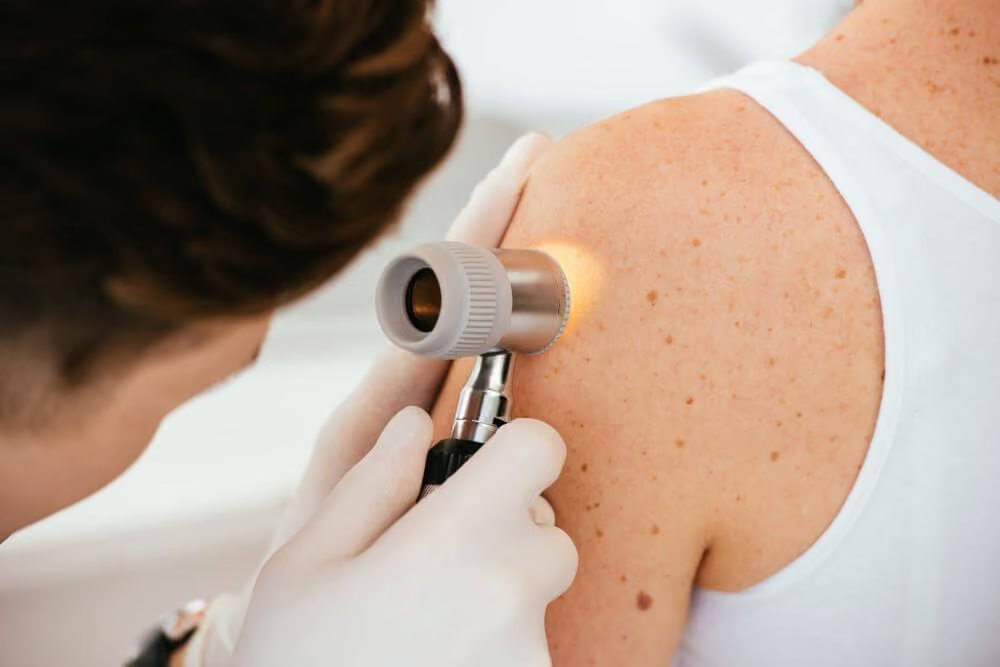
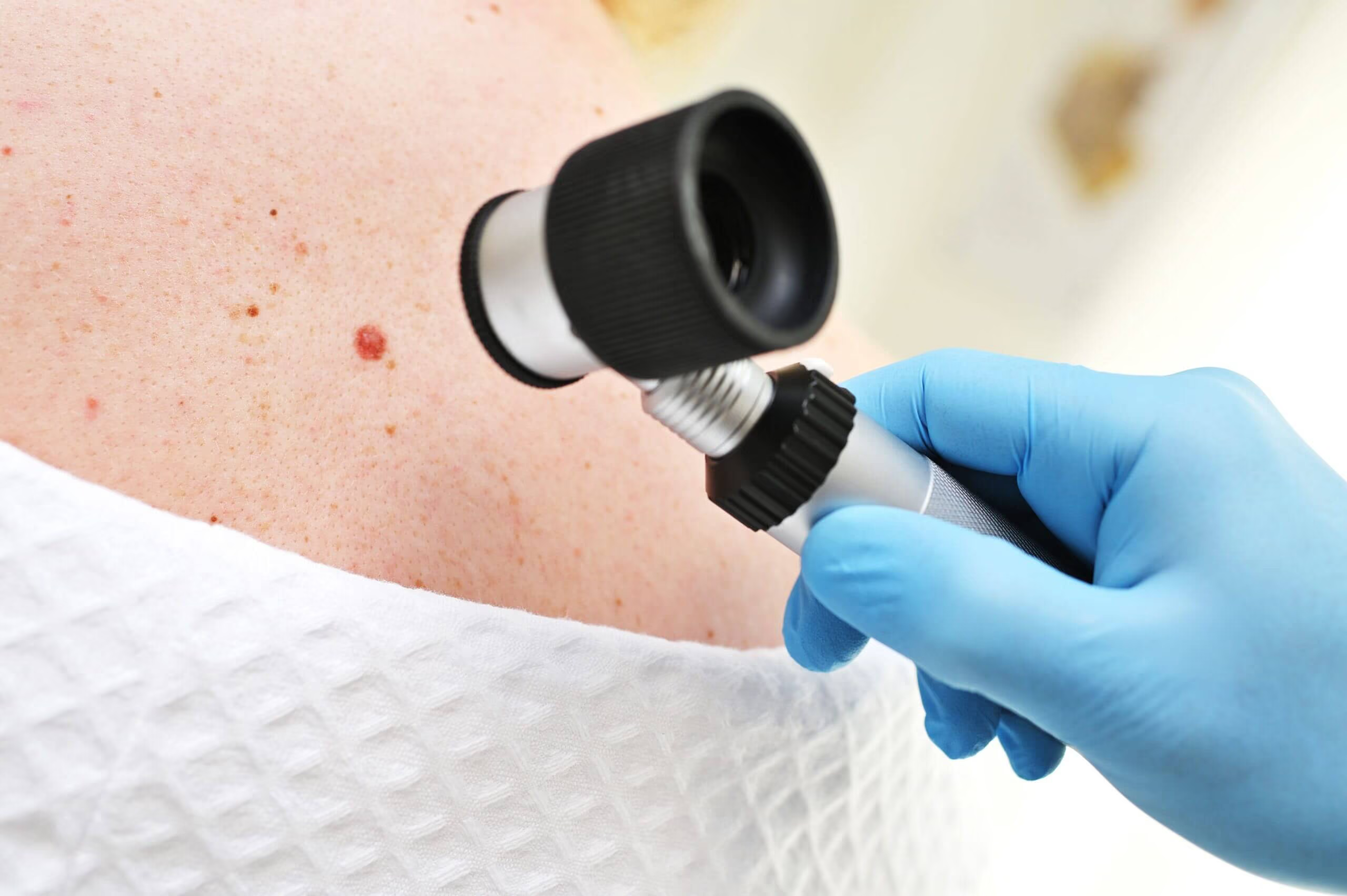
The screening exam itself is non-invasive. You change into a gown so the entire skin surface can be examined, and the dermatologist works systematically from the scalp to the soles, including the scalp, behind the ears, between the toes, the palms, the nails, and other areas patients commonly miss on self-exam. We use a dermatoscope, a handheld magnifying device, to look at the pigment and vascular structures of any lesion that catches our eye.

If a lesion is suspicious, we biopsy it during the same visit when possible. A biopsy is a quick in-office procedure under local anesthesia, usually a shave or punch technique, with results back in five to seven business days. Most biopsied lesions turn out to be benign, but the small fraction that are precancerous or cancerous are then treated with the appropriate option, ranging from cryotherapy to surgical excision to Mohs surgery, depending on diagnosis.

For patients with many moles or atypical moles, total-body photography and serial dermoscopic monitoring create a baseline so we can track subtle changes over time rather than relying on memory.

What to Expect During Treatment

A typical screening exam takes 15 to 30 minutes. Come without makeup, nail polish, or self-tanner, and pin long hair up so the scalp can be seen clearly. You will change into a gown and the dermatologist will guide you through positions to examine each area. The exam is professional and respectful, and you can ask for a chaperone at any time.

Bring a list of any spots you are concerned about so they can be addressed first. We point out the lesions we want to follow, photograph anything that needs monitoring, and explain whether biopsy is recommended. If everything looks reassuring, you leave with a recommended timeline for your next exam.

Most patients are surprised at how quick and straightforward the visit is, and how often we catch spots they had not noticed at all.

When to See a Dermatologist

Schedule a screening sooner rather than later if you notice any new or changing spot, a sore that will not heal, a mole that looks different from your others, a dark streak under a nail, or a rapidly growing pink bump. Get a baseline exam if you have not had one as an adult, particularly if you have any of the risk factors above.

Anyone with a personal history of skin cancer needs ongoing surveillance, typically every six to twelve months for life. Family members of patients with melanoma should also be evaluated, since melanoma can run in families.

Prevention and Self-Care

The best partner to professional screening is monthly self-examination. Pick a day each month, stand in good light with a full-length mirror, and use a hand mirror for the back, neck, and scalp. Get to know your own moles. Photograph anything you are watching so you can compare objectively in future months. The new and the changing are the spots to flag.

Daily broad-spectrum SPF 30 or higher, hats, sun shirts, and shade between 10 a.m. and 4 p.m. lower your lifetime risk. Avoid tanning beds entirely. If you have already had a skin cancer, sun protection is not optional, because second skin cancers are common and largely preventable.

FAQs

How often should I get a skin cancer screening?

We recommend annual full-body skin exams for all adults. Patients with a personal or family history of skin cancer, many moles, or a history of significant sun exposure may benefit from screenings every 6 months. Your dermatologist will recommend the right schedule based on your risk profile.

Does a skin cancer screening hurt?

Not at all. A skin cancer screening is a completely painless visual examination. If a biopsy is needed, we use local anesthesia to numb the area first, so you'll feel only minimal pressure. Most patients describe it as less uncomfortable than a blood draw.

Does insurance cover skin cancer screenings?

Most insurance plans cover annual skin cancer screenings as a preventive service, especially if you have risk factors. If a biopsy is performed, it is billed as a diagnostic procedure and is typically covered. Our team can verify your specific coverage before your visit.

What happens if something suspicious is found?

If your dermatologist identifies a concerning spot, they may perform a quick in-office biopsy under local anesthesia. Results typically come back within a week. If skin cancer is confirmed, our team including Mohs surgeons will discuss the best treatment options with you right away.

Can young people get skin cancer?

Yes. Melanoma is one of the most common cancers in young adults aged 25 to 29, and rates among young women have been rising. Sun exposure and tanning bed use during youth significantly increase risk. We recommend skin cancer awareness and professional screenings starting in early adulthood.

Menu