Eczema & Dermatitis

Expert eczema and dermatitis care at Cleaver Dermatology and Aesthetics

Medical Dermatology
Overview

Eczema, also called atopic dermatitis, is a chronic inflammatory skin condition that affects about 20 percent of children and 10 percent of adults in the United States. It causes intensely itchy, dry, red, scaly skin, and is part of the atopic triad alongside asthma and allergic rhinitis. Although eczema is not curable, modern therapies can keep most patients comfortable, clear, and sleeping through the night.

The biology behind eczema involves a defective skin barrier (often related to a filaggrin gene mutation) and an overactive type 2 inflammatory response involving IL-4, IL-13, and IL-31. That understanding has driven a wave of new targeted treatments, including the biologic dupilumab and the oral JAK inhibitors, which have transformed care for moderate to severe disease.

At Cleaver Dermatology and Aesthetics, our board-certified dermatologists treat infants, children, and adults with eczema at all nine of our offices in North Georgia and Metro Atlanta. We build a long-term plan that combines barrier care, anti-inflammatory therapy, and trigger management.
Common Symptoms

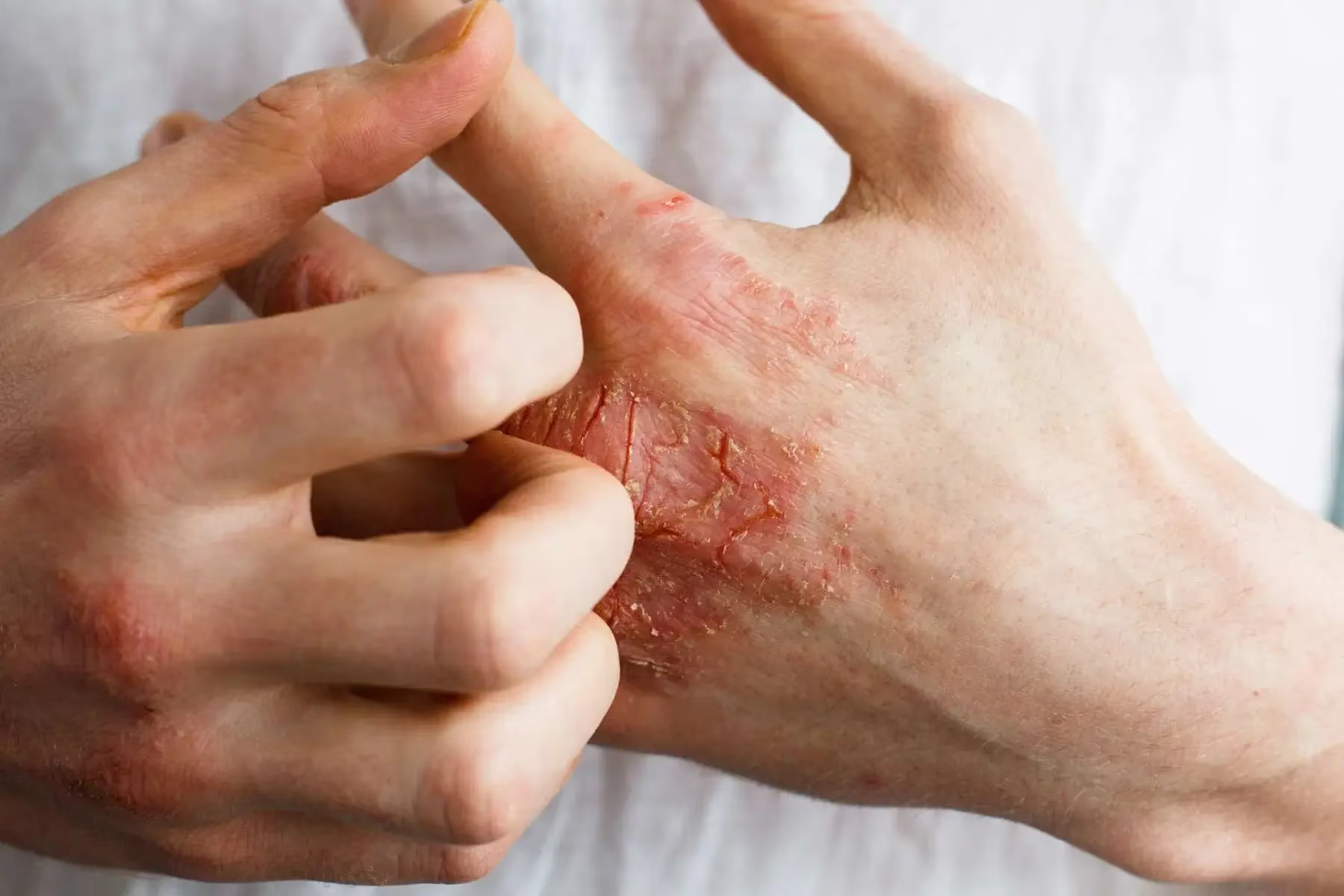
Eczema looks different at different ages. In infants, it usually appears on the cheeks, scalp, and outer arms and legs as red, weepy, scaly patches. In school-aged children and adults, the classic locations are the flexural areas: insides of the elbows, behind the knees, around the neck, and on the wrists and ankles. In skin of color, eczema can appear darker brown or violet rather than red, and post-inflammatory pigmentation often persists after the active rash settles.

Itch is the cardinal symptom and is what people remember most. The itch-scratch cycle leads to thickened, leathery skin (lichenification), open scratched areas, and small bumps. Affected skin is often dry overall, with a fine scale, and can crack at flexural creases. Sleep disruption from nighttime itching is one of the biggest quality-of-life issues we address.

Other forms of dermatitis we evaluate include nummular eczema (coin-shaped patches on the limbs), dyshidrotic eczema (deep itchy blisters on the palms and soles), seborrheic dermatitis, and stasis dermatitis on the lower legs. Distinguishing these from contact dermatitis or psoriasis matters for treatment.

Common Causes

Eczema arises from the combination of a genetically impaired skin barrier and an overactive immune response. About one-third of patients carry a filaggrin mutation that compromises the outermost layer of skin, allowing water loss and easier entry of irritants and allergens. The immune system then mounts a type 2 inflammatory response that produces the itchy, scaly rash.

Risk goes up with a personal or family history of eczema, asthma, or hay fever. Triggers and aggravating factors include dry air and winter weather, hot water, harsh soaps and detergents, wool and other rough fabrics, sweat, fragrances, dust mites, pet dander, and stress. Food allergies can flare eczema in some young children, but most adults with eczema do not have meaningful food triggers despite popular belief, and unnecessary food restriction can do more harm than good.

Treatment Options

Daily barrier care is the foundation. A thick fragrance-free moisturizer such as a cream or ointment, applied to damp skin within three minutes of bathing and again throughout the day, lowers flare frequency and severity. CeraVe, Vanicream, Aveeno Eczema Therapy, and plain petrolatum are good choices.

For mild to moderate flares, topical corticosteroids of the appropriate strength are first-line. Lower-potency options such as hydrocortisone are used on the face and skin folds, while mid-potency triamcinolone or betamethasone is used on the body. Steroid-sparing topical options include calcineurin inhibitors (tacrolimus, pimecrolimus), the PDE4 inhibitor crisaborole (Eucrisa), the JAK inhibitor ruxolitinib (Opzelura), and the newest aryl hydrocarbon receptor agonist tapinarof (Vtama). These are safe for long-term use and on sensitive areas.

For moderate to severe disease that is not controlled with topicals, systemic options include phototherapy with narrow-band UVB, the IL-4 and IL-13 blocker dupilumab (Dupixent) given as a subcutaneous injection every two weeks, the IL-13 blocker tralokinumab (Adbry), and the IL-31 receptor blocker nemolizumab (Nemluvio). Oral JAK inhibitors abrocitinib (Cibinqo) and upadacitinib (Rinvoq) work quickly, often calming itch within days. Wet wrap therapy can rescue severe flares in children when properly taught.

Itch and sleep are addressed with non-sedating antihistamines during the day and sedating options at night when needed. Bleach baths (a quarter to half cup of household bleach in a full bathtub of water, twice a week) reduce skin Staph aureus colonization and the frequency of infections that drive flares.

What to Expect During Treatment

Your first visit includes a careful exam of the rash, a review of products, baths, and potential triggers, and a discussion of how eczema is affecting sleep, school or work, and quality of life. We build a written action plan with daily maintenance care and a clear flare protocol so you know exactly what to do at the first signs of a flare rather than waiting for it to escalate.

Most patients see meaningful improvement within four to six weeks with good topical care. Biologic and oral therapies typically begin reducing itch within two weeks, with substantial skin clearing by twelve to sixteen weeks. We follow up at four to six weeks initially, then less often once stable. Eczema is a long-term condition rather than a one-time fix, so the plan is designed to be sustainable.

If skin becomes acutely worse with weeping, golden crusting, fever, or pain, that often represents a Staph infection on top of eczema and warrants prompt attention.

When to See a Dermatologist

See a dermatologist if eczema is interfering with sleep, school, or work, if over-the-counter products and hydrocortisone are not enough, if your skin is repeatedly getting infected, or if scratching is causing scarring or pigmentation changes. Eczema in infants who are not gaining weight, or with facial swelling or breathing changes, deserves urgent evaluation, as does any spreading red, blistering, or painful rash that could represent eczema herpeticum, a serious complication.

If you have tried multiple topical products without lasting improvement, it is worth discussing systemic and biologic options.

Prevention and Self-Care

Build a daily routine around the basics. Take short, lukewarm showers or baths, use fragrance-free gentle cleansers only on dirty areas, pat skin dry, and apply moisturizer all over while skin is still damp. Keep the home humidified in winter, use a fragrance-free laundry detergent, and rinse clothes twice if you are sensitive. Switch to cotton or other soft fabrics for layers next to the skin.

Manage stress, get good sleep, and treat related conditions such as asthma and seasonal allergies. Keep nails short to limit damage from scratching. Bring children with eczema in regularly so we can stay ahead of flares rather than reacting to them, and so we can adjust treatment as the skin changes through the years.

FAQs

Is eczema contagious?

No, eczema is not contagious. It's a chronic skin condition caused by genetic and environmental factors. You cannot catch it from someone else or spread it to others through contact.

Can eczema be cured?

While eczema cannot be completely cured, it can be effectively managed with the right treatment plan. Many people experience significant improvement or complete remission of symptoms with proper care and trigger avoidance.

Is Dupixent effective for eczema?

Dupixent (dupilumab) is FDA-approved for moderate-to-severe atopic dermatitis and has shown excellent results for many patients. It works by targeting specific immune pathways that cause inflammation. Our dermatologists can determine if it's appropriate for your condition.

What's the difference between eczema and psoriasis?

While both cause itchy, red patches, they are different conditions with different causes and treatments. Eczema involves a defective skin barrier and allergic inflammation, while psoriasis is an autoimmune condition. Professional diagnosis is essential for proper treatment.

Can stress make eczema worse?

Yes, stress is a common eczema trigger that can worsen symptoms significantly. Managing stress through exercise, meditation, and relaxation techniques can help reduce flare-ups. Our team can provide guidance on stress management strategies.

Menu