Hyaluronic acid and collagen-stimulating fillers for lips, cheeks, jawline, and smile lines
Dermal fillers add structure and volume where it has been lost or where you want more definition. Most fillers we use are made from hyaluronic acid, a substance your body already produces. Others, like Radiesse, stimulate your body to produce its own collagen over months. The right choice depends on the area, your goals, and how long you want the result to last.
Filler is not a substitute for Botox, and Botox is not a substitute for filler. Botox relaxes muscles. Filler restores volume. Many patients use them together, in different areas, for the best overall result.
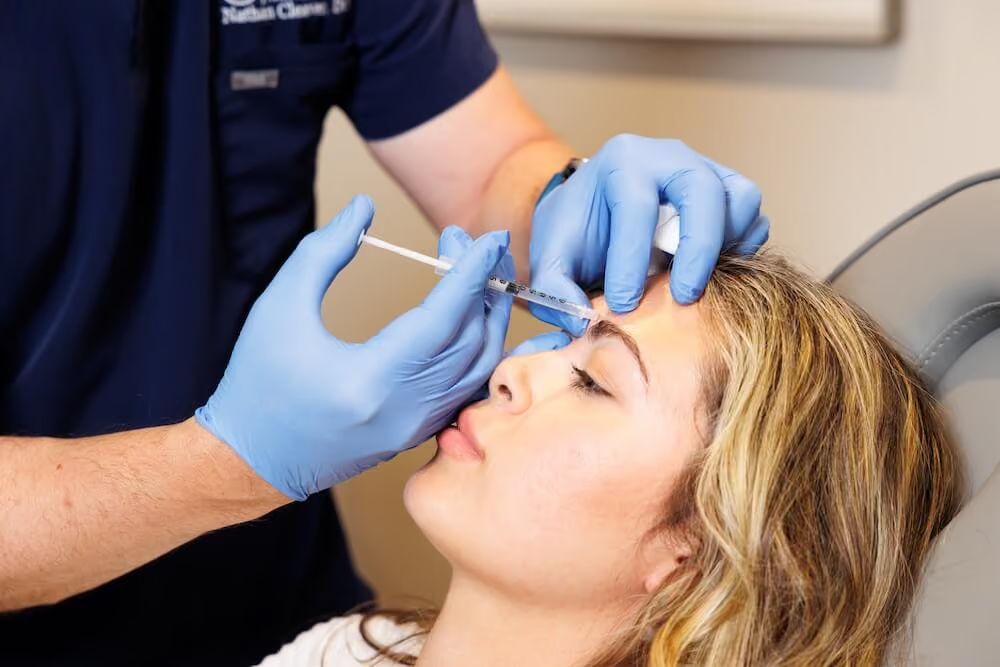
The filler market has expanded significantly over the past decade. Today we have multiple families of hyaluronic acid fillers designed for specific uses, plus non-HA fillers like Radiesse and Sculptra that work differently.
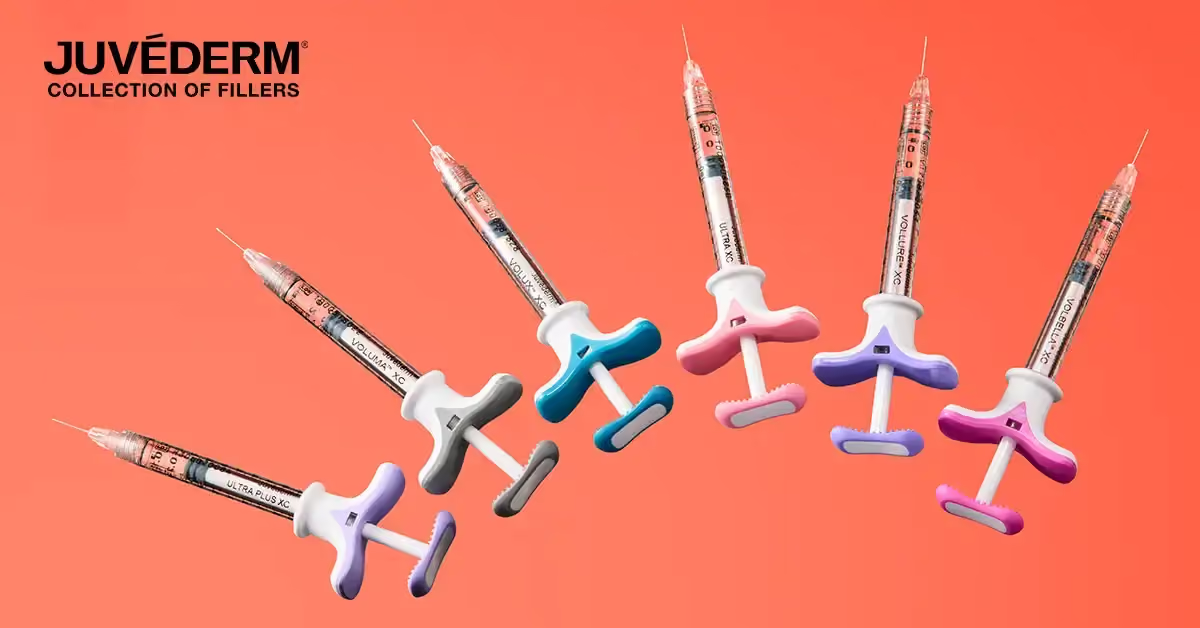
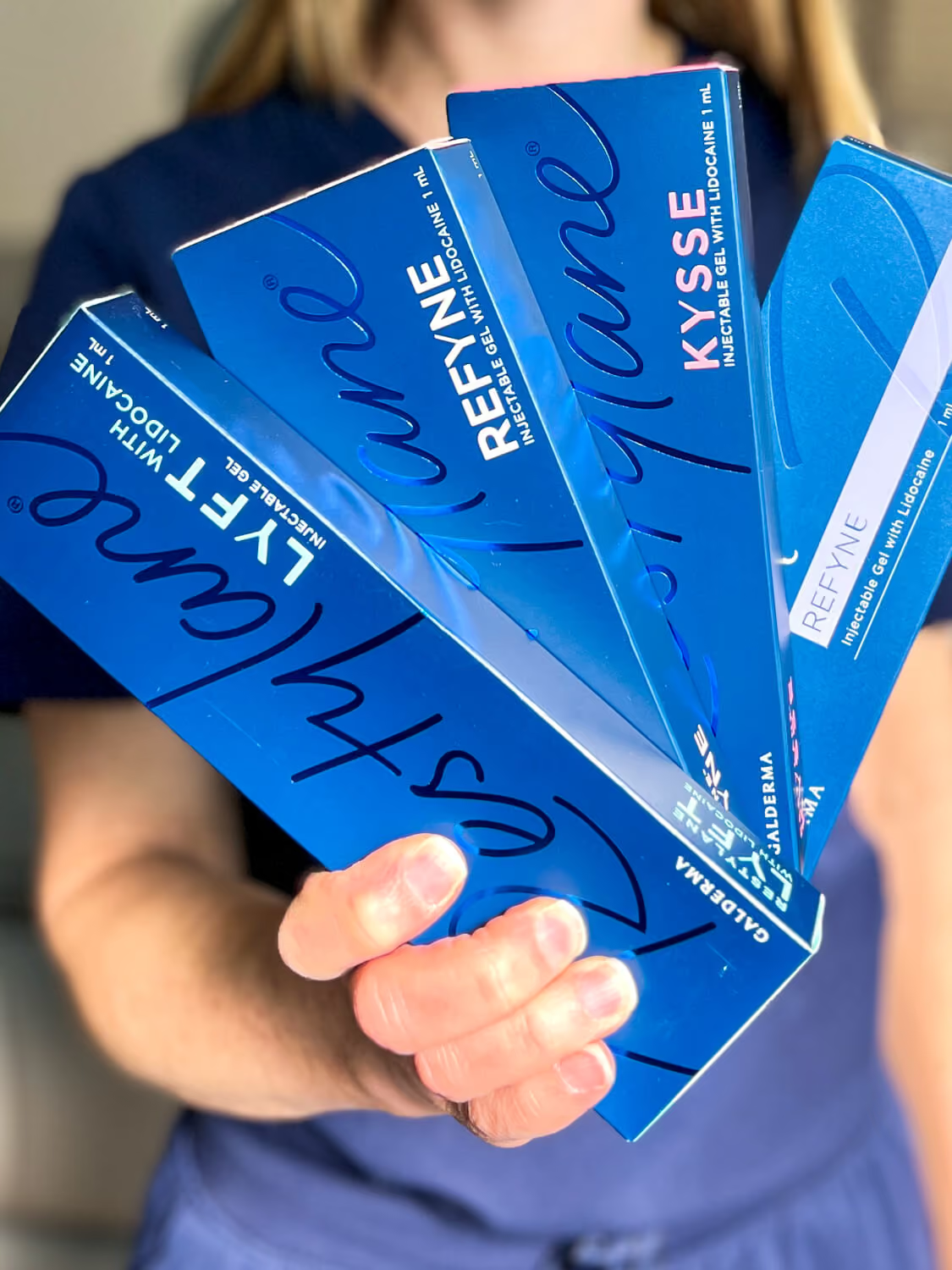
Juvederm and Restylane are the two most common HA filler lines. Within each line, individual products are formulated for specific areas. Juvederm Ultra and Volbella work well for lips. Juvederm Voluma and Restylane Lyft work well for cheeks and jawline because they are thicker and hold structure. Juvederm Volift and Restylane Defyne work well for smile and marionette lines where the filler needs to move with expression.
RHA fillers are a newer line designed specifically to move naturally during expression. They tend to be more forgiving for animated areas like around the mouth. Belotero is a softer HA filler ideal for very fine lines or superficial placement.
Radiesse is a calcium hydroxylapatite filler that provides immediate volume and stimulates your body to produce new collagen over three to four months. It works well for jawline definition, cheek structure, and hand rejuvenation. Results last longer than most HA fillers, often 12 to 18 months.
Sculptra is poly-L-lactic acid, which stimulates gradual collagen production over several months. Sculptra does not create immediate volume. It creates it over time. It is excellent for patients who want gradual, natural-looking improvement in cheek volume or overall skin firmness.
Safety is our biggest concern with fillers. The most serious risk is vascular occlusion, where filler enters a blood vessel and blocks blood flow to the surrounding skin or, in rare cases, to the eye. Our injectors use techniques specifically designed to minimize this risk, and we always have hyaluronidase on hand to dissolve HA fillers if needed. Vascular complications are rare but require fast response, which is why injector experience matters.
Duration varies. Lip fillers typically last six to twelve months. Cheek fillers last twelve to eighteen months. Radiesse lasts twelve to eighteen months. Sculptra results build over six months and last up to two years. Filler does not disappear all at once. It gradually absorbs, so maintenance visits every year or two keep the result consistent.
Finally, filler is not permanent unless you choose a permanent filler, which we do not recommend and do not use. If you stop filler, your face returns to its baseline over one to two years depending on the product and area. Nothing is stretched permanently, and nothing becomes dependent on continued use.
Fillers work well for patients who want fuller lips, more defined cheekbones, a smoother jawline, softer smile or marionette lines, or correction of undereye hollowness. They also work well for patients who have noticed flattening in the cheeks or temples as part of normal aging.
Fillers are not the right choice for every concern. If your main issue is expression lines or fine wrinkles, Botox or skin resurfacing are usually better starting points. If your main issue is sagging rather than volume loss, surgical options may be a better fit. Our providers tell you honestly when filler is not the answer.
Fillers require detailed knowledge of facial anatomy, especially the location of blood vessels. Our injectors are dermatology-trained and placed fillers for years before joining our practice. That expertise matters for both aesthetic outcomes and safety.
We underfill on purpose at the first visit. You can always add more, but overfilling is hard to fix and looks obvious. Most patients are happier with staged treatment over two or three visits than with one heavy session.
Hyaluronic acid fillers can be dissolved with an enzyme called hyaluronidase if you do not like the result or if there is a rare complication. Not every clinic stocks it. We always do.
Plan for 45 to 60 minutes. Your injector reviews your goals, examines your face, and suggests a placement and product plan. For new patients we often recommend starting conservatively and adding more at a follow-up visit rather than going big on the first try.
Most hyaluronic acid fillers include lidocaine, which numbs the area as the product is injected. Some areas like the lips benefit from topical numbing cream in advance. You may feel pressure during injection but most patients tolerate it well.
Swelling and minor bruising are expected for three to seven days. Results are immediate but refine over two weeks as swelling resolves. If something is uneven or you want an adjustment, we schedule a touch-up at two weeks.
Depends on the product and area. Lip filler usually lasts six to twelve months. Cheek and jawline filler lasts twelve to eighteen months. Sculptra results last up to two years.
Not with our approach. We start conservatively and add more at follow-up if needed. Most patients notice a difference but friends and family often cannot put their finger on what changed.
Hyaluronic acid fillers can be dissolved with hyaluronidase, which is available at every visit. Non-HA fillers like Radiesse and Sculptra cannot be dissolved, which is why we are careful about placement.
Fillers are priced per syringe. Most areas require one to two syringes per visit. Our team provides a written quote at consultation so you can plan.
Bruising is common with fillers, especially around the mouth and under the eyes. We minimize it with careful technique, avoiding blood thinners where possible, and recommending arnica pre-treatment. Bruising typically resolves within five to seven days.
Please give us a call and we will be happy to answer all your questions or concerns you may have.