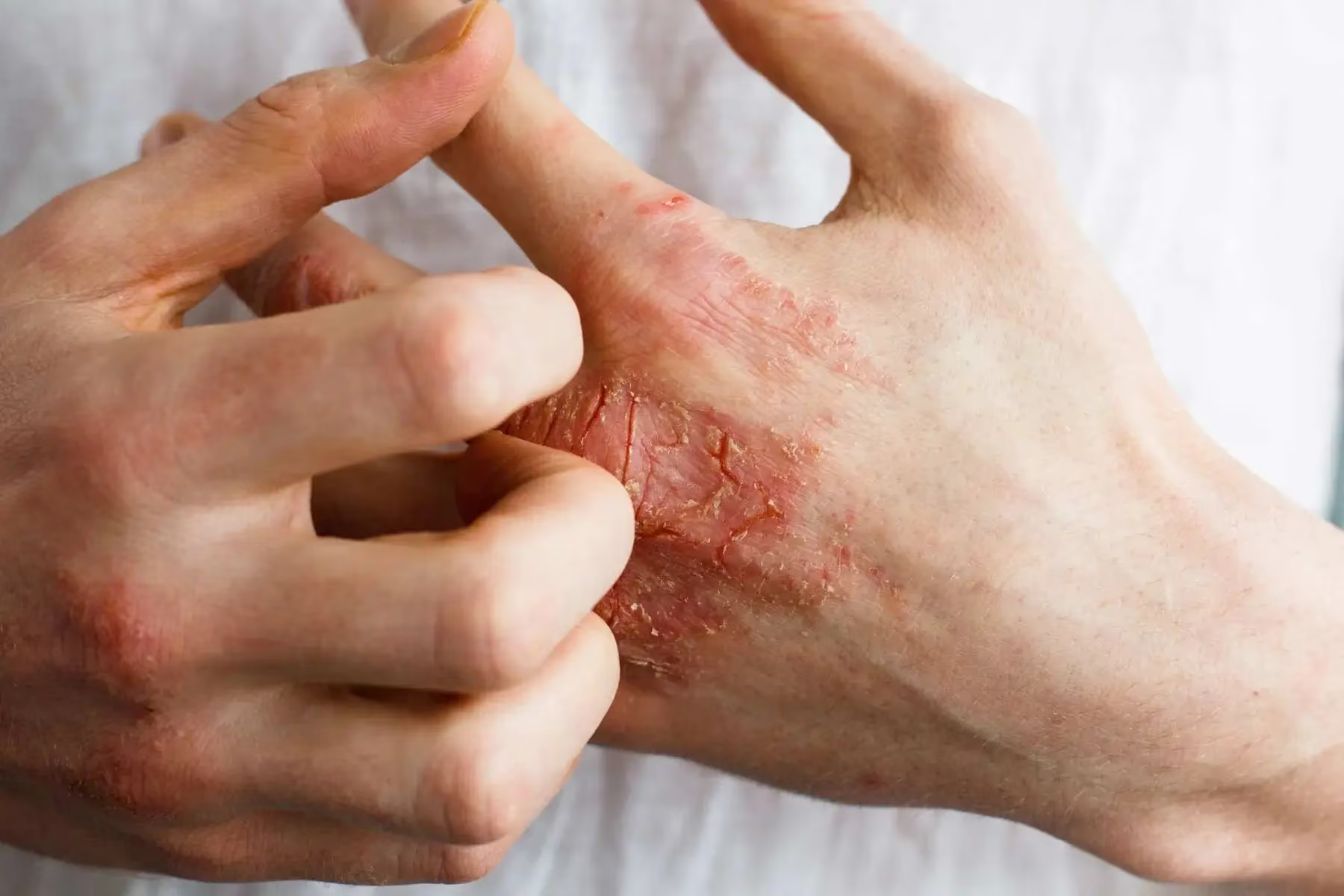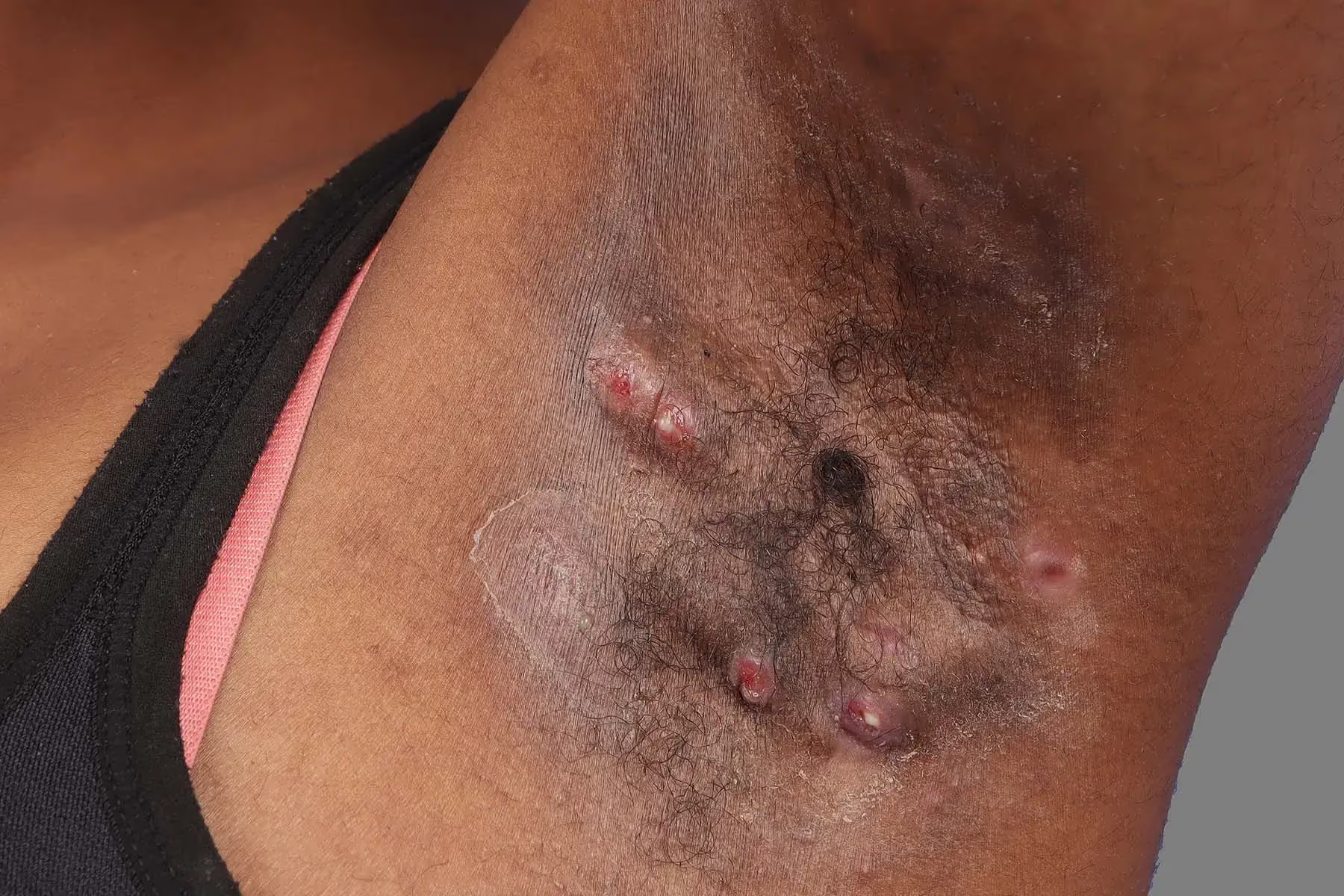
Active clinical trials for eczema, psoriasis, acne, and other skin conditions
Our practice participates in clinical trials for new dermatology treatments, usually sponsored by pharmaceutical companies developing the next generation of therapies. Patients with qualifying conditions can sometimes access these treatments years before they reach the market.
Participation is always voluntary, always reviewed for safety by independent oversight boards, and always separate from your regular care. If you decide not to participate, or if you are not a fit, your normal treatment continues without interruption.
The dermatology medications available today, the biologics that transformed severe psoriasis and eczema care, the newer oral treatments for alopecia and vitiligo, the precision therapies for rare conditions, were all in clinical trials before they became standard care. Every one of those approvals required patients who were willing to participate in research, often years before the treatment was available to the general public.
Our practice participates in research because we believe in the work and because it serves patients who have run out of options with current treatments. The most common reason patients come to us about a trial is because they have a chronic condition that has not responded adequately to anything else they have tried, and they want to know if an investigational treatment might help.
Participating in a trial has real benefits. The treatment itself, if the trial works, can improve a condition that has been difficult to control. Study visits are typically more thorough than standard visits because of the documentation required. Study medications are provided at no cost for the duration of the trial. Modest stipends often cover time and travel.
There are also real considerations. Trial visits take time and require commitment to follow the study protocol. Some trials involve a placebo arm, which means some participants receive an inactive treatment. Most modern trials are designed so that all participants eventually receive the active medication, either during the study or in an open-label extension, but patients should understand the study design before enrolling.
Side effects from investigational medications are monitored closely. Trial participants have more provider contact and more lab monitoring than standard patients, which often leads to earlier detection of any issues. In rare cases, side effects may require stopping the study medication, but participants always retain access to standard care.
If you are interested in whether a current trial might fit your situation, start by mentioning your condition and current treatment at your next visit. Our team can tell you whether any active trials are relevant, explain the commitment involved, and walk you through the screening process if you want to learn more.
Eligibility depends on the specific trial. Most trials have criteria around the condition being studied, its severity, prior treatments, age, and overall health. Active trials in our practice frequently study treatments for atopic dermatitis, plaque psoriasis, hidradenitis suppurativa, alopecia areata, and actinic keratoses, though the specific trials change over time.
If you have a chronic skin condition that has not responded to current treatment options, it is worth asking whether a trial might be a fit.
Some of the medications patients are on today were in clinical trials five years ago. Trial participation sometimes gives patients access to treatments that are not yet commercially available, especially for conditions where current options are limited.
Running clinical trials correctly requires specialized experience. Our team includes a research coordinator who manages study visits, documentation, and communication with sponsors and oversight boards.
Every clinical trial we participate in is reviewed and monitored by an independent institutional review board, as required by federal regulations. Patient safety is the primary concern, and trials with emerging safety signals are paused or modified immediately.
If you are interested in a specific trial, you start with a screening visit that reviews your medical history, examines your condition, and confirms whether you meet the trial criteria. Not every interested patient qualifies, and the screening visit protects patients from being enrolled in studies that would not serve them well.
If you qualify and decide to enroll, the trial schedule varies by study. Typical trials involve a series of visits over a period of weeks or months, often with more frequent follow-up than standard care. Participants often receive the study medication, related supplies, and study visits at no cost, and some trials provide modest stipends for time and travel.
You can withdraw from any trial at any time, for any reason. We never use trials as a substitute for standard care, and your participation does not affect your access to standard treatment before, during, or after the study.
Study-related visits and medications are typically provided at no cost to participants. Some trials also provide stipends for time and travel. Your regular care outside the trial is billed normally to your insurance.
You can withdraw at any time. Your standard dermatology care continues uninterrupted. Some trials also allow switching into an alternative treatment arm during the study.
Some trials include a placebo arm, others do not. The trial team explains the study design, including placebo arms and the odds of being in each arm, before you enroll. Modern trials often include an open-label extension where all participants eventually receive the active treatment.
Mention your condition to your provider at your next visit. Our research team maintains a list of currently enrolling trials and can tell you whether any are a potential fit for your situation.
Please give us a call and we will be happy to answer all your questions or concerns you may have.