Same-day biopsies with in-house pathology and results back in three to five business days
A skin biopsy is a small procedure to remove a piece of skin so it can be examined under a microscope. Biopsies are the standard way dermatologists confirm whether a spot is benign, precancerous, or cancerous. The procedure itself usually takes less than 10 minutes, is done with local anesthesia, and leaves a small scab or stitch depending on the technique used.
We handle biopsies the same day a provider decides one is needed, so you do not have to come back for a separate visit. Our on-site pathology team reviews most biopsies, which keeps the turnaround tight.
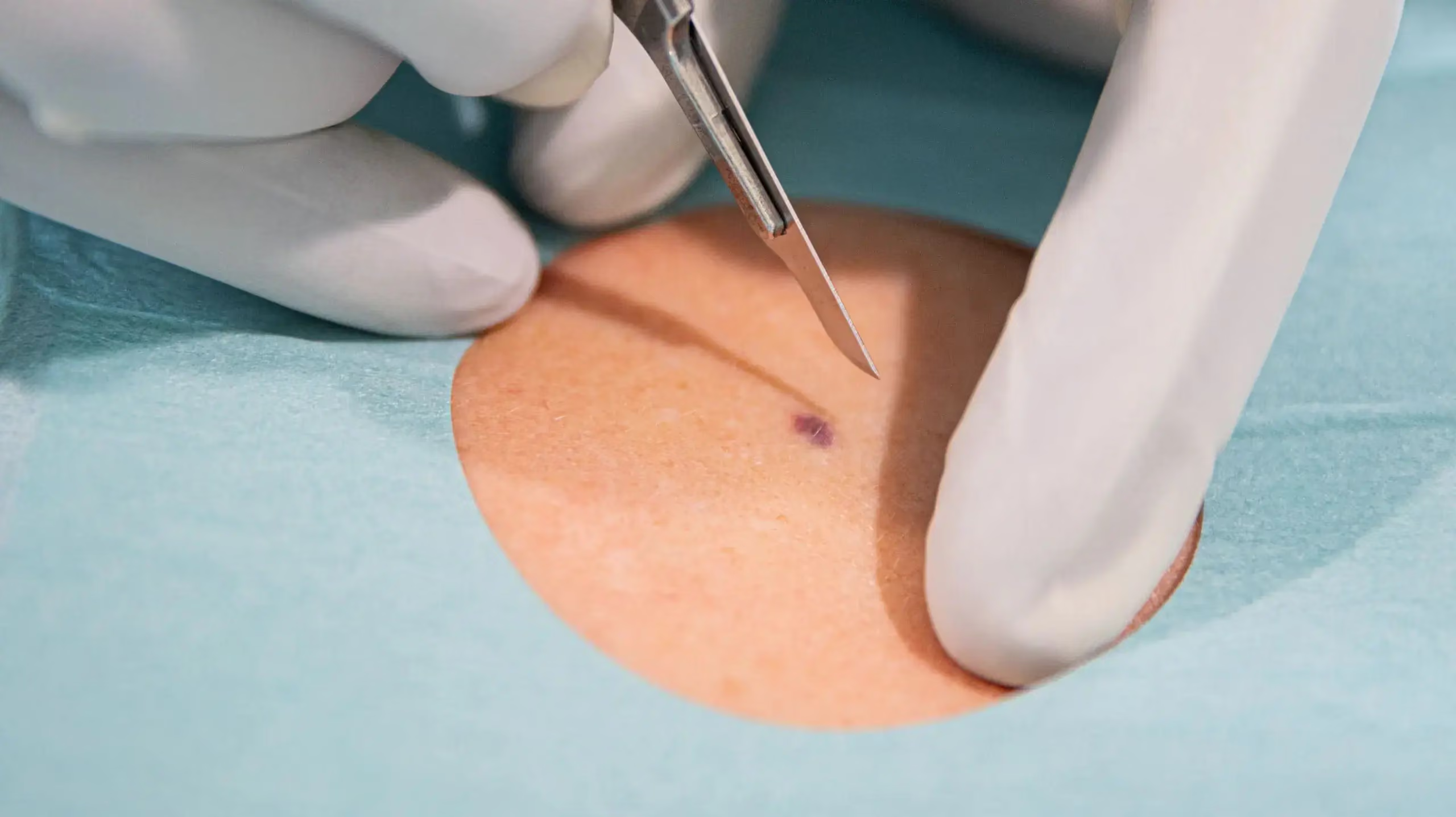
Biopsy results fall into a few broad categories, and what happens next depends on which category your result falls into.
Benign results make up the majority of biopsies we perform. These include common moles, seborrheic keratoses, skin tags, cysts, lipomas, and other harmless growths. For benign results, there is nothing to do unless the spot is bothersome for cosmetic or functional reasons, in which case we can discuss removal at a follow-up visit.
Precancerous results, most often actinic keratoses or atypical moles, require ongoing attention but are not cancer yet. For actinic keratoses, we usually treat the spot with cryotherapy at a follow-up visit and discuss broader field treatment if multiple AKs are present. For atypical moles, we may recommend complete removal if the biopsy only partially removed the lesion, or we may recommend close monitoring with photos at subsequent visits.
Basal cell carcinoma is the most common form of skin cancer we diagnose. Treatment depends on the location and subtype. For small, simple basal cells on the trunk or extremities, a standard excision in the office is often the right approach. For basal cells on the face, ears, scalp, or other cosmetically or functionally sensitive areas, we usually recommend Mohs surgery, which offers the highest cure rate and best cosmetic outcome.
Squamous cell carcinoma is the second most common skin cancer. Treatment is similar to basal cell but with a few differences. Squamous cell on the lips, ears, or in patients with weakened immune systems is treated more aggressively because of higher risk of spread. Superficial squamous cell and squamous cell in situ can sometimes be treated with topical chemotherapy creams rather than surgery.
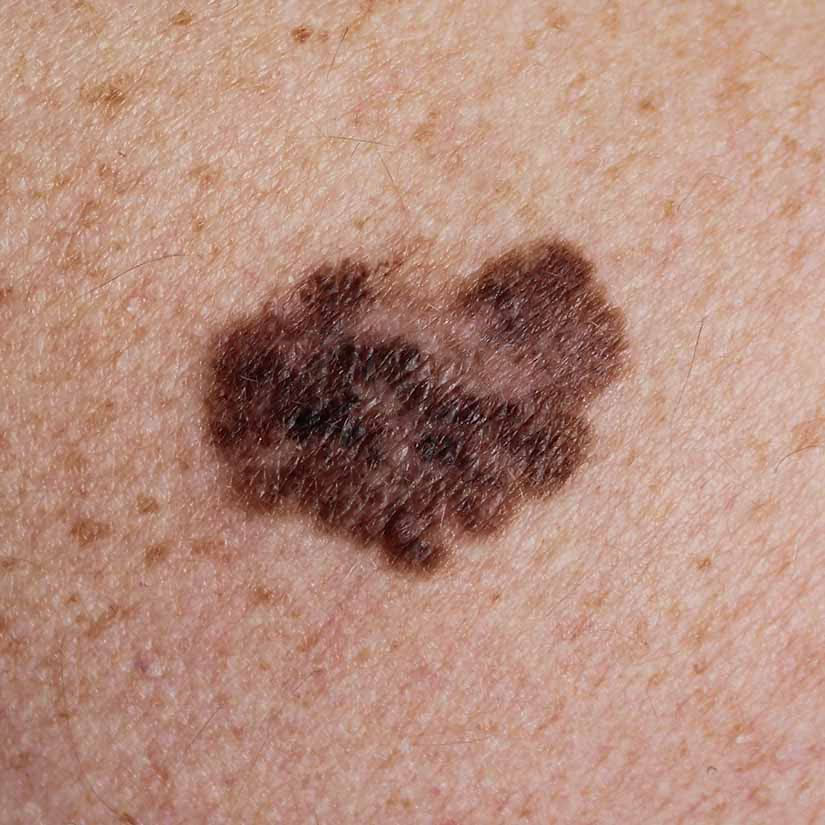
Melanoma is the most serious skin cancer and requires prompt treatment. Early melanoma is usually treated with a wide local excision that removes the melanoma plus a larger margin of surrounding skin. For thicker melanomas, we coordinate with a surgical oncologist and may recommend sentinel lymph node biopsy. Outcomes for early melanoma are excellent, which is why the annual skin exam and biopsy of suspicious spots matter so much.
Inflammatory and infectious conditions make up the rest of biopsy results. If the biopsy confirms something like psoriasis, lupus, lichen planus, or a specific infection, we use that information to tailor treatment.
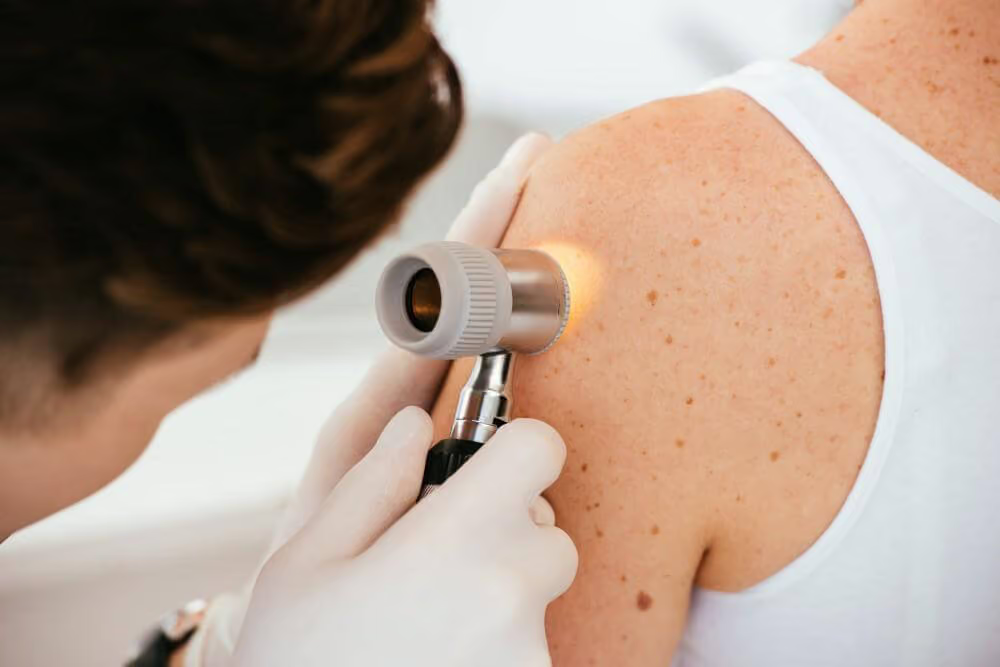
Your provider may recommend a biopsy for any spot that looks suspicious for skin cancer, any rash that has not responded to treatment and could be a specific diagnosable condition, any long-standing lesion that has started to change, or any growth that is unusual for your skin. Patients often come in for what they thought was a routine skin check and leave with one or two small biopsy sites based on what the provider saw.
If you come in specifically because of a spot you noticed, your provider may biopsy it at that visit if it looks suspicious enough. This avoids a second trip.
If your provider recommends a biopsy during your visit, we do it that day. You do not have to reschedule or come back. This cuts the time from concern to treatment by weeks in most cases.
Our pathology team reviews most biopsies on site. Results return in three to five business days. For complex cases that need outside consultation, we coordinate that directly.
You hear back from us directly with the result, not through a voicemail or a portal notification with no context. Your provider walks through what the result means and what the next step is, whether that is nothing, monitoring, or treatment.
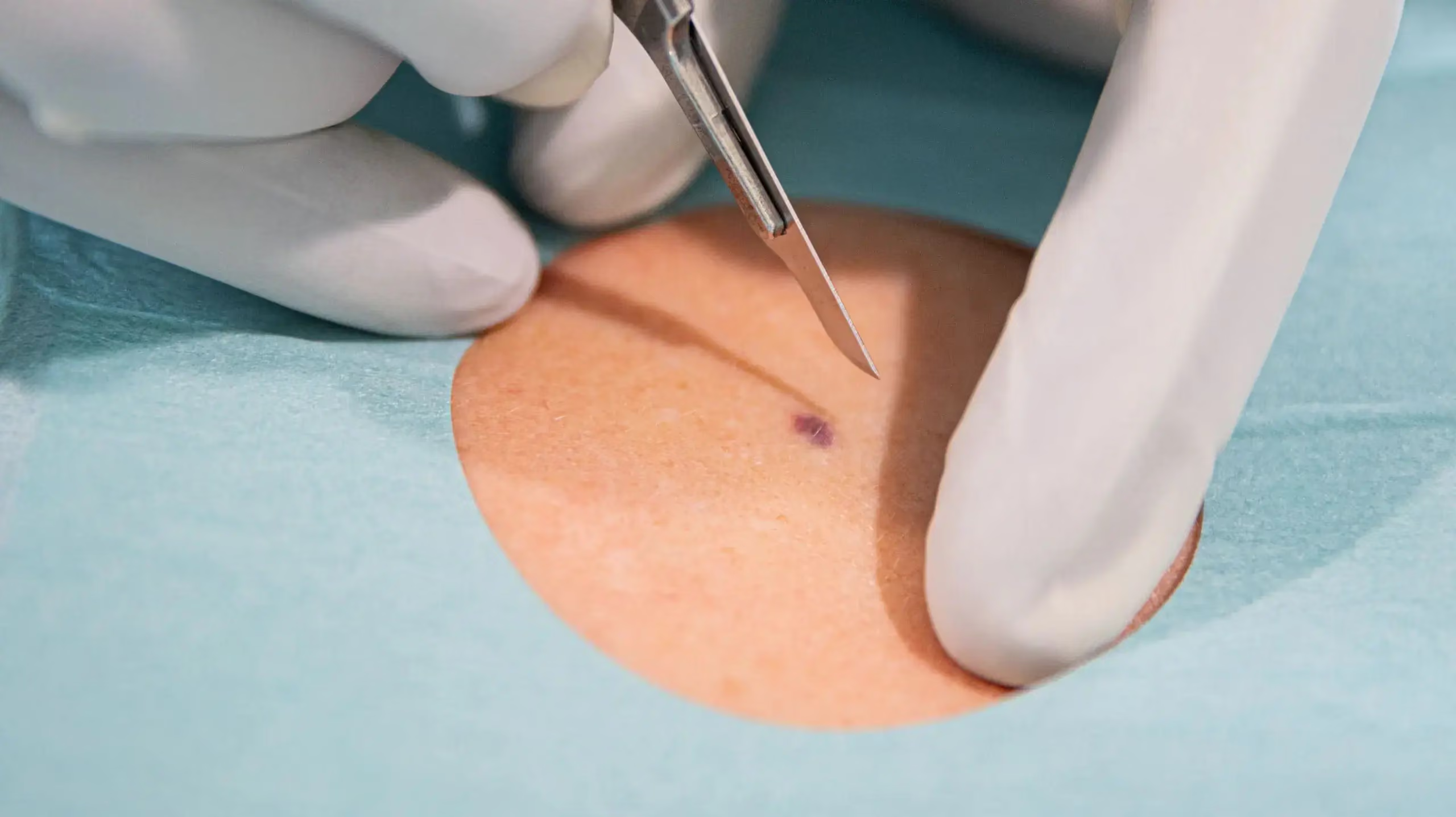
The procedure starts with cleaning the area and injecting a small amount of local anesthetic. You feel a brief pinch and then nothing for the rest of the procedure. The provider removes the sample using one of three common techniques.
A shave biopsy uses a small blade to remove the top layers of a raised spot. This is the most common type for moles and small growths. It leaves a scab that heals over a few weeks with minimal scarring for most patients.
A punch biopsy uses a small circular tool to remove a cylinder of skin all the way through. This is used for deeper lesions or for rashes where the provider wants to see the full thickness of skin. A punch biopsy usually requires one or two stitches and leaves a small linear scar.
An excisional biopsy removes the entire lesion plus a margin of normal skin around it. This is reserved for spots that are highly suspicious for melanoma or that need complete removal regardless of diagnosis. It requires more stitches and a slightly longer recovery.
After the biopsy, you leave with wound care instructions and a plan for follow-up. Results come back in three to five business days. Our team calls you directly with the result and with next steps based on what the pathology shows.
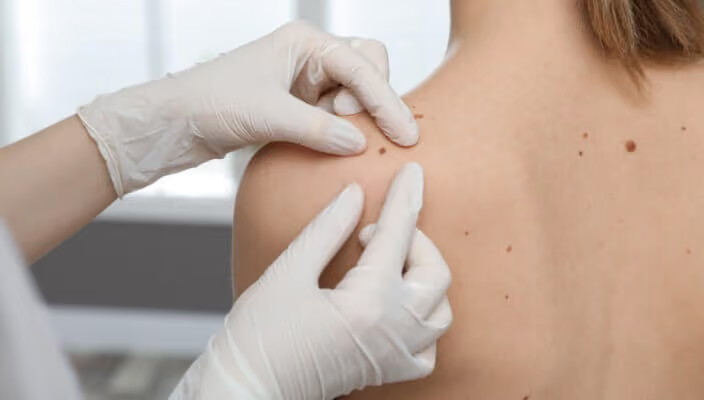
The injection of local anesthesia stings briefly, but the biopsy itself is painless. Most patients are surprised how quick it is.
Most biopsy results come back within three to five business days. Complex cases that need outside consultation may take longer, and we let you know if that is the situation.
Some form of mark is expected. Shave biopsies leave a small, often flat white or pink spot that fades over months. Punch and excisional biopsies leave small linear scars. The location and your skin type affect how visible the final mark is.
If the biopsy shows skin cancer or another condition that needs treatment, your provider calls you directly to discuss results and next steps. Most skin cancer is treatable when caught early, and we move fast on scheduling treatment when needed.
Yes, biopsies are covered by most insurance plans when they are medically necessary, which applies to virtually all biopsies we perform. Our team verifies your coverage before the visit.
Please give us a call and we will be happy to answer all your questions or concerns you may have.