Prescription, topical, and regenerative options for men and women losing hair
Most hair loss responds to treatment when it is started early. The challenge is getting the right diagnosis, picking the right combination of treatments, and sticking with them long enough to see results. Our hair loss program handles all three.
We see men with pattern baldness, women with thinning through the crown, patients with sudden shedding after illness or stress, and cases of scarring alopecia that need urgent treatment. The approach is different for each, and getting the pattern right matters.
Most hair loss in men and women is a form of androgenetic alopecia, commonly called pattern hair loss. It is genetic, progressive, and driven by hormones that gradually miniaturize individual hair follicles until they produce thinner and shorter hairs and eventually stop producing visible hairs at all. The medications that work best for pattern hair loss are the ones that slow or reverse this miniaturization. They do not regrow hair from follicles that are completely gone, which is why early treatment matters.
Finasteride for men blocks the conversion of testosterone to dihydrotestosterone, the hormone that drives male pattern hair loss. It works for most men who stick with it, with noticeable results within six to twelve months. Side effect risk is low but real, and we discuss it honestly before starting. Dutasteride is a stronger related medication sometimes used when finasteride is not enough.
Minoxidil is the other workhorse. Applied topically once or twice daily, or taken orally at low doses off-label, minoxidil extends the growth phase of hair follicles and improves density for most patients. It works for men and women across most patterns of hair loss. The oral low-dose form is increasingly popular because it is easier to be consistent with than the topical.
Spironolactone is commonly used for female pattern hair loss, especially in women with underlying hormonal drivers. It blocks androgen activity and can significantly improve density in women with hormone-sensitive hair loss. It is not used in men because of hormonal side effects.
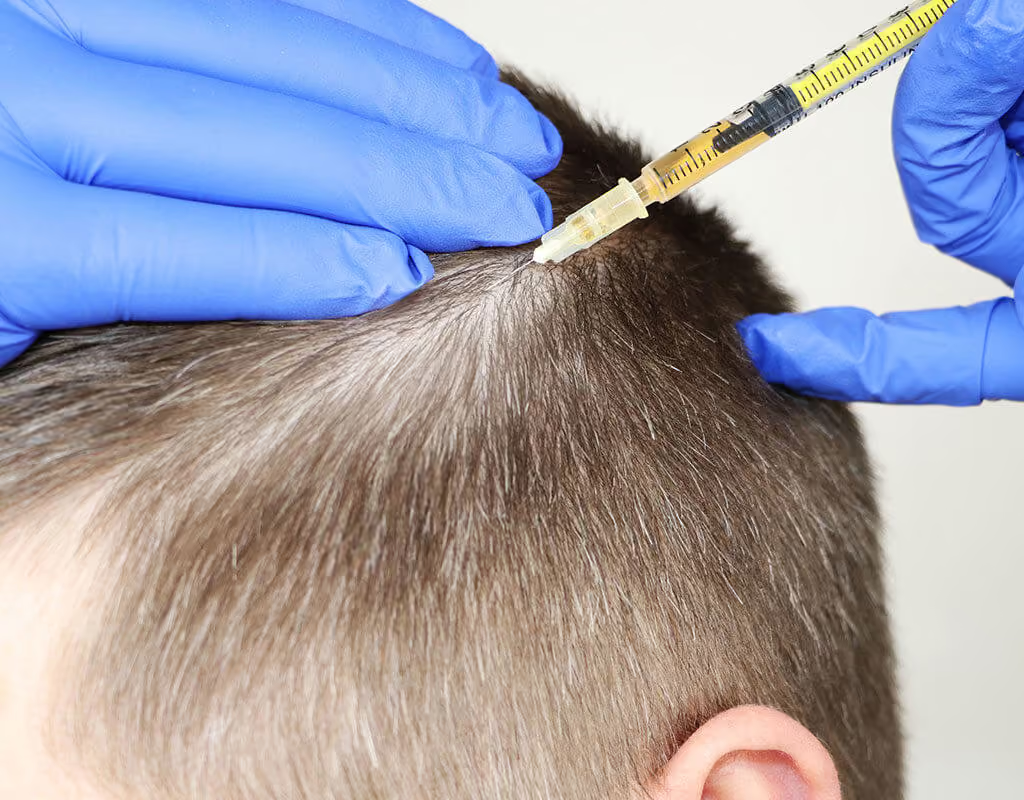
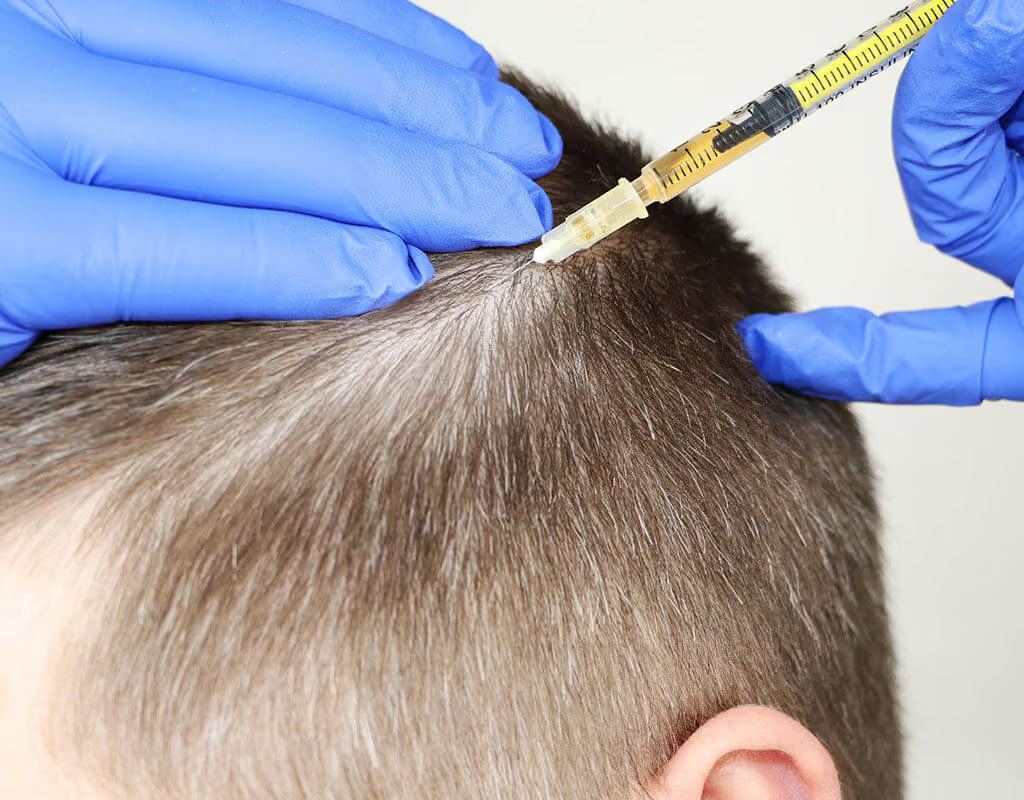
PRP hair restoration uses platelet-rich plasma drawn from your own blood and injected into the scalp to stimulate hair follicles. Evidence for PRP has grown steadily over the past decade, and for patients who respond it adds noticeable density improvement beyond what medications alone provide. Typical protocol is three initial sessions spaced one month apart, then maintenance every three to six months.
Supplements like Nutrafol combine vitamins, minerals, and plant-based compounds that support hair health. They are not a substitute for prescription medication in pattern hair loss, but for some patients they provide modest improvement and reduce the feeling of helplessness between other treatments.
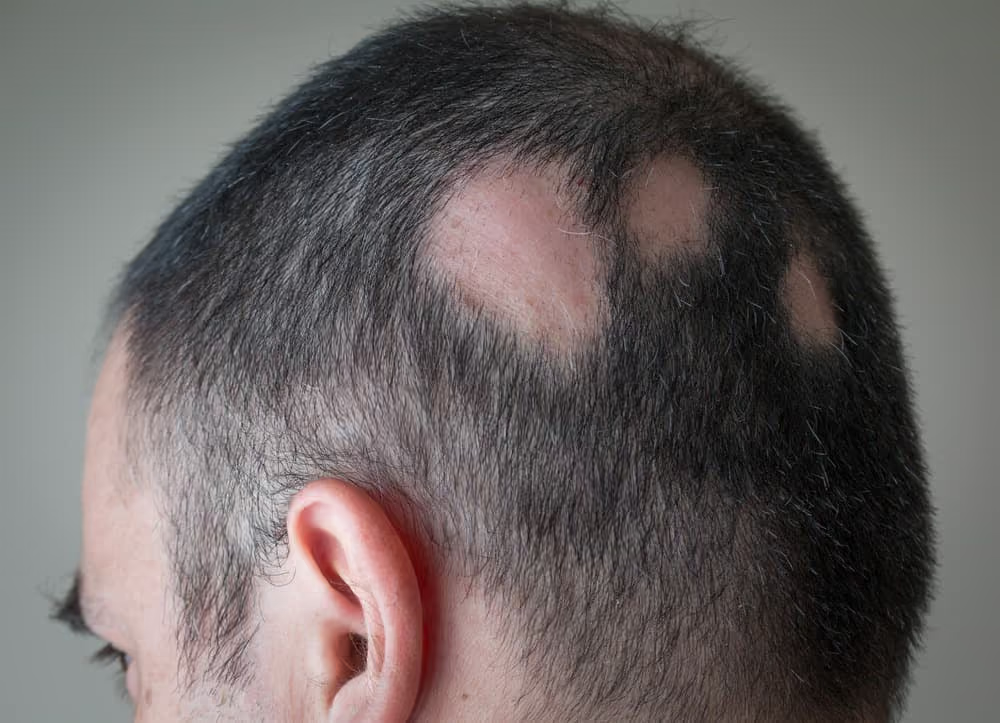
Other forms of hair loss exist and need different treatment. Telogen effluvium is sudden shedding triggered by stress, illness, childbirth, or major weight loss, and it usually resolves on its own within six to nine months. Alopecia areata is patchy hair loss driven by immune attack and now has new oral JAK inhibitor treatments that are highly effective. Traction alopecia is caused by tight hairstyles and reverses if caught early. Scarring alopecias like lichen planopilaris, frontal fibrosing alopecia, and central centrifugal cicatricial alopecia need quick diagnosis and aggressive treatment to prevent permanent loss.
The right plan matches the right diagnosis. That is what the first visit is for.
Come in if you are noticing more hair in the drain or on your pillow, if your part is widening, if your hairline is receding, or if patches of hair have fallen out. Earlier is better. Treatments that work well for early to moderate hair loss are less effective once significant density has been lost, so waiting and hoping it reverses is usually the wrong call.
Patients in their twenties just starting to notice thinning have real options. So do patients in their fifties dealing with a progressive pattern that has been going on for years. Either end of the spectrum is worth exploring.
Most clinics offer one or two hair loss options. We offer prescription medications, topicals, supplements, and PRP under one roof, with one provider coordinating the plan. That means fewer wasted months trying things in the wrong order.
Hair changes slowly. At every visit we take standardized photos so we can compare objectively over six, twelve, and eighteen months. Most patients cannot tell from the mirror whether they are improving. The photos tell the truth.
Scarring alopecia is the kind of hair loss where follicles are permanently destroyed. It needs rapid treatment to stop progression. We screen for it at every hair loss visit because time matters when it is present.
The first visit starts with a detailed history. How long you have been noticing it, family history of hair loss, current medications, any recent illness or major stress, diet and supplement use, and any scalp symptoms like itching or burning. Then we examine your scalp closely, sometimes with a handheld dermatoscope called a trichoscope, to see the density and pattern.
For most patients, no blood work or biopsy is needed. For some patterns, especially in women or in patients with scalp symptoms, we order labs to check for thyroid function, iron, vitamin D, and hormonal markers. In rare cases we do a small scalp biopsy to distinguish between pattern hair loss and less common conditions like scarring alopecia.
The plan typically includes one or more of these options. Minoxidil, which is topical, over the counter, and works for most patterns. Finasteride or dutasteride, which are oral prescriptions that block the hormone driving male pattern hair loss. Spironolactone for female pattern hair loss with hormonal drivers. Nutrafol or similar supplements for patients who prefer a non-prescription adjunct. PRP hair restoration injections every one to three months for patients who want a more active approach.
Six to twelve months for most treatments. Hair grows slowly, and the first sign of response is usually reduced shedding, then stabilized density, then improved density. Patience is a real part of the plan.
PRP is not covered by insurance because it is considered cosmetic for hair restoration. Cost varies by session count. We provide a written quote at consultation.
For most men, finasteride is well tolerated. A small percentage experience sexual or mood side effects that usually resolve when the medication is stopped. We discuss the risk honestly before starting, and we stop if you experience side effects.
Yes, and combining usually works better than any single treatment alone. A typical plan might include oral finasteride, topical minoxidil, Nutrafol supplements, and periodic PRP. We match the combination to your goals and budget.
Sudden shedding usually indicates telogen effluvium, which is reactive to a trigger like illness, medication, or major stress. We look for the trigger, address it if possible, and most patients recover within six to nine months. We treat actively if shedding persists.
Please give us a call and we will be happy to answer all your questions or concerns you may have.