Hair Loss (Alopecia)

Comprehensive Treatment for All Types of Hair Loss

Medical Dermatology
Overview

Hair loss affects roughly 80 million Americans and shows up in many forms. Some patterns are gradual and predictable, others come on suddenly, and some leave permanent scarring if not treated early. Getting the right diagnosis matters because treatment is very different for androgenetic alopecia, alopecia areata, telogen effluvium, and the scarring alopecias.

At Cleaver Dermatology and Aesthetics, our board-certified dermatologists evaluate hair loss with scalp examination, dermoscopic trichoscopy, and targeted blood work, then build a treatment plan around your specific diagnosis. Care is available at all nine of our offices across North Georgia and Metro Atlanta. New therapies, including FDA-approved oral JAK inhibitors for severe alopecia areata, have meaningfully changed what is possible.

Treating hair loss is most effective when it begins early, before follicles are lost permanently. If you have noticed thinning, increased shedding, or a bald patch, it is worth being seen.
Common Symptoms

Androgenetic alopecia, or pattern hair loss, is the most common form. In men it usually shows up as recession of the hairline at the temples and thinning at the crown. In women it appears as widening of the central part with preservation of the frontal hairline, often described as a Christmas tree pattern.

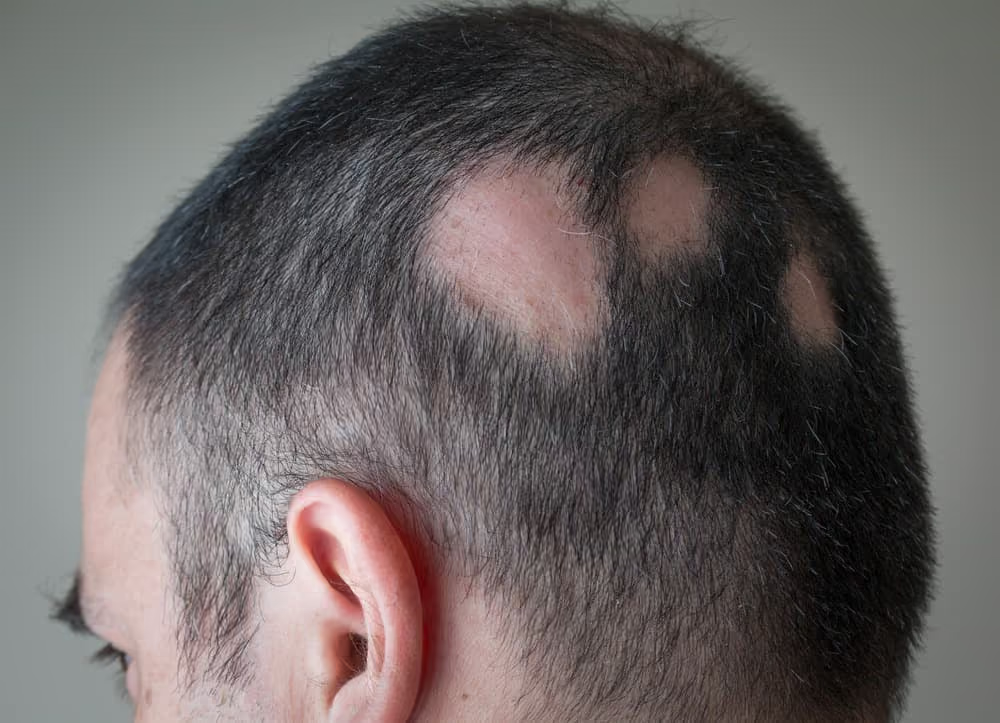
Alopecia areata produces sudden, well-defined round or oval patches of complete hair loss, most often on the scalp but possible on the eyebrows, eyelashes, beard, or body. Telogen effluvium causes diffuse, increased shedding two to four months after a triggering event such as illness, surgery, childbirth, severe stress, rapid weight loss, or thyroid changes. Scarring alopecias such as frontal fibrosing alopecia, lichen planopilaris, and central centrifugal cicatricial alopecia destroy the follicle and leave smooth shiny skin behind. Recognizing scarring patterns early is critical because lost follicles do not regrow.

Common Causes

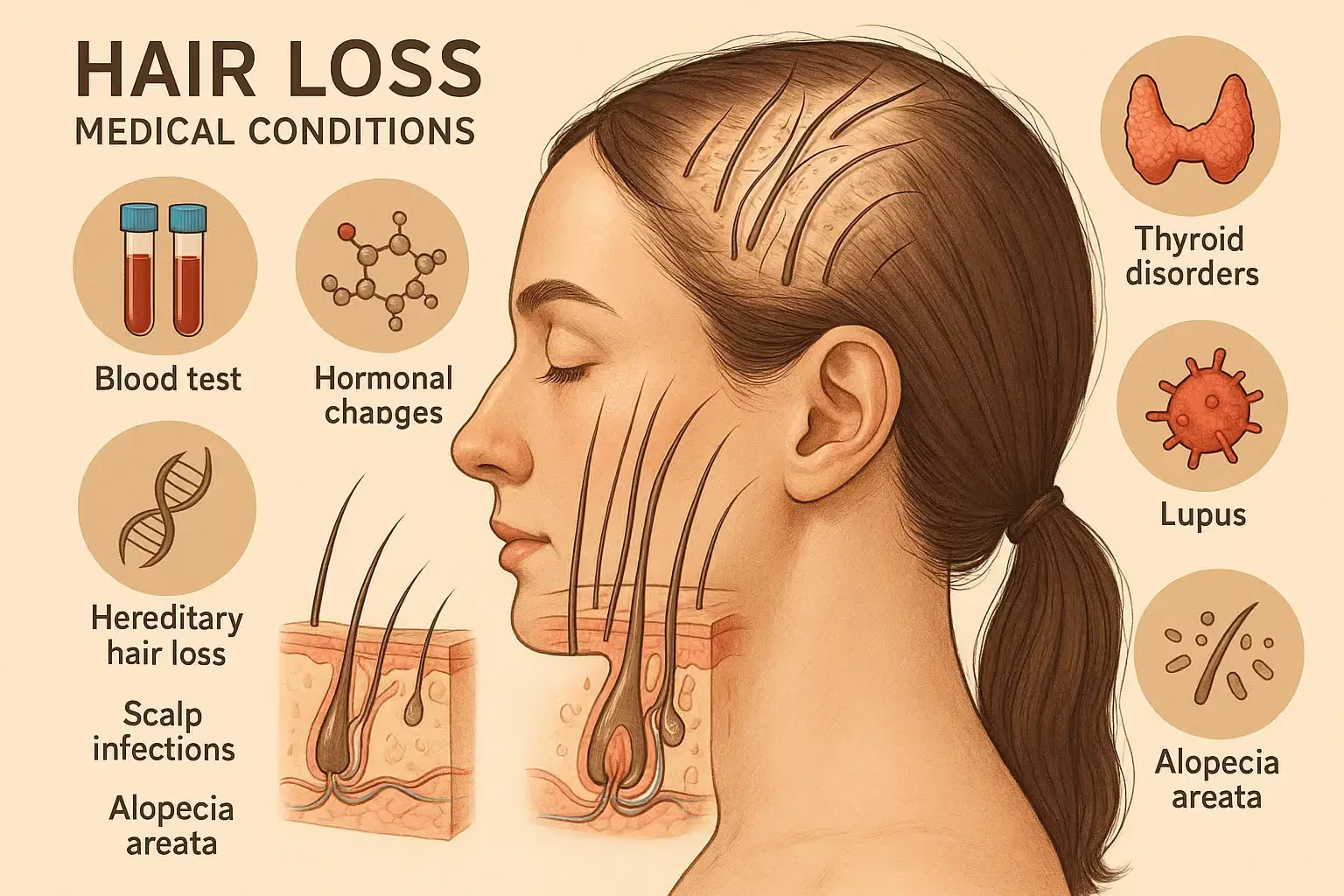
Androgenetic alopecia is driven by genetic sensitivity of hair follicles to dihydrotestosterone (DHT). It is hereditary on both sides of the family, not just the maternal side as the old myth suggests. Alopecia areata is an autoimmune condition in which the immune system attacks hair follicles. It often runs alongside other autoimmune conditions such as thyroid disease, vitiligo, and atopic dermatitis.

Telogen effluvium is triggered by physiologic stress that pushes a large fraction of hairs into the shedding phase at once. Common triggers include high fevers, surgery, postpartum hormone shifts, thyroid disease, iron deficiency, vitamin D deficiency, rapid weight loss, and starting or stopping certain medications. Scarring alopecias have inflammatory and sometimes autoimmune drivers and are more common in certain ethnic groups, such as central centrifugal cicatricial alopecia in women of African ancestry.

Treatment Options

For androgenetic alopecia, topical minoxidil 5 percent applied daily is the first-line over-the-counter option for both men and women. Oral minoxidil at low doses, taken daily, has become a popular and effective alternative when topical use is not tolerated. Finasteride 1 mg daily is FDA-approved for men and works by lowering DHT, with most users seeing improvement by six months. Spironolactone is a common option for women, especially when there are signs of hormonal imbalance.

For alopecia areata, treatment depends on extent. Limited disease responds well to intralesional triamcinolone injections every four to six weeks. Topical and oral steroids, topical immunotherapy with diphencyprone, and topical JAK inhibitors are options. For severe alopecia areata, alopecia totalis, or alopecia universalis, oral JAK inhibitors such as baricitinib (Olumiant), ritlecitinib (Litfulo), and deuruxolitinib (Leqselvi) are FDA-approved and produce significant regrowth in many patients.

Telogen effluvium treatment focuses on identifying and correcting the trigger. Iron, ferritin, thyroid panel, vitamin D, and zinc levels are commonly checked. Once the trigger is addressed, hair regrows over six to twelve months, although the visible recovery feels slower because hair grows only about half an inch a month.

Platelet-rich plasma (PRP) injections are an option for androgenetic alopecia, with treatment courses of three to four monthly sessions and maintenance every four to six months. For scarring alopecias, the priority is calming inflammation as quickly as possible with topical and intralesional steroids, hydroxychloroquine, or other immune-modulating medications. Hair transplant surgery is considered for stable pattern hair loss after medical therapy is optimized.

What to Expect During Treatment

Your first visit includes a focused history covering when shedding started, family history, medical conditions, medications, hairstyling habits, and recent stressors. We examine the scalp using trichoscopy to look at hair shaft caliber, follicular openings, scaling, and signs of scarring. A small scalp biopsy is sometimes needed when scarring or unusual patterns are suspected.

Most regrowth treatments take three to six months to show meaningful change, and a full year for the strongest result. The most common reason patients are disappointed is stopping treatment too early. Photographs at each visit help us track progress objectively.

Maintenance is typically lifelong for androgenetic alopecia, since stopping medication causes gradual return of the hair loss. We work with you to find the simplest sustainable regimen.

When to See a Dermatologist

Make an appointment if you notice a sudden bald patch, increasing shedding for more than three months, widening of your part, recession of the temples, scarring or smooth shiny patches on the scalp, redness or itch on the scalp with hair loss, or hair loss accompanied by other symptoms such as fatigue, weight changes, or menstrual irregularity. Loss of eyebrows or eyelashes also warrants evaluation.

Scarring alopecias in particular are time-sensitive. The earlier we calm inflammation, the more follicles we save.

Prevention and Self-Care

Be gentle with your hair. Avoid tight ponytails, braids, weaves, and extensions that pull on the frontal and temporal hairline, since traction alopecia can become permanent. Limit high heat styling, let hair air dry when possible, and use a wide-tooth comb on wet hair. If you chemically relax or dye your hair, space treatments out and use a trusted stylist.

Eat a balanced diet with adequate protein, iron, and vitamin D, and treat any deficiencies your doctor identifies. Manage stress and sleep, since high physiologic stress is a common telogen effluvium trigger. Do not waste money on shampoos or supplements promising regrowth without evidence; the treatments that actually work are the ones above.

FAQs

Is hair loss permanent?

This depends on the type and cause of hair loss. Androgenetic alopecia (pattern hair loss) is permanent without treatment but can be managed or slowed with medication. Alopecia areata may regrow spontaneously or with treatment. Telogen effluvium is temporary and resolves when the trigger is removed. Scarring alopecia causes permanent hair loss in affected areas.

When should I start treatment for hair loss?

Starting treatment early provides the best outcomes. Early intervention can slow or prevent further hair loss and may regrow lost hair. If you notice unusual hair loss, see a dermatologist promptly. Waiting often results in more extensive hair loss requiring more aggressive treatment.

Can women use finasteride?

Finasteride is not recommended for women of childbearing age due to potential birth defect risks. However, postmenopausal women can use finasteride. Spironolactone is often a better choice for women with pattern hair loss or hormonal alopecia.

How long does hair regrowth take?

Hair regrowth is a slow process taking 3-6 months to become noticeable and 6-12 months for significant results. Consistent treatment is essential. The natural hair growth cycle must complete before results appear.

Are there side effects with hair loss medications?

Minoxidil may cause scalp irritation initially. Finasteride may cause sexual side effects in some men. Spironolactone requires monitoring of potassium levels. JAK inhibitors like baricitinib are generally well-tolerated. Your dermatologist will discuss potential side effects and monitor your response.

Menu