Prescription-strength treatment plans for every pattern, from mild comedonal to cystic
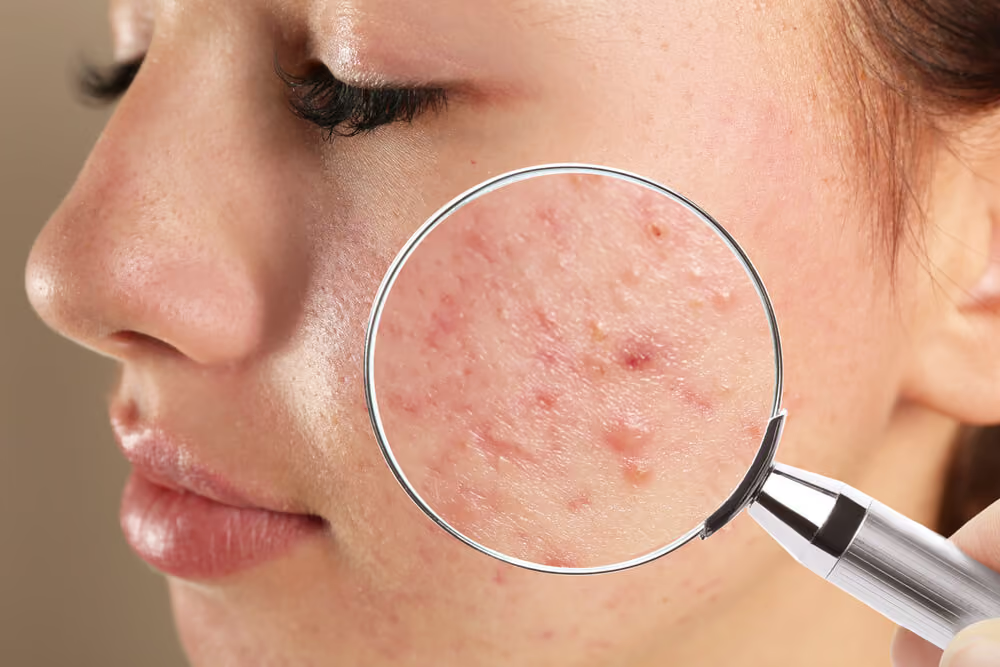
Acne is caused by a combination of oil, bacteria, dead skin cells, and inflammation. A single product almost never addresses all four drivers, which is why most over-the-counter routines stall out around week six. Our acne program builds a regimen that hits every driver, adjusted for the pattern of breakouts you actually have.
Most patients see real improvement within six to eight weeks of starting the right plan. If nothing has changed by then, we adjust.

Comedonal acne, the whiteheads and blackheads pattern, responds best to a topical retinoid used consistently at night. Retinoids unclog pores and prevent new ones from forming, but they take three to four months to reach full effect. We usually pair them with a gentle cleanser, a non-comedogenic moisturizer, and a daily mineral sunscreen because retinoids increase sun sensitivity.
Inflammatory acne, the red and angry pimple pattern, requires the retinoid plus something that fights bacteria and inflammation. Benzoyl peroxide is the first addition for most patients. If that is not enough, we add a topical antibiotic. If that is not enough, we add an oral antibiotic for a defined window, typically three to six months. Oral antibiotics are effective but we taper them off once skin is stable because long-term use is not ideal.
Hormonal acne, the jawline and chin pattern that flares around cycles, often responds best to systemic hormonal therapy. For appropriate patients, that means a combined oral contraceptive or spironolactone. Spironolactone is used off-label for acne and works well for many adult women with persistent hormonal breakouts. We discuss the tradeoffs and monitoring needed before starting.
Nodulocystic and severe acne, where deep painful cysts form and scarring is likely, is where isotretinoin shines. Most patients complete a four to six month course and experience long-term remission. Isotretinoin has real side effects and strict monitoring, especially for women of childbearing age, but for the right patient it is the treatment that actually solves the problem. We walk you through every aspect of treatment before starting.
Adult acne in patients over 25 often has elements of multiple patterns. It is also more likely to be driven by stress, sleep disruption, skincare product overuse, or undiagnosed hormonal conditions like polycystic ovarian syndrome. We ask about all of these in the first visit and adjust the plan accordingly. Adult acne usually takes slightly longer to respond than teen acne, but the results are durable when we find the right approach.
Back and chest acne, truncal acne, is often underdiagnosed because patients do not mention it. If you have breakouts below the neck, bring it up. Truncal acne responds to the same general approaches as facial acne, but the products we use are often different because the skin on the body is thicker and tolerates stronger treatment.
Book this visit if you have been dealing with breakouts that have not cleared with over-the-counter products after two or three months of consistent use. It is especially worth it if you have deep, painful cysts, if your skin scars or marks easily, if your acne comes back every time you stop treatment, or if the breakouts are on your back or chest as well as your face.
We see teenagers, young adults, adults with hormonal acne, and men and women in their thirties and forties whose acne came back unexpectedly. The treatment approach is different for each.
We build plans around the type of acne you have, not the newest product on the shelf. A hormonal pattern gets a hormonal approach. An inflammatory pattern gets anti-inflammatory support. A comedonal pattern gets a retinoid-first regimen.
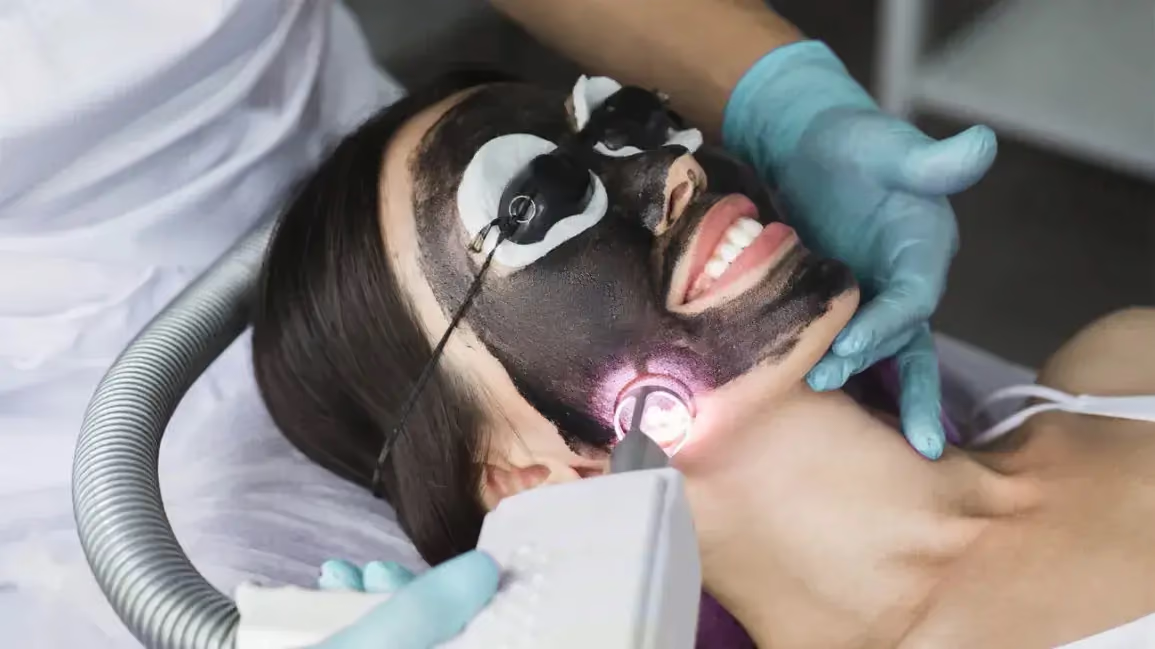
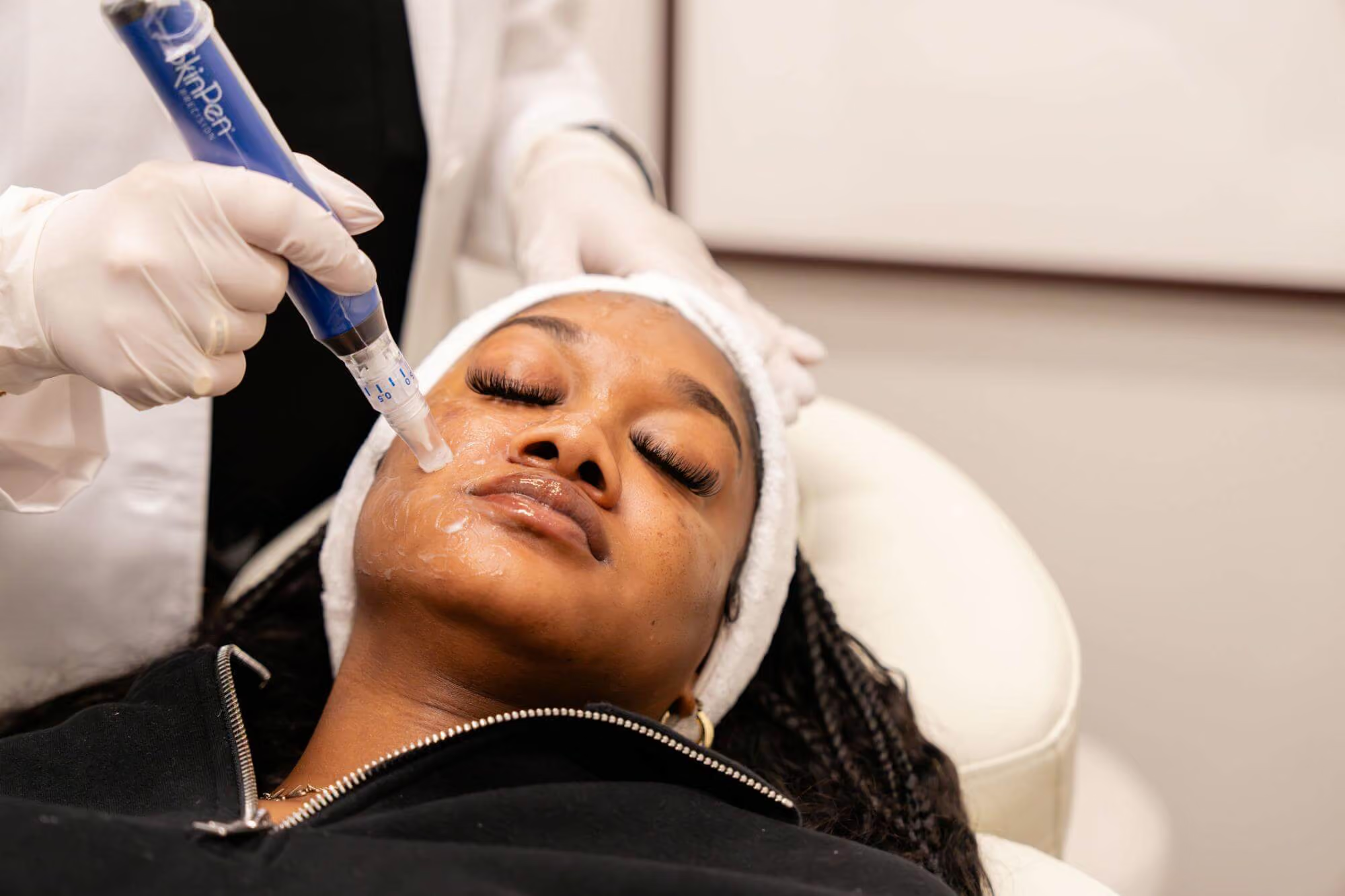
We treat acne fast to keep marks from turning into permanent scars. For patients who already have scarring, we offer microneedling, chemical peels, and laser treatments as a second-phase step once the active breakouts are under control.
Isotretinoin is highly effective for severe or scarring acne and we prescribe it when it is the right call. We also tell you honestly when your case does not need it, which most cases do not.
The first visit is about understanding your specific acne pattern. Your provider looks at what kinds of breakouts you get, where they show up, what makes them worse, what you have already tried, and how your skin tolerates different products. We usually take progress photos so we can objectively track improvement visit over visit.
The plan is usually three to four products and, for moderate or severe cases, an oral medication. We explain how each one works and when you should expect to see it doing its job. Typical cadence is a follow-up at six weeks, another at three months, and longer intervals after that if the plan is holding.
For stubborn or severe cases, we discuss oral options including spironolactone, hormonal approaches, or isotretinoin. We do not push strong medications unless they are clearly the right call.
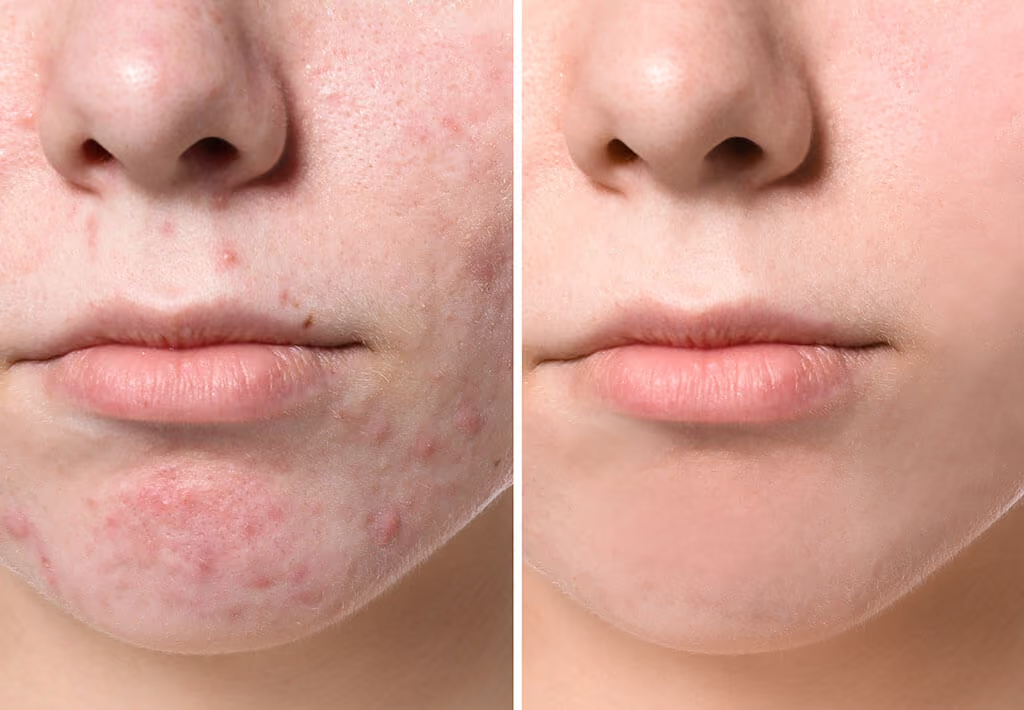
Most patients see visible improvement within six to eight weeks. Full clearing usually takes three to four months. If nothing has changed by week eight, we adjust the plan at the follow-up visit.
Medical acne visits are covered by most major insurance plans. Prescription medications are usually covered as well, though some newer topicals may have copay assistance programs we can help with. Our team verifies coverage before your visit.
Yes, with a few adjustments. Look for makeup labeled non-comedogenic, remove it completely each night before applying your evening routine, and avoid heavy foundations during the first few weeks of treatment when skin can be more sensitive.
Scar treatment is a second phase after we calm active breakouts. Options include microneedling with PRP or exosomes, fractional laser resurfacing, and chemical peels. We sequence the plan so scarring treatments happen when they will actually stick.
Isotretinoin is a serious medication with real side effects and strict monitoring requirements. It is also the most effective acne treatment we have for severe or scarring cases. We use it when it is clearly the right call and walk you through the entire process before starting.
Please give us a call and we will be happy to answer all your questions or concerns you may have.