

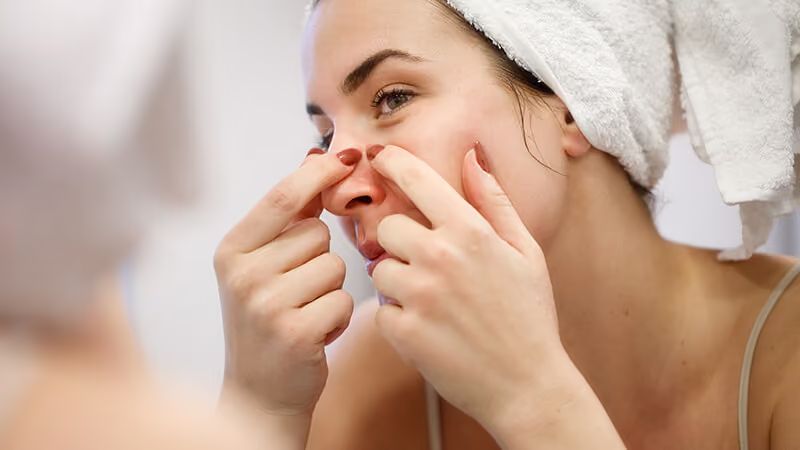
Let's just get this out of the way: you already know you're not supposed to pop your pimples. You've heard it a hundred times, probably from your parents, definitely from the internet, and maybe even from a dermatologist at some point. And yet here you are, standing in front of the bathroom mirror with a glaring whitehead on your chin and a very strong urge to do something about it right now, consequences be damned.
We get it. The temptation to pop a pimple is one of the most universal human experiences, right up there with hitting snooze and eating the last piece of pizza. There's something deeply satisfying about the immediate relief, the sense of control, and the illusion that you've solved the problem. The trouble is that most of the time, popping a pimple doesn't solve the problem. It makes it worse, sometimes much worse, in ways that aren't obvious until days or weeks later when you're left with a dark mark, a scar, or a spot that's even more inflamed than it was before you touched it.
At Cleaver Dermatology & Aesthetics, our providers treat the aftermath of DIY pimple popping every single day across our North Georgia locations. We're not here to shame you for doing it. We're here to explain exactly why it's such a bad idea, what actually happens when you pop a pimple, and what you should do instead if you want your skin to heal faster and look better in the long run.
A pimple forms when a pore becomes clogged with a combination of dead skin cells, oil, and bacteria. The body recognizes this as a problem and sends white blood cells to the area to fight the bacteria, which is what creates the inflammation, redness, and pressure that make the pimple noticeable in the first place. When a pimple comes to a head, meaning it develops a white or yellow center of pus, that's a sign that the body is actively working to expel the infection and resolve the situation on its own.
When you pop a pimple, especially one that hasn't fully come to a head, you're forcibly rupturing that pocket of bacteria, pus, and inflammatory material. Sometimes it comes out cleanly onto the surface of the skin, which is what gives you that brief sense of satisfaction. But more often than you realize, some or all of that material gets pushed deeper into the skin or spreads laterally into the surrounding tissue. What was a localized infection in one pore can now become a larger area of inflammation affecting multiple pores, which is exactly why a pimple you squeezed often looks angrier, redder, and more swollen the next day instead of better.
Your hands and fingers, no matter how clean you think they are, also introduce new bacteria to an already compromised area. The skin around a pimple is inflamed and vulnerable, and breaking the surface creates an open wound that is now exposed to whatever was on your hands, under your nails, or on the towel you used to wipe your face afterward. Infection is a real risk, and infected pimples are not only more painful and longer-lasting but also far more likely to scar.
The type of pimple you're dealing with matters enormously when it comes to the consequences of popping it. A small whitehead that has fully come to a head and is sitting right at the surface is the least risky thing you could pop, though even that carries risk. The pimples that cause the most damage are the ones people are most tempted to mess with: the deep, painful cystic lesions that sit under the skin and never develop a visible head.
Cystic acne occurs deeper in the skin than surface-level pimples, and the inflammation is more severe, more widespread, and more likely to cause permanent scarring even without any squeezing. When you try to pop a cystic pimple, which many people do out of sheer frustration because it hurts and nothing else seems to be working, you're applying pressure to an area that has no clear exit point. The result is almost always worse inflammation, a longer healing time, and a much higher likelihood of leaving behind a dark mark or an indented scar.
Blackheads and whiteheads, which are technically called comedones, are less inflammatory than full-blown pimples and can sometimes be extracted safely with the right tools and technique. But doing it yourself at home, particularly with your fingernails or without proper sanitation, still carries a meaningful risk of damaging the pore, introducing bacteria, or causing post-inflammatory hyperpigmentation.
The immediate consequence of popping a pimple is usually more redness and swelling, which is annoying but temporary. The longer-term consequences are what dermatologists see patients struggling with long after the original pimple is gone. Post-inflammatory hyperpigmentation, often called PIH, is the flat, dark mark that lingers after a pimple heals. It's not a scar in the traditional sense because there's no texture change, but it can take months to fade on its own, and in deeper skin tones, it can last even longer.
PIH is caused by the skin producing excess melanin in response to inflammation, and the more you traumatize a pimple by picking, squeezing, or popping it, the more likely you are to develop a dark mark afterward. For many people, particularly those with medium to dark skin tones, the dark spots left behind by acne are more distressing than the acne itself, and they're far harder to treat than the original breakout would have been.
Atrophic scarring, the pitted or indented marks that create permanent texture changes in the skin, is the other major consequence of aggressive or repeated pimple popping. These scars form when the inflammation from a pimple damages the collagen and elastin in the deeper layers of the skin, and the skin heals with a depression rather than returning to a smooth, even surface. Once atrophic scars have formed, they don't go away on their own. They require professional treatment with lasers, microneedling, or other resurfacing procedures to improve their appearance, and even then, complete correction is not always possible.
If popping isn't the answer, what are you supposed to do when a pimple shows up at the worst possible time and you need it gone as quickly as possible? The honest answer is that there is no magic trick that will make a pimple disappear overnight, but there are things you can do that will help it heal faster, reduce inflammation, and minimize the risk of scarring or dark spots.
Spot treatments containing benzoyl peroxide or salicylic acid can help reduce bacteria and encourage the pimple to resolve more quickly when applied directly to the affected area. A small dab of benzoyl peroxide before bed can make a noticeable difference by morning, though be careful not to overdo it, as too much can irritate the surrounding skin and make redness worse.
Hydrocolloid pimple patches, which are small adhesive stickers designed to absorb fluid and protect the pimple from bacteria and picking, have become enormously popular for good reason. They create a moist healing environment that encourages the pimple to drain naturally without the trauma of squeezing, and they physically block you from touching or picking at the area. Many patients find that wearing a patch overnight helps a whitehead resolve faster and with far less risk of a lasting mark.
Ice can help reduce swelling and numb the pain of a particularly large or inflamed pimple. Wrap an ice cube in a clean cloth and hold it against the pimple for a few minutes at a time. This won't make the pimple disappear, but it can take down some of the redness and inflammation, making it less noticeable while it heals.
For patients dealing with frequent or severe acne, professional treatment is genuinely the best path forward. At Cleaver Dermatology & Aesthetics, our providers can prescribe stronger topical treatments, oral medications, or recommend in-office procedures that address acne at the source rather than forcing you to manage each individual pimple as it appears.
There is a place for pimple extraction, but it belongs in a dermatologist's office, not in your bathroom. Professional extractions performed by a licensed provider use sterile tools, proper technique, and an understanding of skin anatomy that allows them to remove the contents of a pimple without causing the trauma, infection, or scarring that DIY popping so often leads to.
Dermatologists and trained aestheticians know which pimples are safe to extract, which need to be left alone, and how to prepare the skin properly before and after the procedure. For patients with persistent blackheads, whiteheads, or comedonal acne, regular professional facials that include extractions can be a valuable part of an overall acne management plan, particularly when combined with prescription treatments and a solid at-home skincare routine.
Cortisone injections are another option for particularly large, painful cystic pimples that need to resolve quickly. A dermatologist can inject a diluted corticosteroid directly into the lesion, which reduces inflammation dramatically within 24 to 48 hours. This is a common treatment for patients who have a significant event coming up and need a stubborn cystic pimple to calm down faster than it would on its own.
The hardest part of dealing with a pimple is accepting that the best thing you can do is often nothing at all. Your skin has its own healing process, and when you interfere with that process by squeezing, picking, or popping, you're almost always extending the timeline and increasing the risk of a lasting mark. Patience is not particularly satisfying in the moment, but it's what actually serves your skin in the long run.
If you're struggling with acne that keeps coming back, if you're tempted to pop pimples because nothing else seems to be working, or if you're already dealing with scarring or dark spots from past breakouts, the team at Cleaver Dermatology & Aesthetics is here to help. Our board-certified dermatologists, including Dr. Nathan Cleaver, Dr. Stephanie S. Gardner, and Dr. Weston Waxweiler, treat acne patients of all ages across our North Georgia locations with prescription treatments, in-office procedures, and the kind of personalized care that actually gets results. Book your appointment online today and let us help you get your skin under control so you're not fighting the same battles month after month.
Lorem ipsum dolor sit amet, consectetur adipiscing elit. Suspendisse varius enim in eros elementum tristique.

