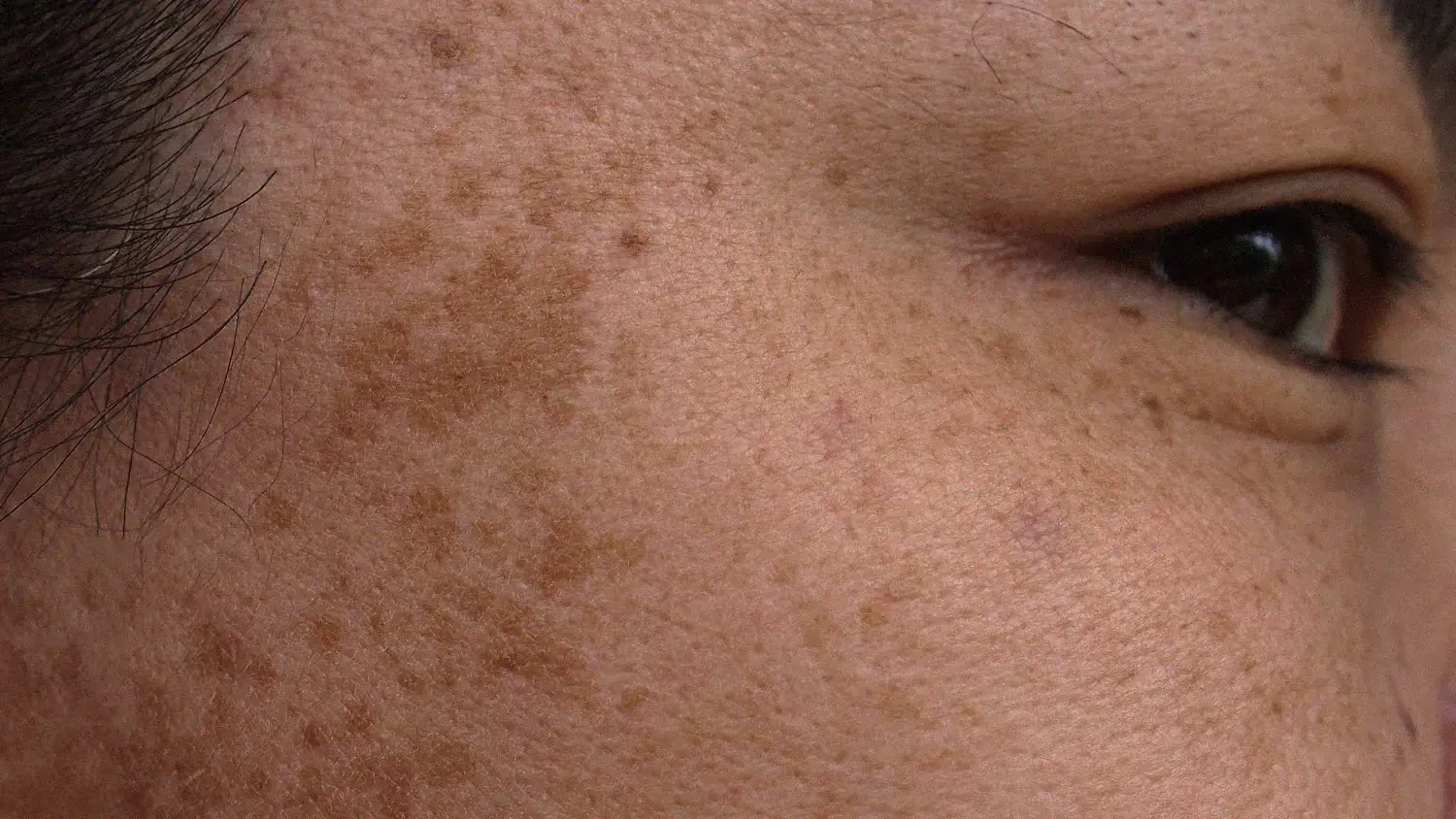

Dark spots are one of the most common skin concerns dermatologists hear about, and one of the most misunderstood. They go by a lot of names: age spots, sun spots, liver spots, melasma, post-acne marks. Patients describe them in different ways too, as patches, shadows, discoloration, or just a general unevenness that makes their skin look older or more tired than they feel. What most of them have in common is a frustration that sets in after months of trying brightening products that don't seem to be doing much of anything.
Here's why that happens: hyperpigmentation is not a surface problem. It originates deep in the skin, in the melanocyte cells responsible for producing pigment, and treating it effectively requires getting beneath the surface in a way that most over-the-counter products simply aren't designed to do. That doesn't mean it's untreatable. Quite the opposite. With the right clinical approach, hyperpigmentation is one of the most successfully addressed concerns in dermatology. But getting there requires understanding what type you're dealing with and matching the treatment to the cause.
At Cleaver Dermatology & Aesthetics, our board-certified dermatologists and aesthetic team help patients across North Georgia achieve meaningfully more even, luminous skin every day. Here's what you need to know about what's causing your dark spots and how to actually get rid of them.
Hyperpigmentation occurs when the skin produces excess melanin, the pigment responsible for skin color, in concentrated areas. The result is patches or spots that appear darker than the surrounding skin. The cause of that excess melanin production determines the type of hyperpigmentation you're dealing with, and that distinction matters enormously when it comes to treatment.
Sun-induced hyperpigmentation, commonly called sun spots or age spots, is caused by cumulative UV exposure over time. When UV radiation hits the skin, melanocytes respond by producing more melanin as a protective response. With years of repeated exposure, some of those melanocytes become overactive and cluster together, creating the flat, well-defined brown or tan spots that appear most commonly on the face, hands, chest, and shoulders. These spots have very little to do with age and everything to do with a lifetime of unprotected sun exposure, which is exactly why they appear earlier and more extensively in people who spend a lot of time outdoors, including across the North Georgia communities we serve.
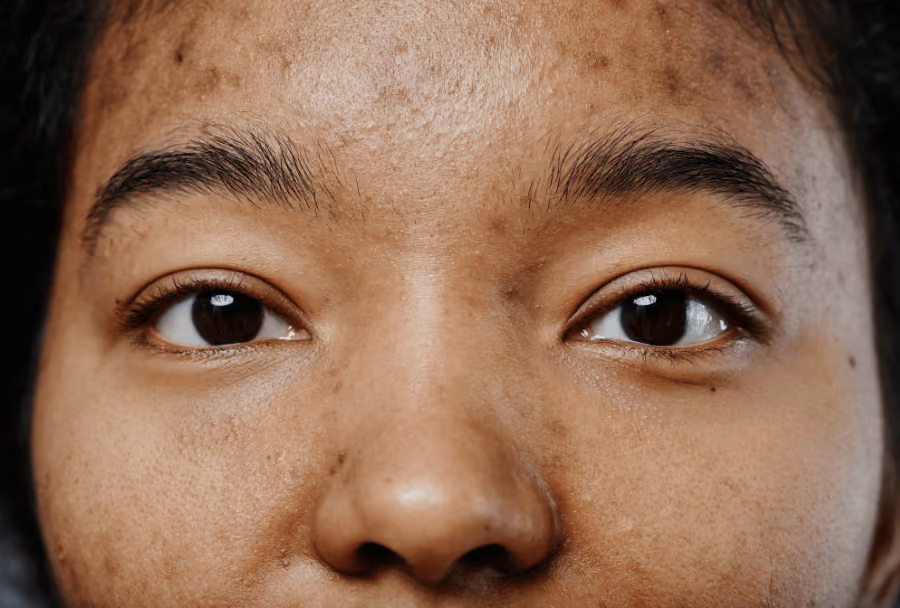
Post-inflammatory hyperpigmentation, often referred to as PIH, is the dark mark left behind after the skin experiences inflammation or injury. Acne is the most common culprit, leaving behind flat brown or purple marks after a pimple heals, but PIH can also follow eczema flares, cuts, burns, insect bites, or any other wound that triggers an inflammatory response. It is not a scar in the traditional sense, because no texture change is involved, but it can linger for months or longer, particularly in deeper skin tones where melanocytes are more reactive.
Melasma is a form of hyperpigmentation driven primarily by hormonal fluctuations, often appearing during pregnancy, while using hormonal contraceptives, or around perimenopause. It presents as larger, irregular patches of brown or grayish pigmentation, typically appearing symmetrically across the cheeks, forehead, upper lip, and chin. Melasma is notoriously stubborn and tends to deepen with sun exposure, which is why sun protection is an absolutely non-negotiable part of any melasma treatment plan.
Walk through the skincare aisle and you'll find no shortage of products promising to fade dark spots and even skin tone. Some of them contain genuinely useful ingredients. Vitamin C, niacinamide, kojic acid, and alpha arbutin all have legitimate brightening properties and can help maintain results once pigmentation has been addressed. The problem is that they work slowly, they work at the surface, and they work best as maintenance rather than as primary treatment for established hyperpigmentation.
The deeper and more entrenched the pigmentation, the less likely it is to respond meaningfully to topical brighteners alone. Melasma in particular is notoriously resistant to over-the-counter products, and post-inflammatory hyperpigmentation in deeper skin tones can take a year or more to fade on its own without clinical intervention. Waiting and hoping is a strategy that often leads to frustration rather than results.
A dermatologist can offer prescription-strength topical treatments, including hydroquinone, which remains the most clinically validated skin-lightening ingredient available, as well as combination formulas that pair hydroquinone with a retinoid and a mild corticosteroid for enhanced efficacy. These are significantly more powerful than anything available without a prescription, and they can produce visible improvement in weeks rather than months when used correctly and consistently.
Beyond prescription topicals, Cleaver Dermatology & Aesthetics offers a range of in-office treatments that target hyperpigmentation at a clinical level, delivering results that topical products alone cannot match.
Photofacials using intense pulsed light, known as IPL, are one of the most effective treatments for sun-induced hyperpigmentation and broken capillaries. The light energy is selectively absorbed by the excess melanin in dark spots, breaking it down so the body can naturally clear it away over the following weeks. Most patients see significant fading after a series of three to five treatments, with results that continue to develop as the skin clears the disrupted pigment. IPL is particularly well-suited to fair to medium skin tones and works beautifully across the sun-exposed areas where Georgia patients most commonly develop pigmentation.
Chemical peels use a carefully calibrated acid solution to exfoliate the outer layers of skin and accelerate cell turnover, bringing fresher, more evenly pigmented skin to the surface more quickly than the skin would naturally shed on its own. Superficial peels using glycolic or lactic acid are excellent for mild pigmentation and can be done with minimal downtime. Medium-depth peels penetrate further and address more significant discoloration, though they involve a few days of peeling and temporary redness. Your provider at Cleaver Dermatology & Aesthetics will recommend the appropriate peel depth based on your skin type, tone, and the severity of your hyperpigmentation.
Laser treatments, including the fractional and CO2RE laser options available at our practice, offer some of the most powerful pigmentation correction available. They work by delivering precise energy into the skin to target discoloration and stimulate collagen remodeling simultaneously, addressing both the pigmentation concern and any associated texture issues at the same time. Laser treatments typically require more recovery time than IPL or peels but can deliver more dramatic and longer-lasting results, particularly for patients with more extensive or deep-seated pigmentation.
Microneedling with the addition of targeted serums can also be a valuable option for post-inflammatory hyperpigmentation, particularly for patients with medium to deeper skin tones for whom certain laser wavelengths carry a higher risk of triggering additional pigmentation. Your dermatologist will take your skin tone into careful consideration when recommending any energy-based treatment, because the right choice for one patient is not always the right choice for another.
Melasma deserves its own conversation because it behaves differently from other forms of hyperpigmentation and requires a more nuanced, layered approach. Unlike sun spots or post-acne marks, melasma is driven by hormonal activity and can return even after successful treatment if the underlying triggers aren't managed. Sun exposure, even brief and incidental, can darken melasma significantly, which is why daily broad-spectrum SPF 50 is the single most important step in any melasma treatment plan, applied every morning without exception.
Prescription topicals, particularly hydroquinone-based combination formulas, are the cornerstone of melasma treatment and are often used in cycles to prevent the skin from developing a tolerance. Chemical peels and certain laser treatments can help accelerate results, but they must be chosen and performed carefully in the context of melasma, as overly aggressive treatment can paradoxically worsen pigmentation in some cases.
Managing expectations is also an important part of treating melasma honestly. It can be significantly improved, and many patients achieve skin that looks beautifully even with the right combination of treatment and ongoing maintenance. But because the hormonal drivers don't disappear entirely, maintenance is a long-term commitment rather than a one-time fix. A dermatologist who is upfront about this from the beginning, as our providers at Cleaver Dermatology & Aesthetics always are, sets patients up for realistic goals and lasting satisfaction rather than disappointment.
No matter what type of hyperpigmentation you're treating or which treatments you're pursuing, daily sun protection is not optional. UV exposure is either the primary cause, a direct trigger, or the most reliable way to undo your progress for virtually every form of dark spot and discoloration. Every in-office treatment and every topical product works harder and lasts longer when it's paired with a consistent daily broad-spectrum SPF of at least 30, preferably 50.
For patients undergoing active pigmentation treatment, a physical or mineral sunscreen containing zinc oxide or titanium dioxide is often preferred because it sits on top of the skin and reflects UV rays rather than absorbing them chemically, making it less likely to irritate skin that is in an active treatment phase. Reapplication every two hours when outdoors is just as important as the morning application, and for North Georgia patients who spend time outside year-round, that habit is genuinely worth building.
Hyperpigmentation is one of those concerns that responds beautifully to the right treatment plan, but it requires patience, consistency, and ideally the guidance of a board-certified dermatologist who can assess your specific pigmentation type and design an approach that's truly matched to your skin. The team at Cleaver Dermatology & Aesthetics serves patients across Cumming, Gainesville, Roswell, Johns Creek, Dahlonega, Canton, Toccoa, Lavonia, and Dawsonville with comprehensive medical and aesthetic care that gets real results. Book your appointment online today and let us put together a plan that gives your skin the even, luminous tone it deserves.
Lorem ipsum dolor sit amet, consectetur adipiscing elit. Suspendisse varius enim in eros elementum tristique.

