Twenty to thirty minutes, once a year, to catch skin cancer early
A full body skin exam, sometimes called an annual skin check, is a visual review of your entire skin from scalp to the soles of your feet. Your provider looks for anything that's new, changing, or doesn't match the pattern of your other moles and spots.
It takes between 20 and 30 minutes depending on how many spots need a closer look. Most insurance plans cover it once a year as preventive care. You stay in the room the whole time, and anything that looks questionable can often be biopsied right then so you don't need a second visit.
A full body skin exam looks simple from the outside, but there is a lot happening in the provider's head while they work through your skin. Most dermatologists use a pattern-based approach, learning what is normal for your body across the entire visit so that anything that does not match the pattern stands out.
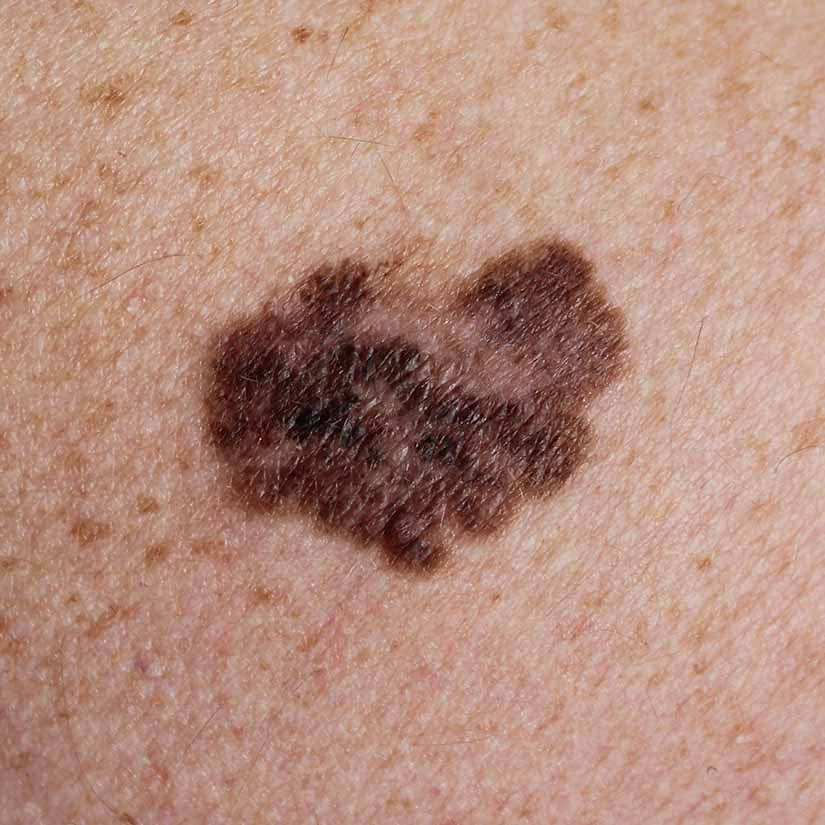
The most commonly used framework for mole evaluation is the ABCDE rule. A is asymmetry, where one half of the mole does not match the other. B is border, where the edges are jagged, notched, or blurred rather than smooth. C is color, where a single mole contains more than one shade of brown, black, red, or white. D is diameter, where the spot is larger than about six millimeters, roughly the size of a pencil eraser. E is evolving, where the spot has been changing in size, shape, color, or symptom over weeks or months. No single factor is a diagnosis, but the more factors a mole shows, the more reason there is to biopsy it.
Most of what your provider flags during an exam turns out to be benign. Seborrheic keratoses, cherry angiomas, dermatofibromas, and common moles all show up frequently and rarely cause problems. Providers flag them so you know they are there and so you know what to ignore when you check your own skin at home. Knowing what is not concerning can be as valuable as knowing what is.
Between visits, a brief self-exam every month is worth the time. Start in the bathroom with good lighting and a hand mirror. Look at your scalp, face, neck, chest, stomach, back using the hand mirror, arms, hands, thighs, knees, shins, ankles, and feet including between your toes. You are not trying to diagnose anything. You are just trying to notice if something new has shown up or something existing has changed. If either happens, take a photo with a ruler or a coin in frame for scale and bring it to your next visit, or message your provider through the patient portal.
Sun protection between visits is still the highest leverage thing you can do for long-term skin cancer risk. A daily mineral sunscreen with SPF 30 or higher is the baseline. Reapplying every two hours during extended outdoor time is the part most people skip. Wide-brim hats, UPF clothing for lake days, and staying out of direct sun between about 10 AM and 4 PM in summer all help. None of this replaces exams. It works in addition to them.
Finally, a note on anxiety. Plenty of patients come to a full body exam quietly worried about what might be found. If that is you, tell your provider at the start of the visit. It changes how they talk you through what they are seeing. Most spots turn out to be nothing, and the ones that are something are almost always treatable when caught early. That is the whole point of getting checked every year.
Most adults benefit from a yearly full body exam, but the exam becomes more important if any of these apply to you. A personal or family history of skin cancer. More than fifty moles. Light skin that burns easily. A history of sunburns as a kid. Years of outdoor work or play. Current or prior use of tanning beds.
If you're under forty and none of those apply, every two to three years is still reasonable. If you're over fifty or you've had skin cancer before, once a year is the minimum, and some patients need to come in every six months.
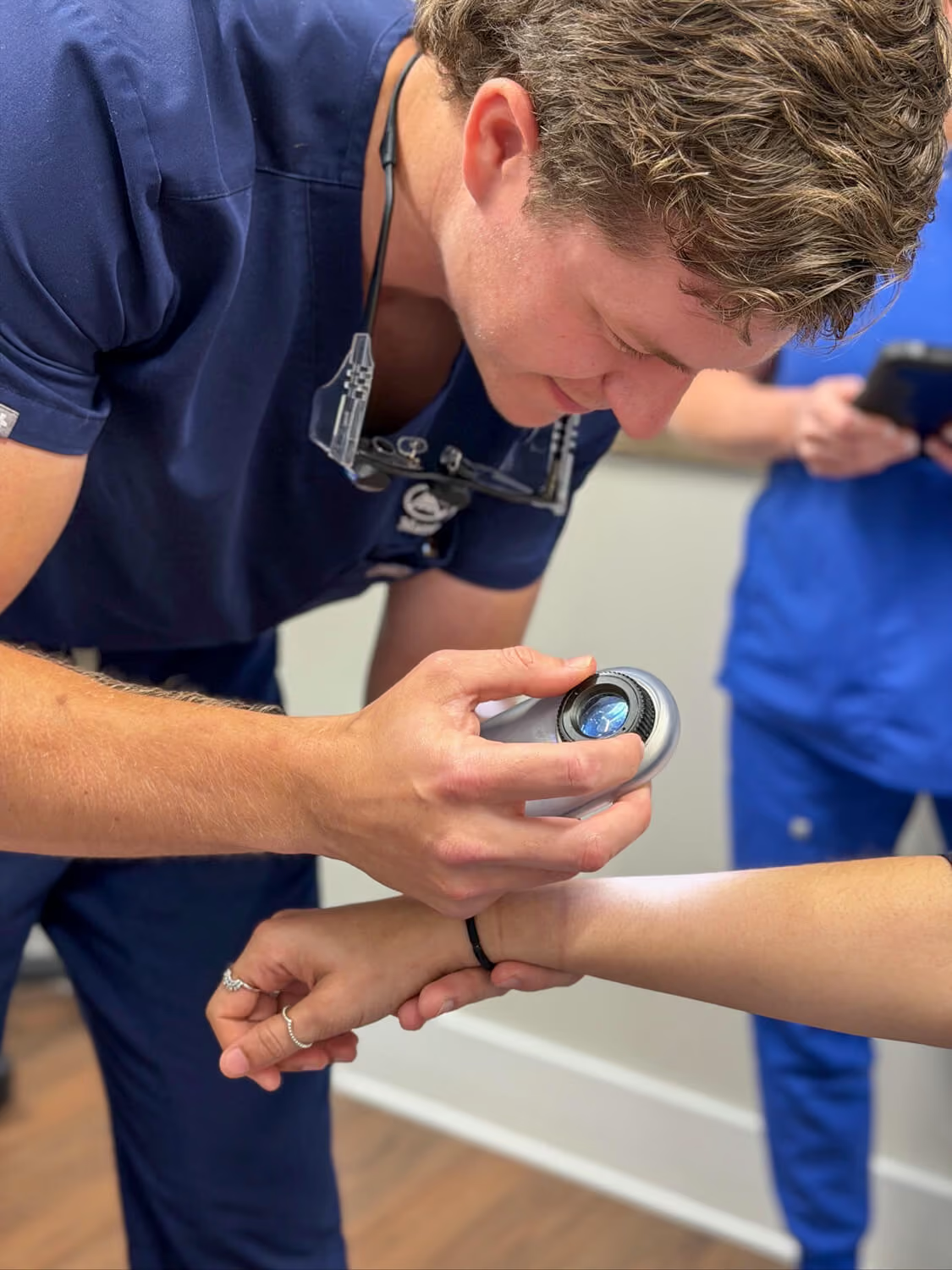
A dermatoscope reveals patterns the naked eye misses. Every mole that catches your provider's attention gets a closer look with this tool, not just a quick glance.
Dr. Nathan Cleaver is a fellowship-trained Mohs surgeon. If a biopsy comes back as basal cell or squamous cell carcinoma, your next visit for treatment is already in-house and usually within two weeks.
If you need a biopsy during your exam, it happens the same visit. Pathology is reviewed by our team and you hear back directly from a provider you've already met, not a third party lab.
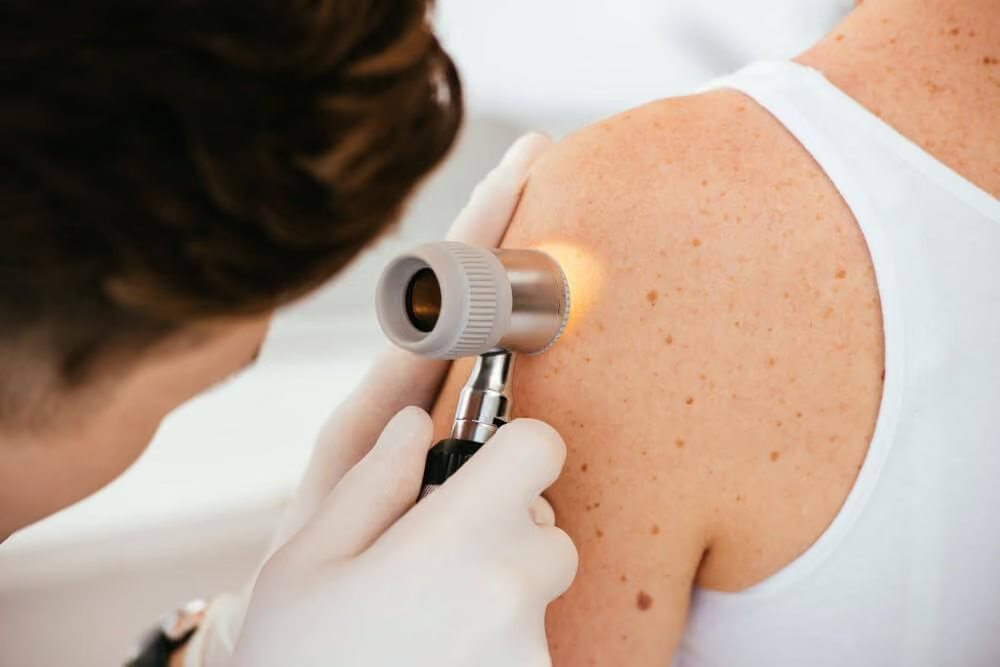
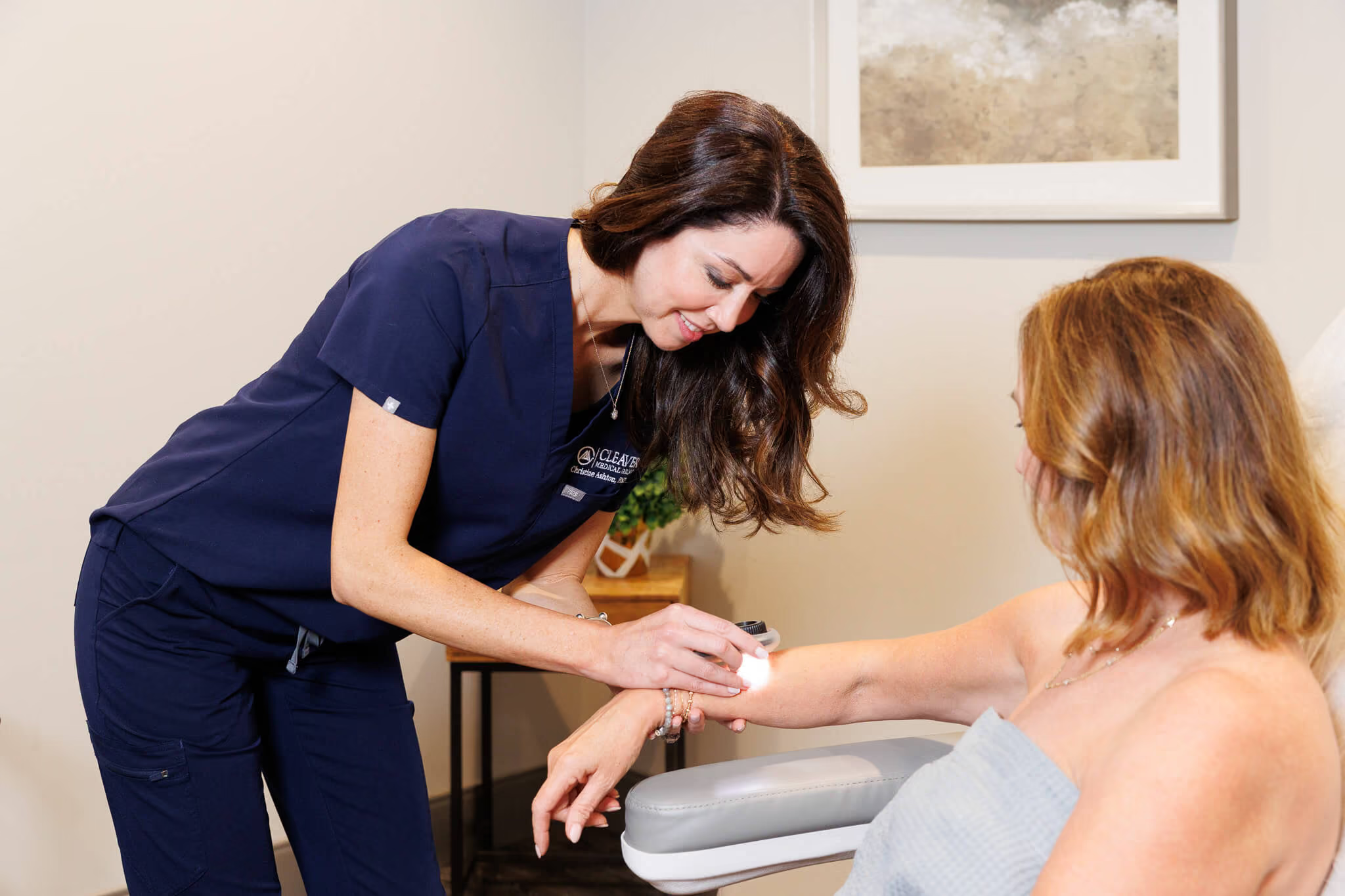
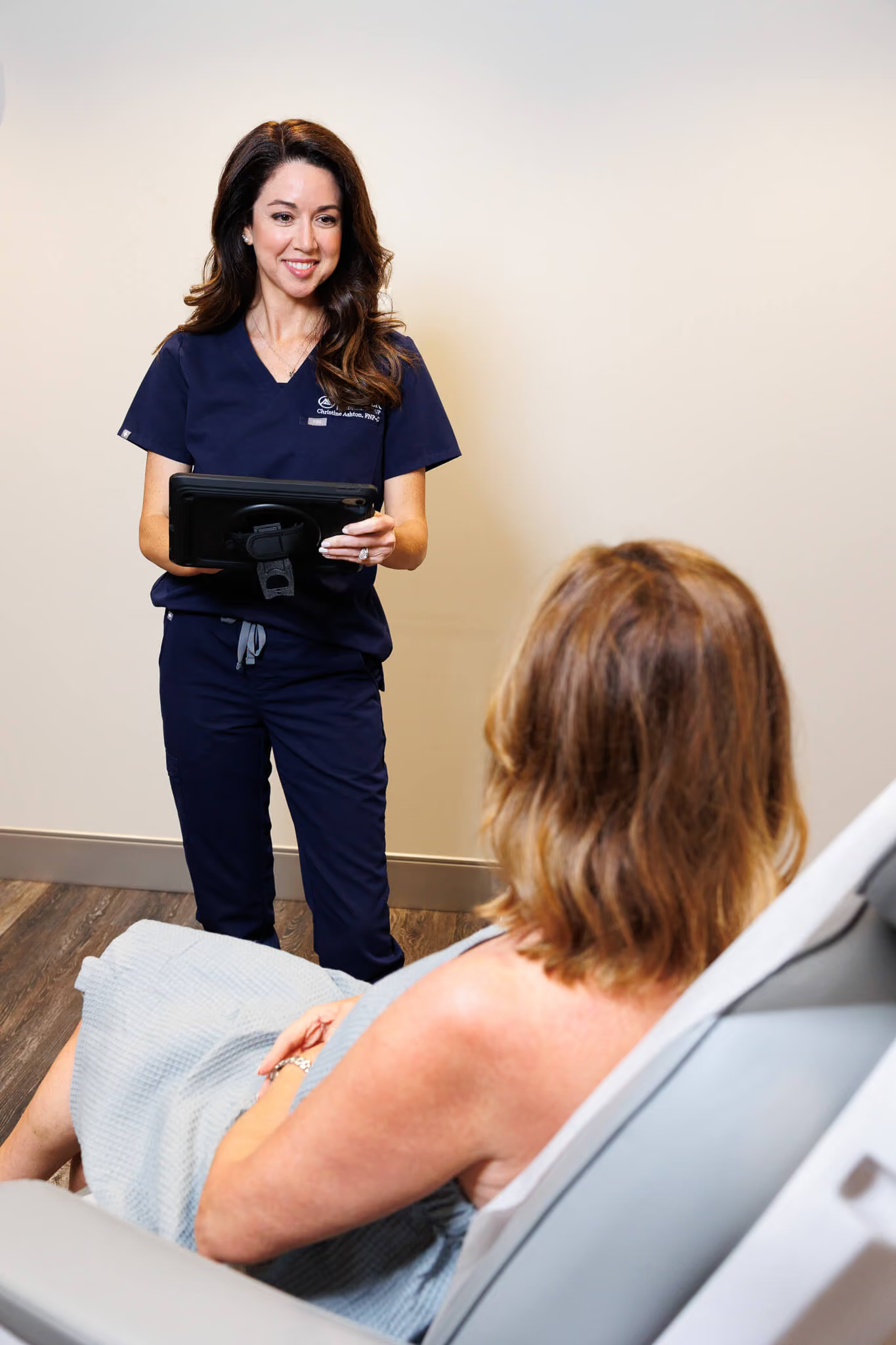
When you're roomed, you change into a gown. Your provider walks through your skin in sections, usually starting at the scalp and working downward. They use a dermatoscope, which is a small magnifier with a light, to get a closer look at moles and spots that stand out.
You stay in control throughout. If there's an area you'd rather not have checked, you can say so. If a spot looks concerning, your provider will explain what they're seeing and walk you through options, which might be watch-and-wait, a biopsy that day, or a photo to track changes at your next visit.
If a biopsy happens in the visit, it usually takes less than ten minutes. Our in-house pathology team reviews most biopsies and results come back in three to five business days.
Once a year is the standard recommendation for most adults. If you've had skin cancer before or you're at high risk, your provider may recommend every six months.
Most major insurance plans cover an annual skin exam as preventive care when it's medically necessary. Our team verifies coverage before your visit and gives you a heads up if anything would fall outside your plan.
Plan for 20 to 30 minutes. A simple exam with no concerns is at the shorter end. An exam with a biopsy or two takes the full thirty.
You'll change into a gown for a proper head-to-toe look, but you stay in control. Most patients keep underwear on, and sensitive areas like the genital region are only checked if you want them checked.
Most spots we flag turn out to be nothing. If something looks concerning, your provider will explain what they're seeing and offer options, usually watch and photo, biopsy that day, or a follow-up in a few months. You decide.
Please give us a call and we will be happy to answer all your questions or concerns you may have.