Light, medium, and deeper peels chosen for your skin and your specific concern
A chemical peel is a controlled application of an acid solution to the skin that removes damaged outer layers and stimulates cell turnover. The result is fresher skin underneath, with improved tone, texture, and often reduced pigmentation. Peels range from very light, with no visible downtime, to deeper medical-grade peels that produce days of visible peeling followed by noticeably improved skin.
The right peel depends on your skin type, your concern, and how much downtime you can accept.
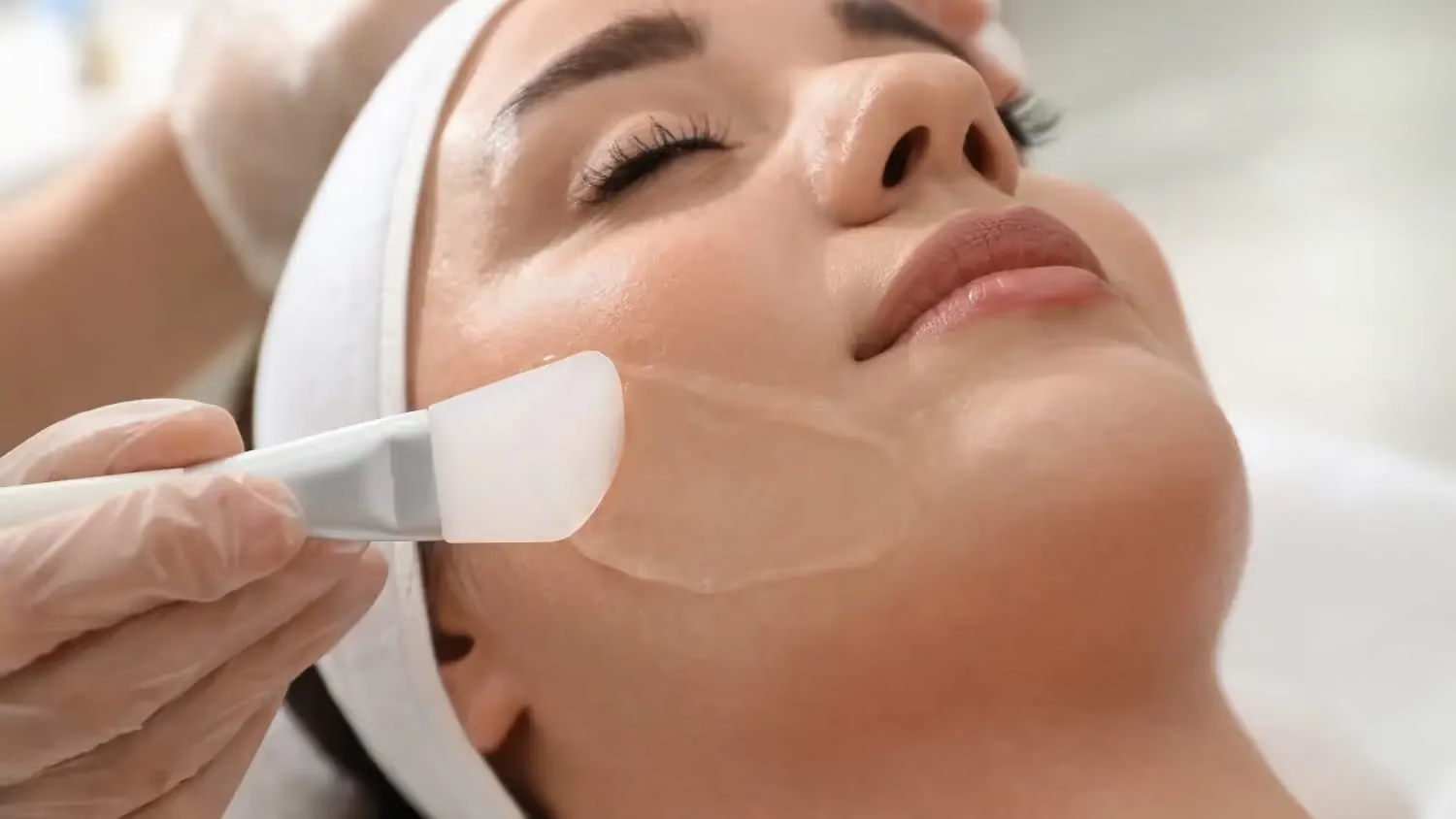
Superficial peels, sometimes called lunchtime peels, use mild acids like glycolic acid, lactic acid, or salicylic acid at concentrations that exfoliate only the outermost layer of skin. They produce a brightening effect with minimal or no visible peeling. A series of three to six superficial peels spaced two to four weeks apart produces meaningful cumulative improvement in tone, texture, and glow. They are a great starting point for patients new to peels.
Medium-depth peels use stronger acids like trichloroacetic acid (TCA) at moderate concentrations or blended formulations like the VI Peel. These peels reach the upper dermis and produce visible peeling for three to five days. They address more significant pigmentation, moderate sun damage, early wrinkles, and post-acne marks. Most patients benefit from one to three medium peels, and the improvement per peel is more dramatic than with superficial peels.
Deeper peels like the VI Peel Precision Plus or stronger TCA formulations reach deeper into the dermis and produce five to seven days of visible peeling. They address more significant scarring, deeper pigmentation, and fine-to-moderate wrinkles. A single deeper peel can produce results comparable to multiple sessions of microneedling, though the downtime is longer.
Picking the right peel depends on your skin type, your concern, your schedule, and your tolerance for downtime. For patients who cannot take a week off from normal social activity, a series of superficial peels is often the better choice. For patients with a specific event coming up in a month or two, a medium or deeper peel can produce visible results in time.
Melasma patients get a specific protocol. Peels can help melasma, but aggressive peels often make it worse. We use gentler peels formulated specifically for melasma, typically jessner's solution or a low-percentage TCA combined with brightening agents, and we always pair them with sun protection and topical maintenance.
Acne scarring responds to peels but usually requires a series, and medium-depth peels outperform superficial for true textural scarring. For patients with significant scarring, we often recommend a combination of peels plus microneedling to address both tone and texture.
Preparation matters. We usually ask patients to stop retinoids for five to seven days before a medium or deeper peel to avoid over-exfoliation during the peel itself. For darker skin types, we may recommend a two-to-four-week pre-peel regimen with a brightening topical to reduce the risk of post-inflammatory pigmentation.
After any peel, sun protection is non-negotiable. New skin is more vulnerable to UV damage and to developing pigmentation irregularities. Daily mineral sunscreen and sun avoidance during the first few weeks after a deeper peel are critical for getting the full benefit of the treatment.
Chemical peels work well for uneven tone, dull skin, early fine lines, sun damage, post-acne marks, and mild to moderate acne scarring. They are also useful as maintenance for patients who want to keep skin fresh between other treatments.
Peels are not the best choice for active moderate to severe acne, very deep scarring, or active inflammatory skin conditions like flaring eczema or rosacea. Our esthetician or provider will recommend the right peel or suggest a different treatment if peels are not the best fit.
Light peels maintain glow. Medium peels address tone and early aging. Deeper peels tackle sun damage and acne scars. We pick the depth that fits your goal, not the most aggressive option.
Certain peel formulations can cause pigmentation changes in darker skin tones. Our providers know which peels are safe for which skin types and avoid formulations that carry risk.
A series of three to six superficial peels often produces as much improvement as a single medium peel with far less downtime. We map out the series that fits your schedule and skin.
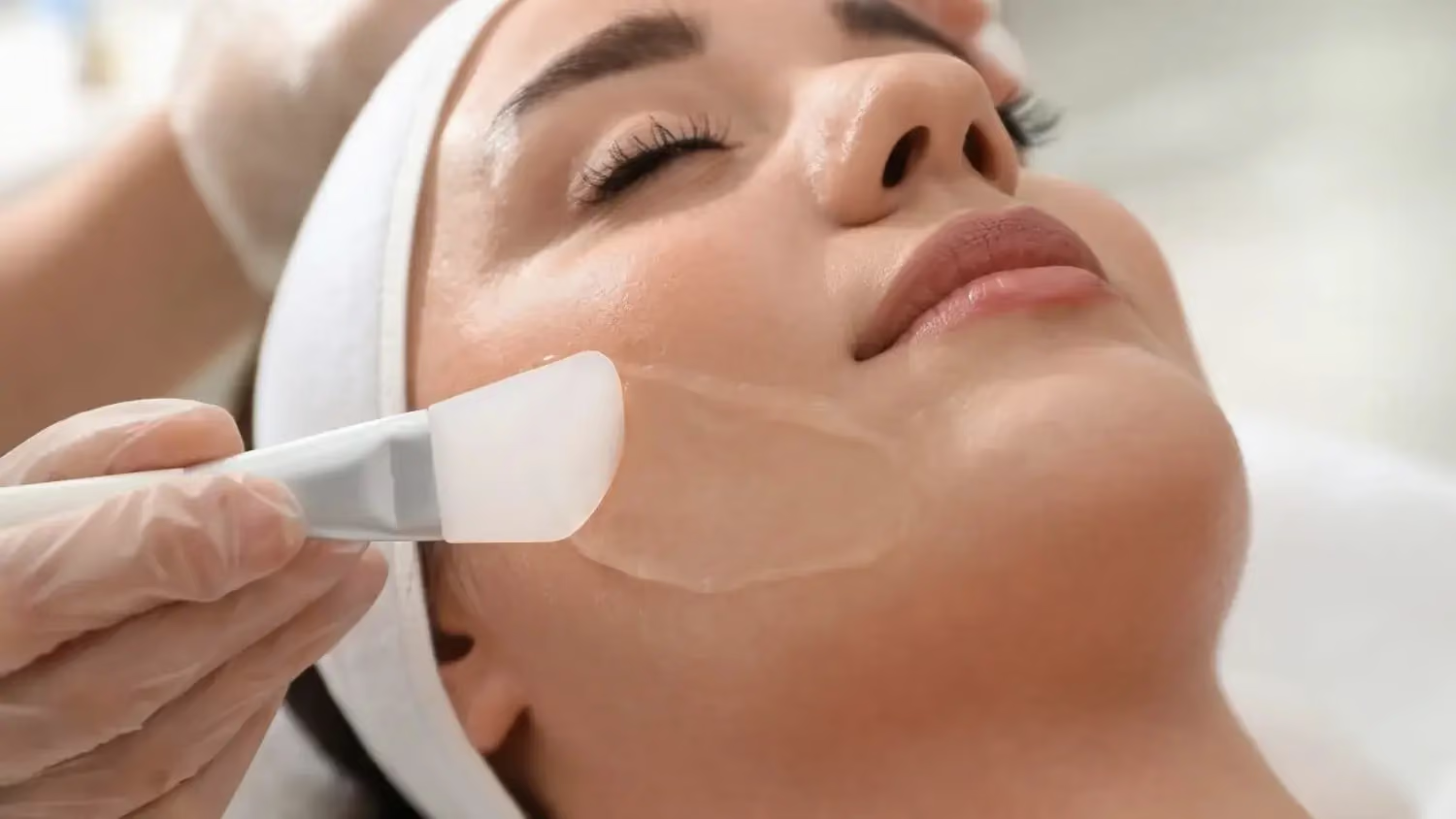
Plan for 30 to 45 minutes. Your provider cleanses your skin and applies the peel solution with a brush or gauze. You feel a tingling or warm sensation that lasts a few minutes for superficial peels and longer for medium-depth peels. A cool fan or cooling air is often used during application for comfort.
Light peels may produce subtle flaking for two to three days. Medium peels produce visible peeling for three to five days. Deeper peels like VI Peel Precision Plus produce peeling for five to seven days and can produce more significant improvement in one session.
After the peel, you follow a specific post-peel protocol with gentle cleansing, a thick moisturizer, and strict sun protection. Do not pick or peel skin manually, which can cause scarring. New skin usually reveals itself by day seven and continues to refine over the following weeks.
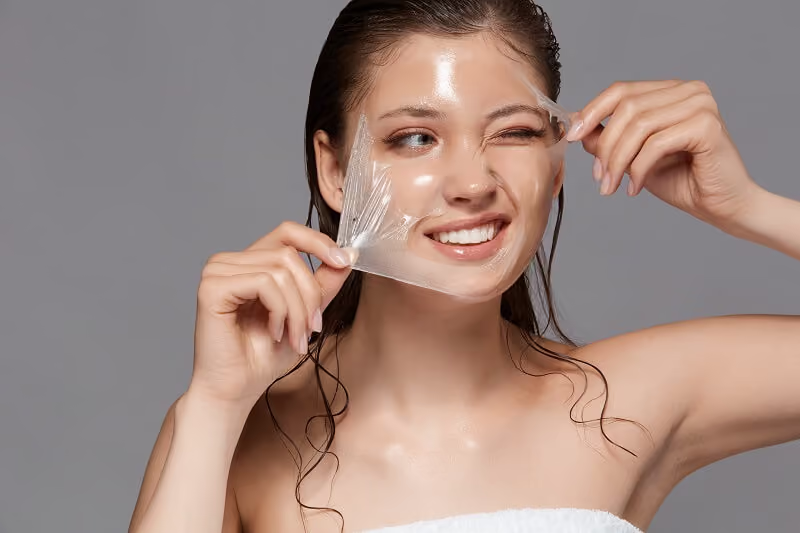
Light peels produce zero to two days of subtle flaking. Medium peels produce three to five days of visible peeling. Deeper peels produce five to seven days. We match the peel depth to the downtime you can accept.
Peels produce a tingling or warm sensation during application that most patients tolerate easily. A cool fan is used for comfort during stronger peels. It is not generally described as painful.
For light peels, you can wear makeup after 24 hours. For medium peels, wait three to five days until peeling resolves. For deeper peels, wait seven to ten days.
Light peels can be done every two to four weeks. Medium peels every six to eight weeks. Deeper peels twice a year at most. We help you plan a schedule that matches your goals.
Yes, with the right formulation. Certain peels carry pigmentation risk in darker skin types, but gentler acids and lower concentrations are safe and effective. Our providers pick peel types appropriate for your skin.
Please give us a call and we will be happy to answer all your questions or concerns you may have.