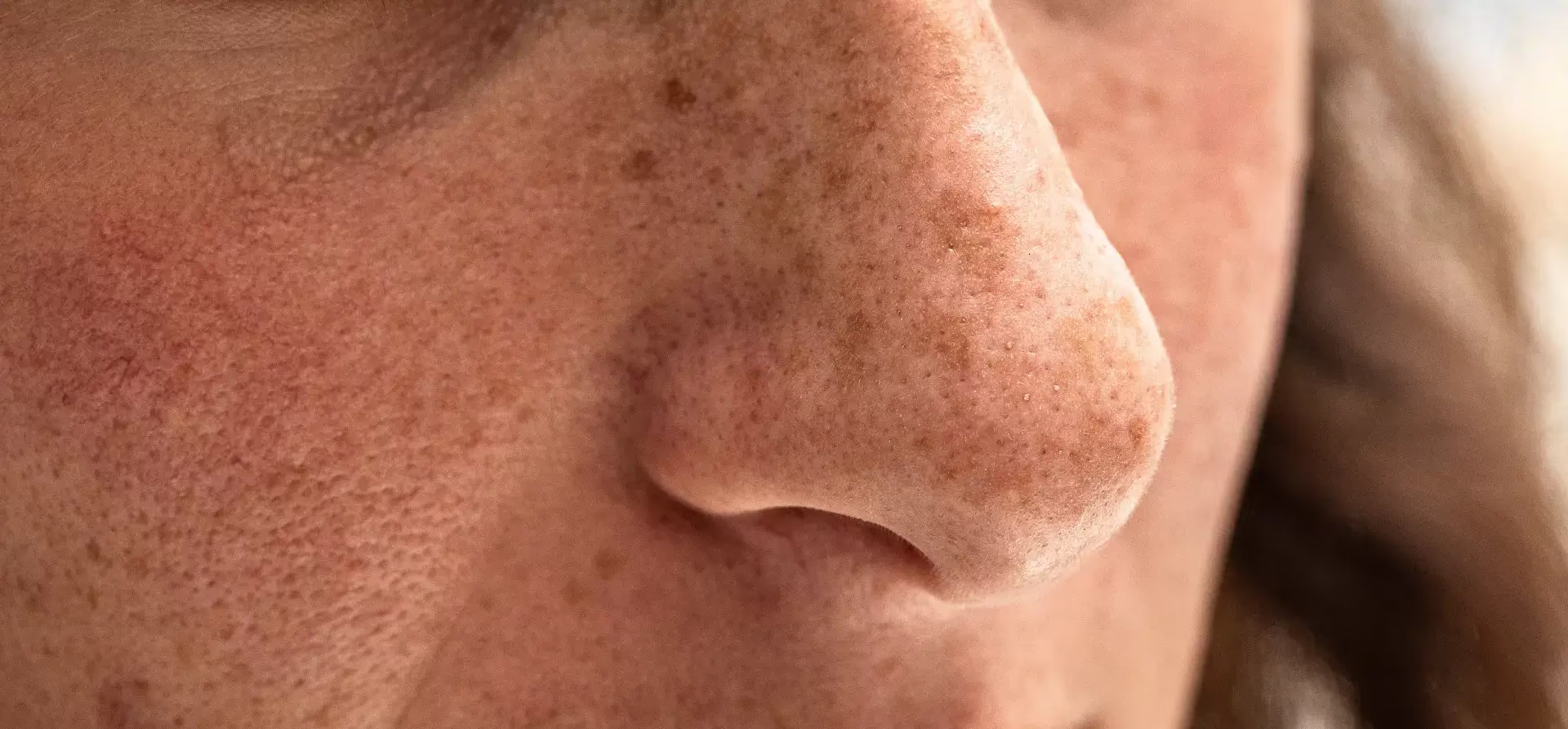

There's something deeply deceptive about sun damage. Unlike a cut or a bruise, it doesn't announce itself immediately. You spend a summer on the lake near Dahlonega, a few weekends hiking in the North Georgia mountains, years of school pickup lines and Saturday afternoon errands, and your skin quietly absorbs all of it without complaint. Then one day you look in the mirror and notice something that wasn't there before. A dark spot. A rough patch. Lines that seem deeper than they should be for your age. Skin that looks older than you feel.
That's sun damage doing what it does best: accumulating invisibly for years before making itself known all at once.
The encouraging part is that sun damage is not a life sentence. Modern dermatology has remarkably effective tools for reversing much of what UV exposure does to the skin, and the earlier you address it, the better your results will be. But understanding what's actually happening beneath the surface is the first step, because sun damage is far more than a cosmetic concern, and treating it well means treating all of it.
The sun emits two types of ultraviolet radiation that reach the earth's surface and affect your skin in different ways. UVB rays are the ones responsible for sunburn. They're more intense during peak daylight hours and are largely blocked by glass. UVA rays penetrate more deeply into the skin, pass right through car and office windows, and remain consistent in intensity throughout the day and across all seasons. UVA is the primary driver of premature skin aging and plays a significant role in skin cancer development.
When UV radiation hits your skin, it damages the DNA inside your skin cells. Your body has repair mechanisms that catch and correct most of this damage, but not all of it. Over time, with repeated exposure, errors accumulate. Melanocytes, the cells responsible for producing pigment, become dysregulated and start producing melanin unevenly, which is what creates the dark spots and uneven tone associated with sun damage. Collagen and elastin fibers, the structural proteins that keep skin firm and smooth, break down faster than the body can rebuild them. The result is sagging, wrinkling, and a loss of the youthful resilience that healthy skin naturally has.
There is also a deeper concern. DNA mutations caused by UV exposure are the primary cause of the three most common forms of skin cancer: basal cell carcinoma, squamous cell carcinoma, and melanoma. Sun damage is not merely an aesthetic issue. It is a medical one, and it deserves to be taken seriously on both levels.
Sun damage presents differently depending on your skin tone, your lifetime UV exposure, and your genetic predispositions, but there are several hallmark signs that dermatologists look for during a skin evaluation.
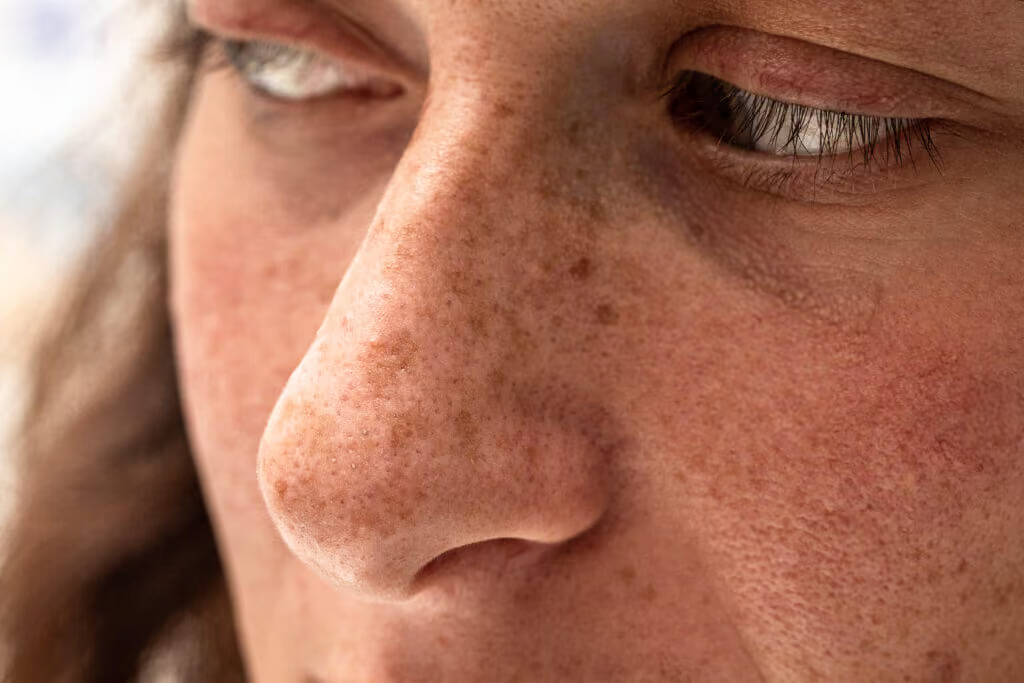
Hyperpigmentation is usually the most visible early sign. This includes flat brown or tan spots, sometimes called age spots or liver spots, that appear on areas with the most sun exposure: the face, hands, chest, and shoulders. These are caused by clusters of overactive melanocytes and are almost entirely the product of cumulative UV exposure rather than age alone, which is why many people start seeing them in their 30s and 40s despite being nowhere near elderly.
Actinic keratoses are rough, scaly patches that develop on sun-exposed skin and represent a more medically significant form of sun damage. They are considered precancerous lesions, meaning that without treatment, a percentage of them will eventually develop into squamous cell carcinoma. They can feel like sandpaper, appear pink, red, or skin-toned, and are often easier to feel than to see. If you notice a patch of skin that feels persistently rough and doesn't respond to moisturizer, that's worth having evaluated promptly.
Beyond spots and texture, sun damage also manifests as broken capillaries and redness, a leathery or thickened skin texture, loss of elasticity that shows up as sagging or deep wrinkling, and an overall dullness that makes skin look tired rather than healthy and luminous.
If there is one thing every dermatologist agrees on across the board, it is this: daily broad-spectrum sunscreen is the single most effective tool available for preventing sun damage, slowing skin aging, and reducing your risk of skin cancer. Not a weekly sunscreen. Not a sunscreen when you're going to the beach. A daily sunscreen, applied every morning, regardless of the weather or your plans for the day.
The reason daily application matters so much comes back to UVA. Because UVA rays penetrate clouds and glass with ease and remain present from sunrise to sunset year-round, your skin is accumulating UV exposure on overcast Tuesday mornings in January just as it is on sunny July afternoons on the water. That daily, low-grade exposure adds up to an enormous amount of cumulative damage over a lifetime.
For daily use, dermatologists recommend a broad-spectrum sunscreen with an SPF of at least 30, and SPF 50 is better for those with fair skin, a history of sun damage, or elevated cancer risk. Broad-spectrum means the formula protects against both UVA and UVB radiation, not just the burning rays. For everyday life, a lightweight, non-comedogenic formula that you'll actually enjoy wearing is far more effective than a heavy, unpleasant one that sits in your drawer. The best sunscreen, as the saying goes, is the one you'll use consistently.
For patients in North Georgia, the case for daily sunscreen is especially strong. Georgia's climate delivers significant UV exposure across a long warm season, and outdoor recreation is a way of life across communities from Canton and Gainesville to Toccoa and Lavonia. Our providers at Cleaver Dermatology & Aesthetics can recommend specific medical-grade sunscreen formulas suited to your skin type, and many are available through our online store or at our office locations.
The good news about sun damage is that a meaningful amount of it can be reversed or significantly improved with the right treatments. The approach depends on what type of damage you're dealing with, how extensive it is, and what your skin goals are.
For hyperpigmentation and uneven skin tone, photofacials using intense pulsed light, also known as IPL, are one of the most effective options available. IPL targets the excess melanin in dark spots and broken capillaries, breaking it down so the body can clear it naturally. The result is a more even, brighter skin tone with progressive improvement over a series of treatments. Cleaver Dermatology & Aesthetics offers IPL photofacials at multiple North Georgia locations, and they're particularly popular with patients who want comprehensive tone correction without significant downtime.
Laser resurfacing treatments, including fractional and CO2RE laser options available at Cleaver Dermatology & Aesthetics, go deeper than IPL and can address both pigmentation and the textural changes caused by collagen loss. These treatments stimulate the skin's natural healing response, triggering a collagen remodeling process that gradually improves firmness, smoothness, and overall skin quality over the weeks and months following treatment.
For actinic keratoses, treatment is not optional but urgent. Options include cryotherapy, in which the lesion is frozen off with liquid nitrogen, topical prescription creams, photodynamic therapy, or surgical removal. Your dermatologist will determine the best approach based on the number, size, and location of the lesions. Treating actinic keratoses promptly is one of the most important ways to interrupt the progression toward skin cancer.
Chemical peels and medical-grade retinoids, whether prescribed or recommended by your dermatologist, are also valuable tools for addressing surface-level sun damage, improving cell turnover, and helping the skin shed damaged cells in favor of healthier ones beneath.
Not all sun damage leads to skin cancer, but all skin cancer is caused by sun damage. That relationship is why regular skin cancer screenings are so essential for anyone with a history of significant UV exposure, and that is most adults who have spent time outdoors in a sun-rich state like Georgia.
During a full-body skin exam at Cleaver Dermatology & Aesthetics, your provider will evaluate every area of sun-exposed skin for signs of change, including early indicators of skin cancer that may not yet be visible to the untrained eye. If anything is found that warrants further investigation, a biopsy can be performed quickly and comfortably, and if skin cancer is confirmed, Dr. Nathan Cleaver's fellowship-trained expertise in Mohs micrographic surgery means that the most effective surgical treatment is available right here in North Georgia.
Sun damage is one of those things that feels distant and abstract until it isn't. The spots, the texture, the lines, and the medical concerns that come with a lifetime of UV exposure are real, but so is the ability to address them. Whether you're looking to treat the damage that's already there, protect the skin you have going forward, or simply get a clearer picture of where your skin stands, the team at Cleaver Dermatology & Aesthetics is here to help. Book your appointment online today at any of our North Georgia locations and let us help your skin look and feel as healthy as it deserves to.
Lorem ipsum dolor sit amet, consectetur adipiscing elit. Suspendisse varius enim in eros elementum tristique.

