
For a lot of people, booking a dermatology appointment is something that lives on the to-do list for months, sometimes years, before it actually happens. Not because they don't care about their skin, but because there's a quiet uncertainty about what the appointment will actually involve. Will it be uncomfortable? Will they find something concerning? Will the doctor make them feel judged for waiting so long or for the products they've been using? Is their reason for coming in even worth a specialist's time?
If any of that sounds familiar, you're far from alone. First appointments of any kind carry a certain amount of anxiety, and dermatology is no exception. But here's what patients almost universally say after their first visit: it was much easier than they expected, and they wish they hadn't waited so long.
The team at Cleaver Dermatology & Aesthetics sees first-time patients every single day across our nine North Georgia locations, and we genuinely love being the practice that someone trusts with their skin for the first time. Here's a clear, honest look at what your first dermatology appointment involves so you can walk in feeling prepared and confident rather than anxious and uncertain.
A little preparation before your visit goes a long way toward making your appointment as productive as possible. The most important thing you can do is come with clean, product-free skin if your appointment involves a skin evaluation or full-body screening. Makeup, self-tanner, and heavy moisturizers can make it harder to assess the skin accurately, so a simple cleanse the morning of your appointment is ideal.
If you're coming in for a specific concern, think through the details ahead of time. How long have you had it? Has it changed? Does it itch, bleed, or hurt? Have you tried anything to treat it, and if so, what? Your provider will ask these questions, and having clear answers helps them reach an accurate assessment more efficiently.
Bring a list of any medications, supplements, or skincare products you're currently using. Certain medications can affect the skin and interact with dermatological treatments, and your provider needs a complete picture of what's going in and on your body. If you have a history of skin cancer, allergies, or relevant family history, make a note of that as well.
Finally, if you have insurance, call ahead or check the practice website to confirm your coverage and whether a referral is required. Cleaver Dermatology & Aesthetics accepts a wide range of insurance plans, and our front desk team is happy to help with any questions about your benefits before you arrive.
When you arrive at any of our North Georgia locations, you'll be greeted by our front desk team and asked to complete some intake paperwork if you haven't already done so online through the patient portal. This typically includes your medical history, current medications, insurance information, and the reason for your visit. Completing this ahead of time online can save you time in the waiting room and lets your provider review your history before they walk into the room.
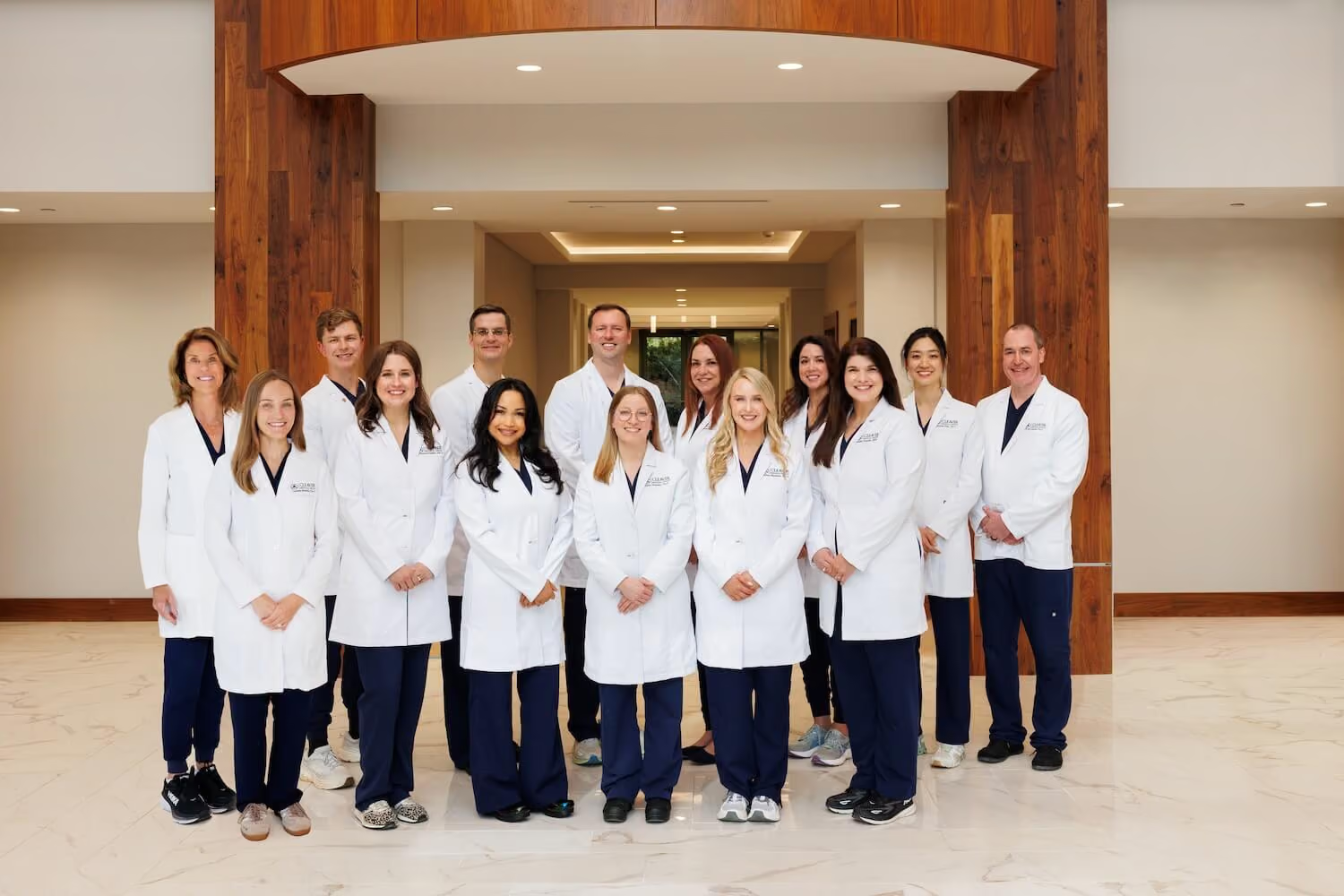
At Cleaver Dermatology & Aesthetics, you may be seen by one of our board-certified dermatologists, Dr. Nathan Cleaver, Dr. Stephanie S. Gardner, or Dr. Weston Waxweiler, or by one of our highly trained physician assistants or nurse practitioners depending on your concern and the location you visit. In every case, you're in the hands of a clinically experienced provider who takes your skin health seriously and treats every patient with genuine care and respect.
A medical assistant will typically bring you back to the exam room first, take a brief history, confirm the reason for your visit, and note your vital signs or any relevant information. Then your provider will come in and the real conversation begins.
Your provider will start by talking with you. Dermatology appointments are as much about listening as they are about examining, and a good dermatologist wants to understand your concerns, your history, and your goals before they start making recommendations. Don't hold back during this part of the conversation. There is no concern too small or too embarrassing to mention, and nothing you say will surprise or judge your provider. Dermatologists have seen and heard everything.
If you're coming in for a specific spot or condition, your provider will examine it closely, sometimes with a dermatoscope, which is a handheld device with magnification and lighting that allows them to see the structure of a lesion in much greater detail than the naked eye allows. This is a completely painless and quick step that significantly improves diagnostic accuracy.
If you've requested a full-body skin cancer screening, or if your provider recommends one based on your history, you'll be asked to change into a gown so that your skin can be examined from head to toe. This includes areas that don't often see the light of day, like the scalp, behind the ears, between the toes, and the soles of the feet, because skin cancer can develop anywhere on the body, not just sun-exposed areas. The exam is thorough but quick, and your provider will talk you through what they're looking at as they go.
Sometimes a provider will find something during an exam that warrants a closer look. This can feel alarming in the moment, but it's important to understand that identifying a concern and investigating it is exactly what the appointment is for. Finding something that needs attention is a success, not a failure, and it's almost always far better to know.
If your provider recommends a biopsy, which involves removing a small sample of skin tissue to be analyzed in a laboratory, it is typically performed right there at the same appointment. The area is numbed with a small injection of local anesthetic, and the procedure itself takes only a few minutes. Most patients describe the numbing injection as the most uncomfortable part, comparable to a mild pinch, and the biopsy itself as essentially painless. The sample is sent to a pathology lab and results are typically returned within one to two weeks, at which point your provider will contact you to discuss next steps.
Not every spot that gets biopsied turns out to be something serious. Many biopsies confirm that a lesion is benign, giving you and your provider a clear, documented baseline for monitoring going forward. Either way, you leave with information, and information is always better than uncertainty.
Beyond the physical examination, your first dermatology appointment is also an opportunity to discuss anything that's been on your mind about your skin, whether that's a chronic condition like acne, eczema, or rosacea, a cosmetic concern like hyperpigmentation or signs of aging, hair or nail changes you've noticed, or simply wanting to know whether your current skincare routine makes sense for your skin type.
Dermatologists are medical doctors with deep expertise in everything the skin does and everything that affects it. You don't need to limit your appointment to the one thing that got you through the door. If you've been wondering about something for a while, this is your chance to ask.
At Cleaver Dermatology & Aesthetics, we believe that a good first appointment sets the tone for a long-term relationship between patient and practice. We're not interested in rushing you out the door. We want to understand your skin, answer your questions thoroughly, and put together a plan that makes sense for your life and your goals, whether that's a simple prescription, an in-office treatment, a referral to one of our aesthetic specialists, or just the reassurance that your skin is in good shape.
Before you leave, your provider or a member of the care team will walk you through any next steps. If a prescription was recommended, it will be sent electronically to your pharmacy. If a follow-up appointment is needed, whether to discuss biopsy results, check on treatment progress, or continue a course of care, you'll schedule that before you go. If products or a skincare routine were discussed, your provider may recommend specific formulas, some of which are available through the Cleaver Dermatology & Aesthetics online store or directly from our office.
You'll also have access to the patient portal, where you can message your care team, review your visit notes, request prescription refills, and manage future appointments without needing to call the office. It's a genuinely convenient tool, and our team encourages all patients to set it up before or at their first visit.
Most importantly, you'll leave with a clearer picture of your skin's health than you walked in with. That clarity is valuable in and of itself, and it's the beginning of a relationship with a care team that is genuinely invested in your long-term skin health and confidence.
There is no perfect moment to book your first dermatology appointment, but there is a right one, and it's sooner rather than later. Whether you have a specific concern, you're overdue for a skin cancer screening, or you simply want expert guidance on taking better care of your skin, the board-certified team at Cleaver Dermatology & Aesthetics is ready to welcome you. Book your appointment online today at any of our nine North Georgia locations, including Cumming, Gainesville, Roswell, Johns Creek, Dahlonega, Canton, Toccoa, Lavonia, and Dawsonville, and let us take it from here.

Lorem ipsum dolor sit amet, consectetur adipiscing elit. Suspendisse varius enim in eros elementum tristique.

